Voters get the bill for war and tariffs... Trump’s foreign policy faces a reckoning [Nov. 3 midterms: America’s choice] (3)
Ahead of the midterm elections scheduled for November 3, U.S. voters rank rising prices and the cost of living as their top concerns. Foreign policy itself may appear to have slipped down the list of priorities, but as the Trump administration’s war with Iran and broad tariff policies are seen as direct causes of rising prices felt by consumers, foreign policy has emerged as a key factor with a decisive influence on how people vote. According to think tanks and experts, this election goes beyond the traditional formula, “It’s the economy, stupid.” Foreign and trade policies, including the Iran war and high tariffs, are directly affecting the prices voters experience in their daily lives and putting pressure on the Trump administration, while Democrats are hoping to win majorities in both chambers of Congress.■ U.S. voters: Rising cost of living blamed on tariffs and the Iran warThe biggest feature of this election is that foreign policy issues have directly hit people’s everyday finances. In a poll of 4,150 registered U.S. voters conducted by the Cato Institute last September, 74% said President Trump’s tariffs had raised the prices of goods they buy, while 49% said their quality of life had worsened. The poll also found that 57% of voters viewed tariffs as equivalent to an additional tax. This month, Chi-cago Council on Global Affairs (CCGA) polling found that 86% of voters said the Iran war was a direct cause of rising prices for fuel, groceries and fertilizer. With diesel prices topping $6 per gallon (3.8 liters), logistics costs are expected to rise further ahead of the year-end holiday rush. Nevertheless, the Trump administration is tightening tariffs on trading partners, including the European Union (EU), under “Super 301.” It may also apply Section 232 of the Trade Expansion Act to semiconductors, critical minerals, aircraft and related parts on national security grounds. The administration is also preparing the option of retaliatory tariffs over the EU’s Carbon Border Adjustment Mechanism (CBAM), signaling that it may tighten tariff measures further. On trade, the British think tank Chatham House said that although U.S. voters are highly dissatisfied with the higher cost of living caused by tariffs and the Iran war, even if Democrats win this election and take control of Congress, withdrawing bills or launching investigations would take a long time and would not immediately lower prices as experienced by consumers. Voters may therefore become even more frustrated if they feel their ballots are not leading to real policy changes. Chatham House’s analysis is that this is more likely to become a dramatic wildcard in the 2028 presidential race than in these midterms.■ Voters view diplomacy with China and Russia positively, but expect Ukraine policy to remain unchangedAs President Trump’s pledge to “stay out of new wars” has given way to prolonged military involvement in the Middle East, even 76% of Republicans viewed this negatively in a Chicago Council on Global Affairs poll, suggesting that they are turning away from him.Views on support for Israel have also shifted, with 56% saying military aid should be reduced or halted. The Gaza war was found to have prompted young voters who support Democrats to become more actively involved in the election.The hard-line approach to the Iran war, including deploying additional troops, is expected to continue after the election, and even passage of the War Powers Act in Congress is unlikely to stop it. This is because the president has veto power and executive authority.Congress can reject requests for increased defense spending or threaten to cut the budget, but so far there has been no instance of it actually blocking war funding in full.Voters view the Trump administration’s diplomacy with China and Russia positively. Joshua Shifrinson, a professor of public policy at the University of Maryland, said in a recent interview with The Christian Science Monitor that most voters see President Trump’s China policy as less confrontational than that of former President Joe Biden’s administration and are more supportive of a cooperative approach. Shifrinson said U.S. voters have a positive view of relations with China and Russia, seeing them as relatively stable, and that this perception could influence their choice of candidate on Election Day.Regardless of the midterm results, President Trump’s limited support for Ukraine and his policy toward Russia are unlikely to change. Kurt Volker, who served as the U.S. State Department’s special envoy for Ukraine negotiations during Trump’s first term, said Democrats are likely to win majorities in both the House and the Senate in these midterms and will try to increase aid to Ukraine, but predicted there would be no change because President Trump would exercise his veto. Trump’s view of Ukraine and his policy stance are therefore likely to remain in place after the election.These midterms could be a historic test of whether failures in foreign and trade policy can immediately trigger a reckoning for the government at home. But regardless of the election results, U.S. isolationism abroad and its trade pressure are expected to continue, while the struggle between the administration and Congress over control of budgets and legislation is likely to [email protected] Yoon Jae-joon Reporter
![Voters get the bill for war and tariffs... Trump’s foreign policy faces a reckoning [Nov. 3 midterms: America’s choice] (3)](https://image.fnnews.com/resource/crop_image/2026/10/24/thumb/202610241838147461_1793078313740.jpg)


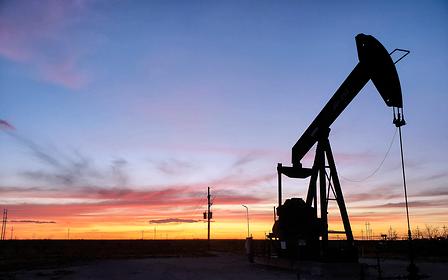 Oil prices fall as Saudi-Iranian tensions ease ... “War premium alone is $20”
 Net Worth Hits 9 Billion Won, but “I’m Having a Reality Check Rather Than Feeling Happy”... A 40-Something Office Worker’s Surprising Confession
 Anthropic's revenue surges 14-fold...$807 billion AI bet
 “I’ve been waiting just for this”: A 3 billion won lottery if you win... Frenzy over applications for Banpo’s flagship complex
 “They suddenly take off their shoes and pray”: Does Muslim prayer at a highway rest stop make you uncomfortable? [What do you think?]