US and Japan to Jointly Develop Rare Earths, Lithium, and Copper, Challenging China’s Dominance
- Input
- 2026-03-17 18:51:38
- Updated
- 2026-03-17 18:51:38
According to The Financial News’ Tokyo correspondent Seo Hye-jin, Nihon Keizai Shimbun (The Nikkei) reported on the 17th that the United States and Japan are expected to agree at the U.S.-Japan summit on the 19th to jointly develop rare earths, lithium, and copper. Four projects in the US will be given priority: rare earth refining, copper smelting, lithium mine development, and copper mine development. The goal is to reduce dependence on low-priced critical minerals from China and to strengthen supply chains under U.S.-Japan leadership.
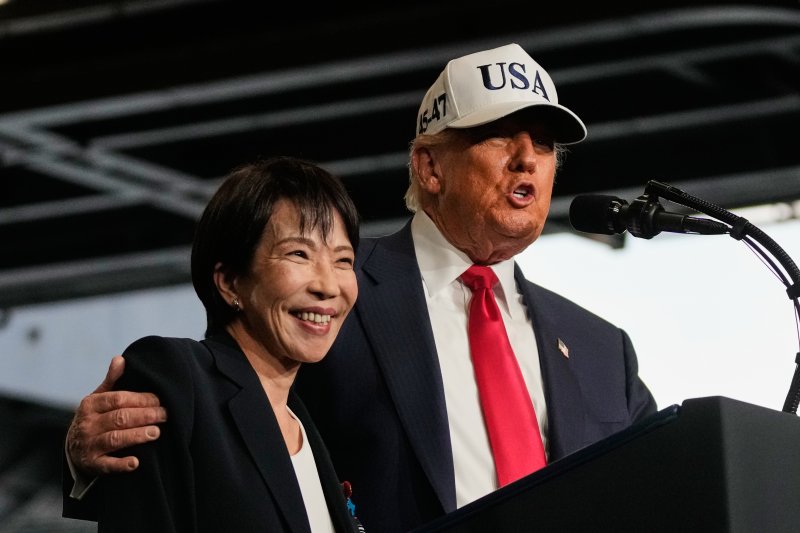
The Nikkei (Nihon Keizai Shimbun) reported that Japanese Prime Minister Sanae Takaichi and US President Donald Trump plan to make economic security cooperation a key agenda item at the summit. To that end, they intend to decide on joint development of critical minerals, adopt an action plan, and set up a working-level task force.
The cooperation projects in the US will proceed under the name “U.S.-Japan Critical Minerals Project,” and the two leaders will designate four priority projects. These are: a rare earth refining project in the State of Indiana; a copper smelting project in the State of Indiana; lithium mine development in the State of North Carolina; and development of the Copper World copper mine project in Arizona.
The rare earth refining project will recover and recycle rare earths and rare metals from waste permanent magnets used in home appliances, automobiles, and industrial equipment. Mitsubishi Materials is coordinating its investment and participation.
For the copper smelting plan, the partners intend to work with a UK-based company that uses waste electronic circuit boards from smartphones, PCs, and home appliances as raw materials.
Lithium mine development will be pursued in Kings Mountain, North Carolina. Mitsui & Co. is considering a partnership with US chemical giant Albemarle.
For the Copper World copper mine project in Arizona, Mitsubishi Corporation will invest about 87 billion yen to participate and will secure mining rights jointly with a Canadian company.
The summit will also produce the “Japan-U.S. Action Plan for Ensuring the Resilience of Critical Mineral Supply Chains.” As a key measure to curb inflows of low-priced Chinese minerals, the two sides are considering introducing a “minimum price guarantee” mechanism, potentially backed by tariffs.
In addition, the two countries plan to sign a memorandum of understanding (MOU) on the development of marine mineral resources and to establish a working-level task force. Discussions are expected to cover manganese collection in waters near Hawaii and rare earth mining near Minamitorishima (also known as Marcus Island) in the Ogasawara Islands (also known as the Bonin Islands) of Japan.
According to the Ministry of Economy, Trade and Industry of Japan (METI), China accounts for about 60% of global rare earth mining and around 90% of rare earth refining. China is also responsible for roughly 80% of lithium refining.
Recently, as China has tightened export controls on critical minerals and increased economic pressure, the risk of supply chain disruptions has grown for many countries, including the US and Japan.
The Nikkei pointed out that China can export at low prices because its environmental regulations are relatively lax and production costs are low. As a result, it will not be easy for importing countries to break away from their dependence on China.
[email protected] Seo Hye-jin Reporter