Redeployment of South Korea-Based THAAD and Japan-Based Marines to Middle East Leaves Deterrence Gap Against China...Vance Publicly Backs Trump
- Input
- 2026-03-17 15:31:36
- Updated
- 2026-03-17 15:31:36
On the 16th (local time), a former senior official who served in a past U.S. administration pointed out, "A very large portion of U.S. military power that had been deployed in the Indo-Pacific region to deter China has been emptied out." The official added, "Some Marines and several assets that we worked hard to deploy in South Korea have left," noting, "This shift in deterrence is happening just as China is conducting an unprecedented number of sorties around Taiwan."
The reference to "some Marines" is understood to point to recent U.S. media reports that 2,500 troops from the 31st Marine Expeditionary Unit (31st MEU), based in Okinawa, Japan, are heading to the Middle East aboard the amphibious assault ship USS Tripoli (LHA-7). The "forces we worked hard to deploy in South Korea" are seen as referring to part of the THAAD system. When the United States deployed THAAD to Seongju County, North Gyeongsang Province, in 2017, it triggered large-scale protests by local residents and led to serious diplomatic friction between South Korea and China.
The former official criticized the dispatch of U.S. assets from the Indo-Pacific to the Middle East, saying, "It is astonishing. Even at the most serious moments in the past, we did not have a deterrence gap like this." The official went on, "At a time when the deterrence problem in East Asia has become more serious than ever, the United States once again risks being distracted by the Middle East and getting bogged down there."
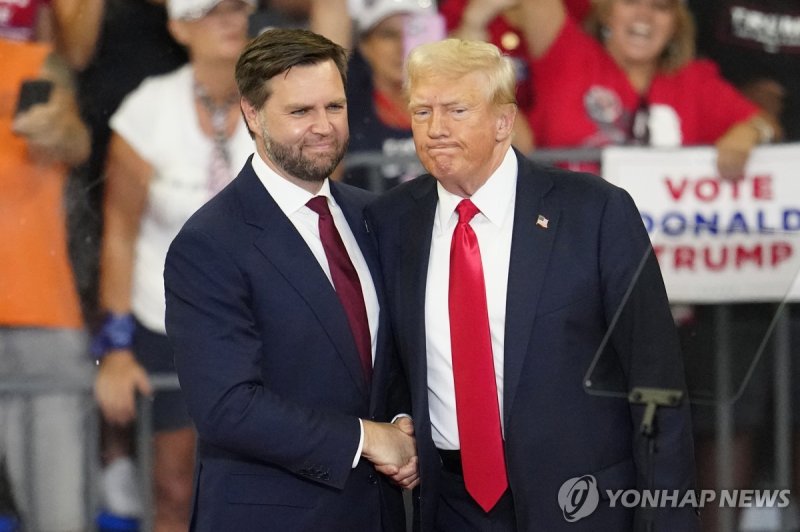
Despite such concerns, on the same day Vice President Vance attended an event at The White House alongside President Trump and was asked about the war with the Islamic Republic of Iran. He responded, "In the past, presidents were stupid, but now the president is smart, and I believe President Trump will get the job done." He further stressed, "I have long agreed that the Islamic Republic of Iran must not have nuclear weapons." His remarks made clear that he supports President Trump's decision to launch military operations against Iran.
Vice President Vance had previously maintained an isolationist position, arguing that the United States need not involve itself in overseas conflicts, and he had expressed skepticism even before the start of the current military operations against the Islamic Republic of Iran. Since the operations began, he had remained relatively quiet and had avoided appearing in public together with President Trump.
His comments on this day, which run counter to his long-standing stance, came amid speculation that his political standing could be at risk. Vance has recently been seen as differing with President Trump over the war with Iran and as eyeing a bid for the presidency in the 2028 election.
[email protected] Hong Chae-wan Reporter