Chey Tae-won: "If SK hynix lists ADRs in the U.S., it will become an even more global company"
- Input
- 2026-03-17 11:17:05
- Updated
- 2026-03-17 11:17:05
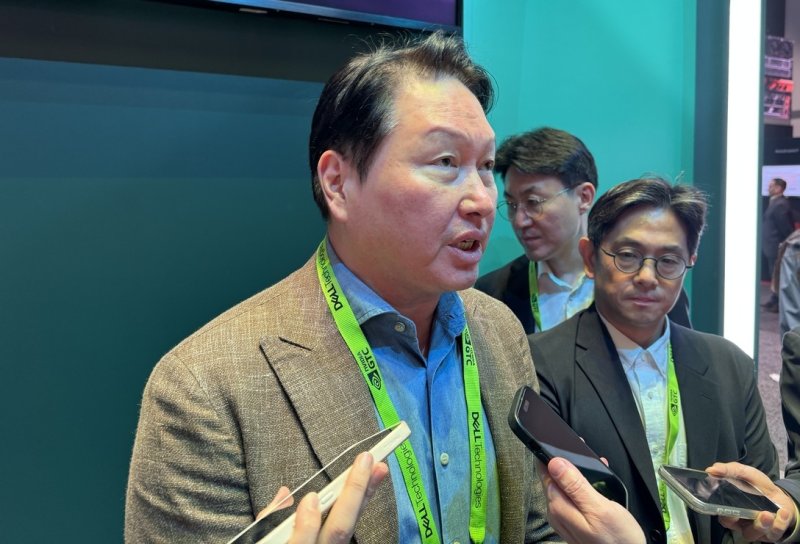
At the GTC venue, Chey explained that the review of a U.S. listing via ADRs is intended to broaden the investor base for SK hynix. He said, "It would give us exposure not only to Korean shareholders but also to U.S. and global investors, and if we go ahead with the listing, SK hynix can become a more global company."
SK hynix has been actively reviewing a U.S. listing through American Depositary Receipts (ADR) since the second half of last year. ADRs are an alternative to a direct listing on U.S. exchanges. Original shares issued outside the United States, such as in Korea, are deposited with a local U.S. custodian bank, which then issues dollar-denominated receipts that trade on United States stock exchanges like ordinary U.S. stocks. For companies, this structure makes it easier to raise capital from U.S. investors and enhances global visibility. Shares of Taiwan Semiconductor Manufacturing Company (TSMC) and Korea Electric Power Corporation (KEPCO) are also traded in the U.S. market in the form of ADRs.
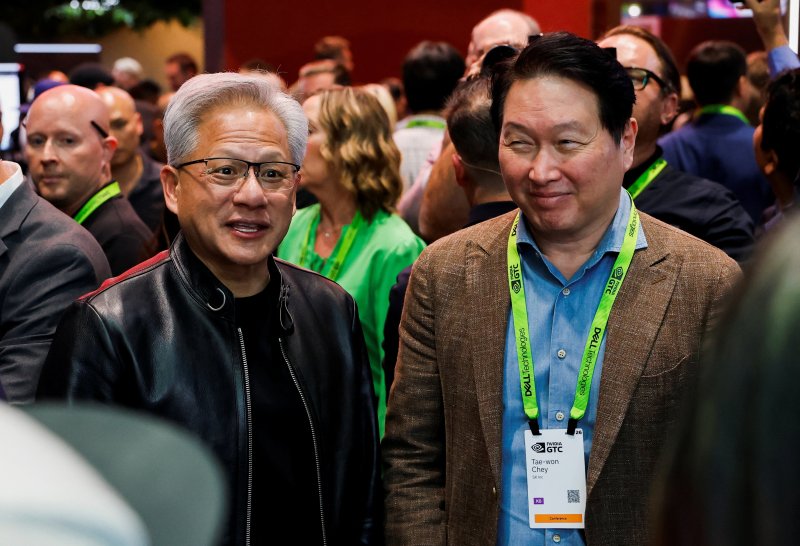
Regarding the recent intensification of global chipflation, or surging semiconductor prices, Chey noted, "Semiconductor demand is growing explosively," and went on, "Noh-Jung Kwak, President of SK hynix, plans to soon announce measures to stabilize Dynamic Random Access Memory (DRAM) prices." He pointed out that the worldwide shortage of memory stems from soaring HBM demand and a lack of wafer supply, and added that the company is working to expand wafer supply to help stabilize semiconductor prices. He also explained, "In industries such as smartphones and personal computers (PC), it may become difficult to secure DRAM, and this could affect not only AI companies but also individual consumers."
On the possibility of relocating manufacturing facilities to the United States, Chey responded, "It is essentially the same wherever you go," noting, "Building production capacity outside Korea also takes a long time. With a greenfield investment approach, it takes about five to seven years." He continued, "Korea already has the necessary infrastructure in place, so we can respond much more quickly," and stressed, "We are focusing on Korea."
[email protected] Reporter Cho Eun-hyo Reporter