[Editorial] An AI-Centric Business Overhaul, a Fresh Challenge for Shinsegae
- Input
- 2026-03-17 18:28:38
- Updated
- 2026-03-17 18:28:38
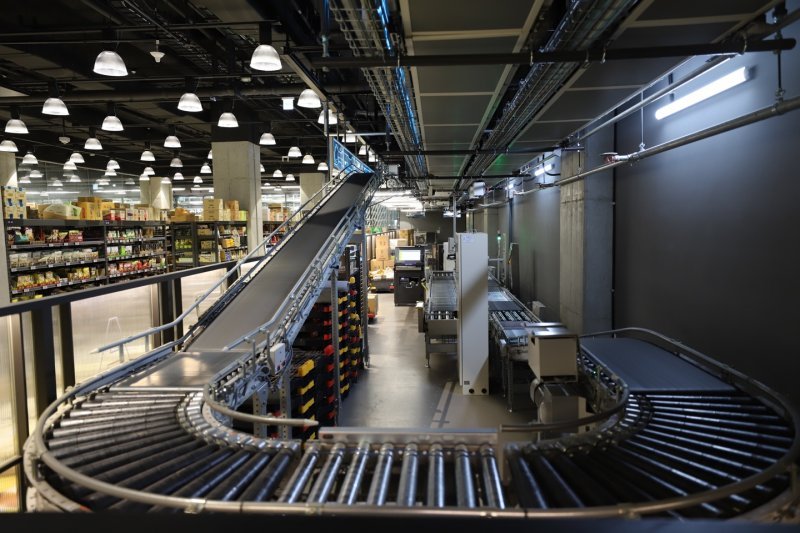
Shinsegae’s push to build an AI data center stems from its assessment that it has reached the limits of growth under its existing business model. In fact, Shinsegae Group’s sales have recently been stagnating. To break through this impasse, the group is seeking to combine its vast trove of commerce data and offline location information with AI, thereby expanding its business domain. In online malls, AI agents could handle the entire process of selecting, paying for, and delivering products tailored to individual preferences, while automating ordering, shipping, and other distribution systems to boost efficiency.
AI data centers have recently emerged as core infrastructure in this era of rapid technological change. Developing AI models and operating AI services require enormous computing power and electricity, and data centers play the crucial role of supplying these resources in a stable way. Companies can generate revenue by using such data centers to offer other firms storage space and AI computing services.
Last year, Korean companies accelerated their infrastructure investments after forming a so-called "AI Alliance" with Nvidia. Hyundai Motor Group plans to build an AI data center to process and store the information needed to develop software-defined vehicles (SDVs) and implement smart factories. SK Group, for its part, is working with Amazon Web Services (AWS) to promote the construction of a 100 MW-class AI data center in Ulsan.
Amid these moves, Samsung Electronics is reported to have begun contract manufacturing of Groq 3, Nvidia’s next-generation AI inference chip. The company has also unveiled the next-generation AI memory HBM4E (High Bandwidth Memory 4E) for the first time in the world, a bold bid to secure a commanding lead in advanced technologies. These developments suggest that Korean companies are striving to strengthen their AI competitiveness and seize the initiative in future industries spanning production, infrastructure, and services.
The rapid spread of AI technology is eroding traditional boundaries between sectors and reshaping the entire industrial ecosystem. Industries such as retail, manufacturing, and mobility are converging around AI, giving rise to a new competitive order.
In this period of transition, the government must refine the institutional framework so that corporate investment and innovation are not stifled. It should rationalize regulations on power supply, site selection, and the environment, all of which are essential for building large-scale AI data centers, and expand tax incentives and research and development (R&D) support for key areas such as semiconductors and cloud services. Policy design must also ensure that large-scale private investment and technology accumulation translate into industrial competitiveness. As companies throw their full weight into this race, the government must match their speed and direction if Korea is to secure the upper hand in the global technology contest.