U.S. vows to "test allies' resolve" — Japan's choice ahead of summit
- Input
- 2026-03-17 12:26:14
- Updated
- 2026-03-17 12:26:14
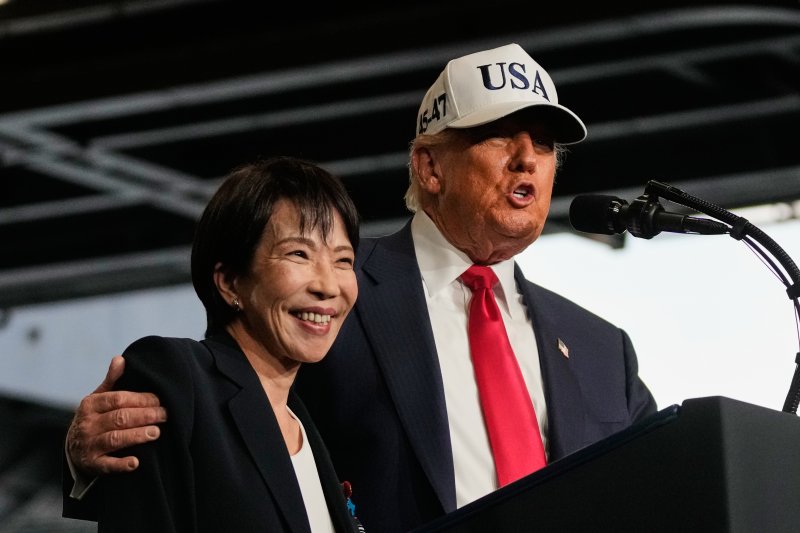
Tokyo, The Financial News — Correspondent Seo Hye-jin reports that as President Donald Trump ratchets up pressure on allies to send naval vessels to the Strait of Hormuz, the Japanese government is consulting with South Korea, the United Kingdom, France and other concerned countries to shape its response ahead of the U.S.-Japan summit on the 19th (local time). Trump is expected to ask Prime Minister Sanae Takaichi directly during the summit to support a multinational "maritime task force (TF)" initiative and a joint statement on "freedom of navigation." Takaichi plans to settle Japan's position before the meeting. Within the Japanese government, many argue that, under current law, it would be difficult to dispatch the Japan Self-Defense Forces (JSDF) while the war with Iran continues, so Tokyo is said to be cautiously weighing whether to send forces, including the option of a deployment after the conflict ends.■ Tokyo weighs its options ahead of U.S.-Japan summitPrime Minister Takaichi is scheduled to leave Japan on the 18th and hold a summit with President Trump in Washington, D.C. on the 19th. The meeting is expected to focus heavily on securing safety in the Strait of Hormuz, alongside the broader situation in the Middle East.
According to The Asahi Shimbun, Takaichi intends to clarify Japan's basic stance on the issue before the summit.
The United States is reported to have already conveyed its cooperation plan to Japan. Yomiuri Shimbun reported that in a telephone call on the 15th between the two countries' defense chiefs, U.S. Defense Secretary Pete Hegseth asked Japanese Defense Minister Shinjirō Koizumi to support the multinational "maritime TF" initiative.
The initiative is a multinational cooperation framework aimed at ensuring the safe passage of vessels through the Strait of Hormuz.
Hegseth stressed that the activities would be separate from U.S. and Israeli military operations against Iran, and said the specific scope of operations would be reviewed over the coming days and weeks. He also noted, "We are not asking you to commit to sending equipment," emphasizing that Washington is not immediately demanding the dispatch of JSDF units or naval vessels.
However, he indicated that the plan is highly likely to be on the agenda at the upcoming U.S.-Japan summit and that President Trump will renew his request for Japan's cooperation.
He added that Washington is considering limiting participation to countries that are highly dependent on energy supplies passing through the Strait of Hormuz, and stressed that it is important for the concerned nations to respond together.■ Trump: "I want to see how our allies respond; enthusiasm matters"President Trump has openly framed the issue as, in effect, a test of allied attitudes.
Speaking with reporters in the Oval Office at the White House on the 16th, he cited crude oil import figures through the Strait of Hormuz by country: "Japan gets 95%, China gets 90%, and many European countries import a substantial amount. South Korea gets 35%." He went on, "We should remember that we station 45,000 troops in Japan. We have 45,000 troops in South Korea as well. We have between 45,000 and 50,000 troops in Germany."
Trump said, "They should not only be grateful to us, they should help us." He continued, "I'm asking not so much because we need it, but because I want to see how they respond," adding, "We have protected them from external enemies, but they have not been nearly as proactive."
He also stressed, "The level of enthusiasm matters," and said, "I want to ask why we should keep protecting countries that do not protect us."■ Allies respond with cautionAllied responses to these U.S. demands have so far been largely cautious.
German Chancellor Friedrich Merz stated, "Intervention against Iran was not a joint decision, and Germany will not contribute militarily." German Defense Minister Boris Pistorius likewise drew a clear line, saying, "This is not our war."
The United Kingdom has also stopped short of declaring clear participation. British Prime Minister Keir Starmer said, "The UK will not allow itself to be drawn into a wider war."
French President Emmanuel Macron similarly signaled caution, saying that a mission to protect the Strait of Hormuz would only be possible "after the most intense phase of the conflict is over," indicating reluctance to intervene while fighting is ongoing.
Analysts say this mood reflects frustration over the United States having pushed ahead with military action without sufficient consultation with its allies.■ Japan wrestles with legal constraintsWith the U.S.-Japan summit imminent, Japan is likely feeling the greatest pressure among the allies. For a country that has long relied heavily on the United States for its security, Trump's pointed references to United States Forces Japan (USFJ) are particularly burdensome.
Prime Minister Takaichi said, "We are reviewing the relevant legal basis and the current situation to determine what Japan can and cannot do."
Within the government, the prevailing view is that under existing law it is difficult to send the JSDF to areas where active combat is under way. Tokyo maintains that the current situation involving Iran does not constitute a "survival-threatening situation" that would allow the exercise of collective self-defense, nor a "situation with important influence" that would permit rear-area support for U.S. forces.
Issuing "Maritime Security Operations" under the Self-Defense Forces Act is also legally difficult. Such operations are primarily an exercise of police authority and are not premised on the use of force against other states.
As a result, other options being discussed include mine clearance, protection of Japan-related vessels, expanded intelligence-gathering activities, and closer cooperation with other countries' militaries. A Japanese government official said, "A multinational coalition is one option," adding, "We are keeping cooperation on the table as one of the choices under review."
[email protected] Seo Hye-jin Reporter