Europe Silent on Trump’s Deployment Request: How Will the Republic of Korea and Japan Respond?
- Input
- 2026-03-17 15:24:21
- Updated
- 2026-03-17 15:24:21
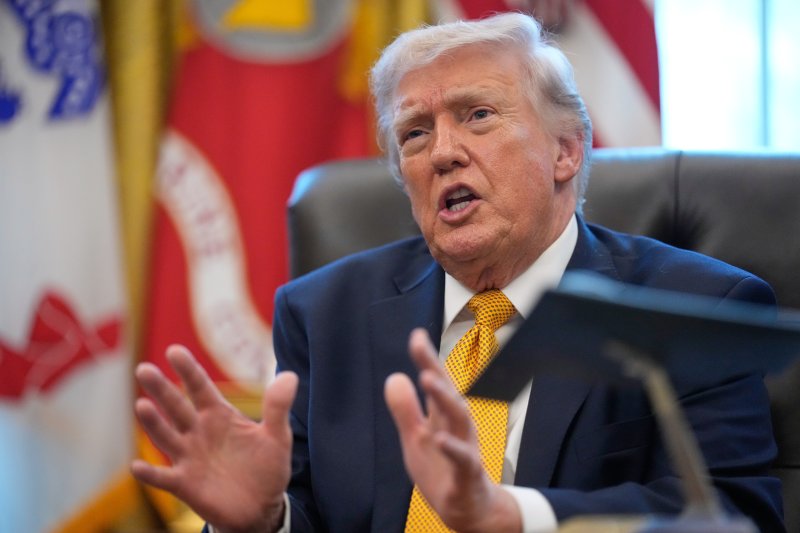
According to Financial News, Donald John Trump urged allies to send forces to the Strait of Hormuz, citing figures that did not match the facts. While the Republic of Korea and Japan were still reviewing the issue, he criticized Europe for refusing to dispatch troops, saying he was "very disappointed."
Pressing for deployments under a ‘free-riding’ claim
Citing The Associated Press (AP) and other local outlets, reports said Trump, at a press conference at The White House in Washington, D.C., on the morning of the 16th (local time), listed countries that import crude oil through the Strait of Hormuz. He stated, "Japan takes 95%, the People's Republic of China (PRC) takes 90%. Many European countries also bring in a substantial amount, and the Republic of Korea brings in 35%." He then added, "So we want them to come in and help us with respect to this strait." On July 14, through social media, Trump had singled out the Republic of Korea, Japan, the PRC, the United Kingdom of Great Britain and Northern Ireland (UK) and France, demanding that they send escort warships to break any blockade of the Strait of Hormuz by the Islamic Republic of Iran.At the same press conference on the 16th, he stressed, "We have stationed 45,000 wonderful soldiers in some countries and have protected them from danger." He complained, "When we ask, 'Do you have minesweeping vessels?' the answer we get is, 'We don’t want to get involved.'" Trump went on, "I said, 'We’ve protected you for 40 years and you still won’t get involved?' Yet they still said they didn’t want to get involved," directly criticizing them. "We have protected them from terrible external threats, but they have shown little enthusiasm," he said, adding, "That level of enthusiasm matters to me."
Trump repeated similar arguments later that afternoon. Meeting reporters in the Oval Office at The White House, he said, "We should remember that we have 45,000 troops in Japan. We have 45,000 troops in the Republic of Korea. We have between 45,000 and 50,000 troops in Germany." "We are defending all of these countries," he continued, insisting, "They should not only be grateful to us, they should help us." He added, "What’s remarkable is that they are not that proactive."
Most of the figures Trump cited that day were incorrect. According to the Korea Energy Economics Institute, as of 2024 the share of crude oil imports that pass through the Strait of Hormuz is about 62% for the Republic of Korea, 69% for Japan and 49% for the PRC. The number of U.S. troops stationed in each country is also different from his claims: roughly 28,500 in the Republic of Korea, about 50,000 in Japan and around 35,000 in Germany.
Japan weighs dispatch as Europe says ‘no’
At the press conference on the 16th, Trump remarked, "We think we will get good help from some countries, but we may be disappointed in others," adding, "I will reveal which countries they are later." Asked at the National Assembly on the 17th whether the United States had formally requested a deployment, Foreign Minister Cho Hyun replied, "At this point, it is very difficult for me to give an answer." He had spoken by phone the previous day with United States Senator Marco Rubio, who serves as a senior figure on foreign policy; local reports described him as a counterpart at the United States Department of State (State Department).Sanae Takaichi, prime minister of Japan, who is scheduled to hold a summit with Trump on the 19th, told the House of Councillors of Japan on the 16th that Tokyo was considering Washington’s request. She said, "We are continuing our review while issuing various instructions on what Japan can do independently within its own legal framework." On the 17th, The Asahi Shimbun, citing government sources, reported that the Japanese government is discussing the possibility of dispatching the Self-Defense Forces.
Europe, by contrast, moved quickly to draw a line. Kaja Kallas, the European Union (EU) high representative for foreign affairs and security policy, said at a press conference on the 16th that the war with the Islamic Republic of Iran "is not Europe’s war." She referred to the ongoing EU naval mission in the Red Sea aimed at countering rebel forces from the Republic of Yemen and made clear that the operation would not be expanded to the Strait of Hormuz. On the same day, German Chancellor Friedrich Merz also stated, "As long as the war continues, we will not be involved in guaranteeing freedom of navigation in the Strait of Hormuz by military means." He stressed, "It is clear that this war is not an issue for the North Atlantic Treaty Organization (NATO)." That day, UK Prime Minister Keir Starmer likewise said in a speech that the conflict with the Islamic Republic of Iran "is not a NATO mission." He asserted, "The UK will not allow itself to be drawn into a wider war."
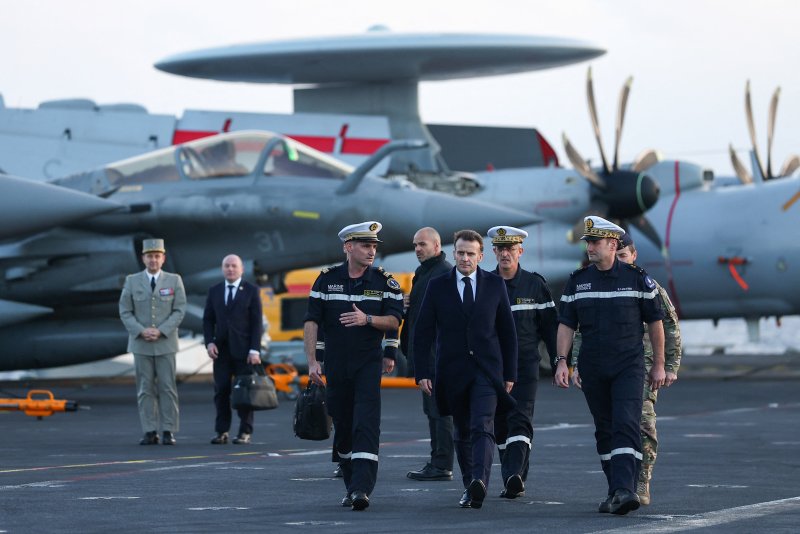
France announced on the 3rd that it had sent a carrier strike group to the Eastern Mediterranean to safeguard maritime security. However, French President Emmanuel Macron stated firmly on social media on the 5th, "France is not taking part in this war." Catherine Vautrin, minister at the Ministry of the Armed Forces of France, said in an interview on the 12th, "France has no plans at this time to send any warships to the Strait of Hormuz." At his press conference on the 16th, Trump said, "I am very disappointed in some countries." He noted that he had discussed the issue with Macron and added, "I think he will help." At the same time, Trump said he had spoken by phone the previous day with UK Prime Minister Keir Starmer and claimed, "I believe the UK will be involved."
[email protected] Reporter Park Jong-won Reporter