Smart Glasses Become Pressing Concern for U.S. Companies and Public Agencies
- Input
- 2026-11-30 06:16:27
- Updated
- 2026-11-30 06:16:27
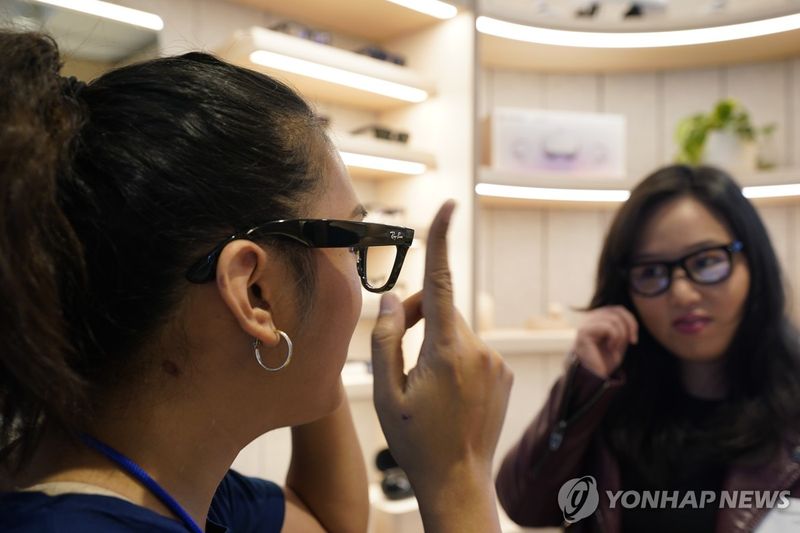
[Financial News] Artificial intelligence (AI) smart glasses that sparked cheating controversies in various exams in South Korea have become a headache in the United States, the technology’s home turf.
The Wall Street Journal (WSJ) examined how companies and public institutions across the United States are addressing smart glasses in a Nov. 29 article titled “Smart Glasses Are Coming to the Workplace. Is Your Office Ready?”
U.S. carrier Southwest Airlines bans employees from wearing smart glasses and other wearable devices with recording and filming capabilities while on duty
Southwest Airlines told all employees last February that they could not wear smart glasses or wearable devices with recording or filming capabilities while on duty. The policy aims to prevent invasions of customer privacy and employee distractions.
Cruise line Royal Caribbean restricted smart-glasses use in certain areas aboard its ships, including public restrooms, youth-program venues, medical facilities and casinos. Basement, a New York nightclub, also said people who bring smart glasses inside will be asked to leave.
New York became the first U.S. state to ban smart glasses in court. U.S. Immigration and Customs Enforcement also banned them in its work areas.
Smart glasses have cameras and microphones that can record, store and transmit audio and video, as well as AI features. They look much like ordinary glasses, making it difficult to tell whether someone is wearing them.
Users can take photos and videos and get AI-generated answers through voice commands or gestures, without using their hands. This creates security risks and legal liabilities, including recording conversations without consent and secretly photographing sensitive, confidential information.
People who serve customers or attend meetings while their smart glasses are active could unintentionally violate privacy or security.
Legal expert: Devices connect to third-party AI platforms, where information may be transmitted, stored or processed
Rayyan Virgo, a labor and employment attorney at law firm Fisher Phillips, said, “These devices are often connected to third-party AI platforms, so information may be transmitted, stored or processed outside the employer’s direct control.”
The WSJ reported that insiders with malicious intent at companies or institutions could use the glasses to steal login credentials, trade secrets and other proprietary information without attracting much attention, or even to map building layouts and physical security systems.
The WSJ noted that as smart glasses become widespread, their mere presence is likely to affect workplace culture and the atmosphere in meetings, even when they are not actively being used.
Megan Hollis, who works for a company specializing in AI and cybersecurity, said, “I have colleagues or friends who wear smart glasses, but I don’t talk when I’m around them.”
Virgo said the awareness that someone might be wearing a device capable of recording, transcribing or analyzing every conversation could discourage normal workplace activities, including brainstorming, impromptu feedback and the relaxed, candid conversations important to workplace culture.
Some argue that blanket restrictions would be difficult because using smart glasses is a matter of personal freedom and the devices may also be necessary for work.
Jennifer Chang, a subject-matter adviser at the Society for Human Resource Management, recommended that most companies prohibit smart glasses in specific situations and places — such as strategic meetings, boardrooms, medical facilities and contract signings — rather than impose a complete ban.
[email protected] Lee Seok-woo, International Affairs Correspondent Reporter