Israeli Yashar Leader Eisenkot Backs Netanyahu Ouster Camp as Unity Talks Collapse
- Input
- 2026-11-30 06:07:19
- Updated
- 2026-11-30 06:07:19
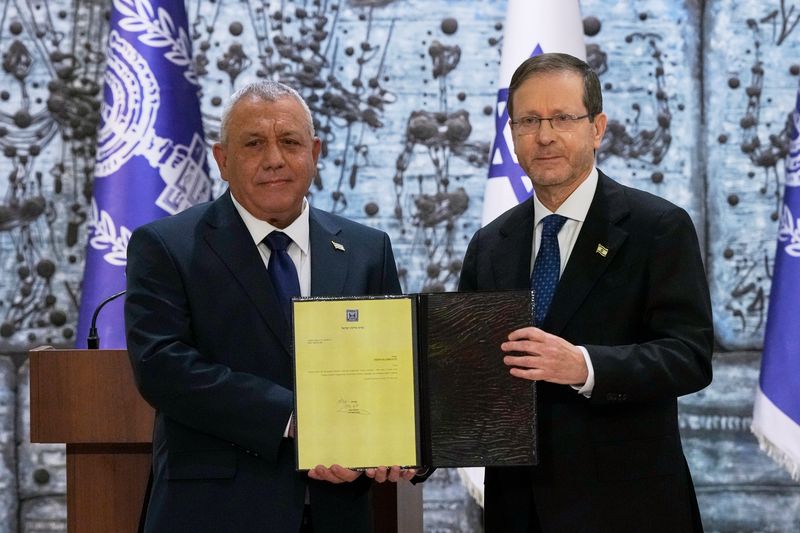
[Financial News] Gadi Eisenkot, leader of the Yashar Party and the lawmaker holding the mandate to form Israel’s next government, met with Prime Minister Benjamin Netanyahu to negotiate a national unity coalition, but the talks collapsed.
According to Israeli media, including The Times of Israel (ToI) and Ynet, Eisenkot and Netanyahu met in Tel Aviv for about two hours on the 29th (local time).
Netanyahu had proposed on Nov. 28 that Eisenkot serve as prime minister first, followed by Netanyahu. Eisenkot was reportedly said to have given the Likud Party 24 hours to negotiate.
The meeting collapsed that day. In a joint statement, the two sides offered only the general remark that “both sides worked to narrow substantive differences, and the meeting took place in a practical atmosphere.” ToI reported that “the meeting ended without progress, and no further meetings are scheduled.”
The two reportedly remained at odds: Netanyahu proposed that he and Eisenkot alternate as prime minister each year, while Eisenkot argued that he should serve for three years, with Netanyahu taking office in the fourth year. Netanyahu also reportedly insisted that National Security Minister Itamar Ben-Gvir could not be excluded from the Cabinet.
Eisenkot said, “I will stand with partners who came together with the goal of ousting Netanyahu as prime minister.”
Ynet also reported that Netanyahu insisted he remain in office until a rotation arrangement formally took effect, a condition Eisenkot explicitly rejected.
Channel 12 reported that Eisenkot told Netanyahu, “I maintain my position that I will stand with partners who came together with the goal of ousting Netanyahu as prime minister.”
As the talks appeared certain to collapse, an unnamed Netanyahu aide sharply told Channel 12, “Today it became clear that Eisenkot is not interested in forming a national unity coalition.”
In the Oct. 27 general election, the broad Eisenkot camp won 48 seats, slightly fewer than the 53 won by the broad Netanyahu camp. But Eisenkot secured the first opportunity to form the next government after receiving recommendations from 67 of the 120 lawmakers.
Coalition negotiations with individual parties are highly complex in Israel’s multiparty system, leaving Eisenkot’s bloc unable to assemble 61 seats on its own. Netanyahu has used that situation to explore forming a national unity coalition with parties joining forces directly with him.
If the 21-seat Yashar Party joined the 27-seat Likud, the two would have 48 seats. They could form a government relatively easily if even some mainstream Jewish parties joined them.
Eisenkot moves toward a governing model that adds support from ultra-Orthodox and some Arab parties to his 48 seats
Eisenkot appears to be leaning toward an independent path to power, combining his bloc’s 48 seats with support from ultra-Orthodox parties and some Arab parties.
Channel 13 also reported that “Eisenkot had planned to announce on Saturday, Nov. 28, that he had secured a coalition, and Netanyahu’s national unity coalition offer was a response to that move.”
The Yashar Party formally signed coalition agreements with the right-wing Yisrael Beiteinu Party on Nov. 25 and the left-wing Democratic Party on Nov. 26. The agreements secured 36 of the bloc’s 48 seats: 21 for Yashar, 12 for Biyahad, eight for the Democratic Party and seven for Yisrael Beiteinu.
Eisenkot could reach 55 seats by adding the seven seats held by the ultra-Orthodox United Torah Judaism party to his bloc’s 48. He could then form a government with outside support from the Arab Ra’am Party if it did not oppose him in the vote to approve the prime minister.
Yisrael Beiteinu and the Democratic Party have strongly opposed an alliance with Netanyahu. Eisenkot reportedly promised not to form a national unity coalition without their consent.
The choice of the 12-seat Biyahad Party, which has yet to sign a formal coalition agreement with Yashar, remains a factor.
Former Prime Minister Naftali Bennett, who leads Biyahad, is the only person in Eisenkot’s camp who supports a national unity coalition and opposes an alliance with United Torah Judaism.
After meeting Netanyahu on Nov. 29, Eisenkot met with former Prime Minister Bennett for an hour to continue coalition negotiations. The Yashar Party said, “The two discussed efforts to form a government, and negotiations are continuing.”
Given that Biyahad has rejected the possibility of leaving Eisenkot’s camp and that its main demand is essentially a reduction in exemptions from military service for the ultra-Orthodox, observers believe it is likely to eventually sign a coalition agreement. An aide to former Prime Minister Bennett told The Jerusalem Post, “There were positive discussions, and considerable progress was made.”
Eisenkot’s first deadline to form a government is Dec. 6, with an extension possible until Dec. 20.
Even if Bennett ultimately decides to leave the camp, a significant number of Biyahad’s lawmakers could still support Eisenkot taking office, since the party’s co-leader, former Prime Minister Yair Lapid, has publicly opposed an alliance with Netanyahu.
The outlook for negotiations with the ultra-Orthodox UTJ is also uncertain. The Yashar Party met with UTJ that day and began formal face-to-face negotiations. According to ToI, UTJ members are divided over whether to support Eisenkot.
Netanyahu’s camp is highlighting Eisenkot’s support from Arab parties as it seeks to prevent United Torah Judaism from joining his coalition. Culture Minister Miki Zohar said, “Joining forces with Eisenkot would mean completely severing their ties with the right wing.”
Eisenkot’s first deadline to form a government is Dec. 6. According to media reports, he is holding last-minute negotiations with the aim of holding a vote to approve the prime minister on Dec. 2 and then holding the swearing-in ceremony.
If Eisenkot fails to form a government by Dec. 6, he can ask President Isaac Herzog for a 14-day extension. If Herzog approves, the final deadline is expected to be Dec. 20.
[email protected] Lee Seok-woo, international affairs correspondent Reporter