Iranian Rial Hits Record 3 Million per Dollar Nine Months Into War
- Input
- 2026-11-30 01:54:21
- Updated
- 2026-11-30 01:54:21
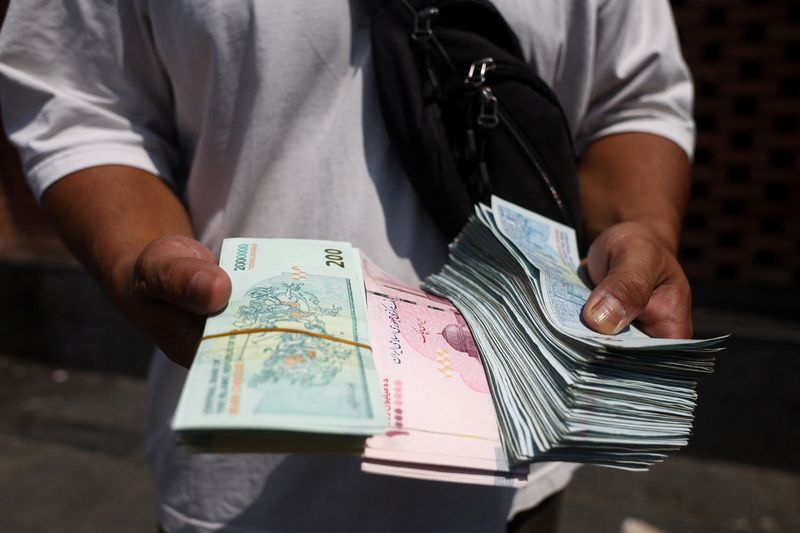
[Financial News] As the war against Iran by U.S. President Donald Trump’s administration enters its ninth month, a sweeping U.S. economic blockade and severe inflation have combined to push the rial below 3 million per dollar for the first time (about 1,338 won, or about 446 won per 1 million rials).
Rial Plunges From 2 Million to 3 Million in Three Months as Blockade Targets Shadow Financial Networks
The rial exchange rate on Iran’s black market rose from 2,992,000 per dollar the previous day to reach the psychological threshold of 3 million rials (about 1,338 won) on Nov. 29, according to Bonbast, a website that tracks foreign exchange markets.
The unofficial free-market rate surged to 3.04 million rials at 12:39 p.m. that day, while the rate against the euro stood at 3,328,900 rials (about 1,460 won), according to exchange-rate analysis firm Navasan.
The rial-dollar rate held at around 40,000 through 2017, in the early days of Trump’s first administration, but began to surge after the United States withdrew from the Iran nuclear deal, the Joint Comprehensive Plan of Action, and reinstated sanctions in 2018-19.
The rate topped 690,000 rials in November 2024, shortly after Trump returned to power, and passed 1 million in March last year. After the outbreak of war, it rose above 2 million rials last August (about 669 won per 1 million rials); just three months later, it broke through 3 million.
The currency’s steep decline is driven by the prolonged war and the U.S. blockade.
After launching airstrikes on Tehran alongside Israel on Feb. 28, the United States imposed a naval blockade in April and began an “economic isolation operation” in August, imposing sanctions even on transactions through third countries.
Early in November, the United States launched an “Iron Gate” task force to block the movement of weapons and sanctioned goods across land borders and through the Caspian Sea. Early this week, it also imposed new sanctions targeting Iran’s shadow financial networks.
U.S. Treasury Secretary Scott Bessent said in a statement announcing the new sanctions, “Iran’s economy is sinking, and its leadership is in a state of panic.”
Food and Beverage Prices Soar 112.6% as Iranians Buy Foreign Currency and Gold Despite Authorities’ Efforts
Inflation in Iran has also reached its worst level in decades.
Consumer prices surged 88.7% in October from a year earlier, while the 12-month average inflation rate rose to 76.8% from 66% in July, according to the Statistical Center of Iran.
Prices of essential goods have posted triple-digit increases for months, with food and beverage prices jumping 112.6% from a year earlier.
Iranian authorities moved to calm market jitters.
Central Bank of Iran Gov. Abdolnaser Hemmati appeared on state television on Nov. 28 and said, “A currency crisis driven by a combination of economic and political problems is shaking the market.” He added, “We have sufficient foreign currency to pay for basic necessities and medicines over the coming months, and are doing everything we can to stabilize the market.”
Despite the authorities’ assurances, Iranians concerned about losses to their assets as the currency falls are reportedly buying major foreign currencies, including dollars, and gold to secure safe-haven assets.
Experts say further declines are inevitable as long as the hard-line standoff continues.
Iranian economic analyst Ashkan Bahrami told Al Jazeera, “It would not be surprising if the rate reached 4 million rials per dollar by the end of this year, March 20, 2027, according to the Persian calendar. The only catalyst for an economic improvement would be a further agreement with the United States, such as a memorandum of understanding to end the war. The effect of any agreement would be limited without fundamental financial reform.”
[email protected] Park Ji-hyun Reporter