[Editorial] South Korea Must Reform Future Fund Built on Borrowing With Weak Oversight
- Input
- 2026-11-29 18:39:16
- Updated
- 2026-11-29 18:39:16
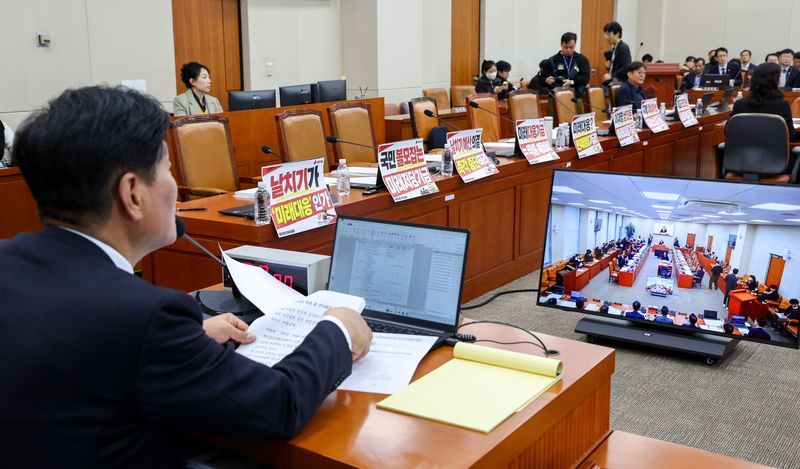
The schedule is tight. If the Budget and Accounts Committee does not finish its review by Nov. 30, the government’s budget bill will automatically be referred to the full Assembly on Dec. 1. The Democratic Party of Korea, which holds a majority of seats, says it is prepared to pass the bill on its own. National Assembly Speaker Cho Jeong-sik said in Canberra, Australia, on Nov. 28 that “if the ruling and opposition parties fail to reach an agreement, the government’s original bill will have to be passed, but then everything the parties have negotiated will become meaningless.” If that happens, the 135 fund projects could be finalized without sufficient scrutiny.
The central issue is how the fund will be built up. The People Power Party argues that issuing 100 trillion won in deficit bonds while putting 104.4 trillion won in excess tax revenue into a separate fund would shift the burden to future generations. The Democratic Party counters that the money is a national financial asset set aside to prepare for future uncertainties. The aim of using fiscal room created by strong semiconductor exports to respond to future crises is understandable. But borrowing to finance spending while keeping cash tied up separately increases interest costs on government bonds. Nor is there any guarantee that excess tax revenue fueled by the semiconductor industry will continue year after year.
Another point of contention is a special provision allowing the fund’s spending plan to be changed by up to 30% without National Assembly approval. The People Power Party opposes the provision. If the fund holds assets for emergencies, the bar for changing its spending should be higher, not lower. Allowing 30% of the spending plan to be changed without Assembly approval would make the fund little different from a spending channel with no oversight.
The potential conflict with monetary policy also needs scrutiny. Bank of Korea Gov. Hyun Song Shin raised the base rate on Nov. 26, emphasizing price stability. If the special provision leads to fund spending being concentrated in a short period, it could offset the effects of monetary tightening.
Discipline across the budget review process is also lax. Requests by standing committee members and Budget and Accounts Committee members for net increases totaled 71.9228 trillion won, more than four times the previous year’s figure. It remains to be seen how much of the parties’ constituency-related budget requests will be reflected by the small subcommittee, a closed-door consultative body. Disagreements over local allocation tax and special activity expenses also remain. The fund must not become a vehicle for transferring existing projects into it, or leave spending in place after excess tax revenue dries up.
The ruling and opposition parties should meet the deadline while reforming the fund. They should first scrap the provision allowing spending to be changed by 30% without Assembly approval, or sharply lower the limit. In the time remaining, they should assess each of the 135 projects whose approval was deferred for necessity and sustainability, and screen out those that would create recurring spending. They should also consider using some of the fund’s accumulated assets to reduce the issuance of deficit bonds. The government should establish a mechanism to report regularly to the National Assembly on the fund’s performance.