Revenue Down 40% in Three Years... JDC Duty-Free Shop and Tenants Join Forces to Develop Sales Channels
- Input
- 2026-11-29 13:48:06
- Updated
- 2026-11-29 13:48:06
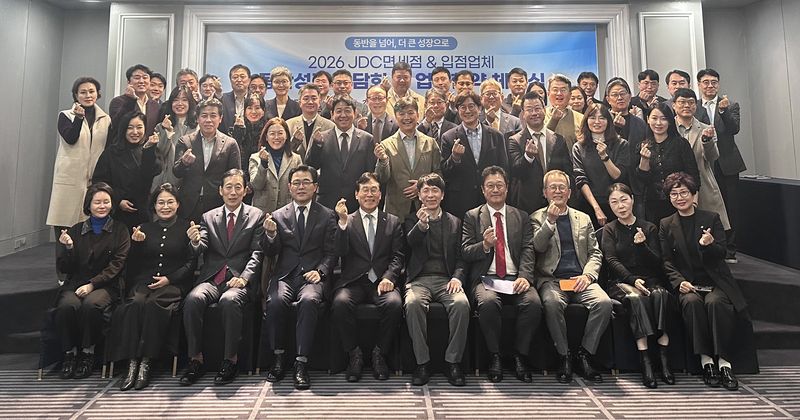
【Financial News, Jeju = Jeong Yong-bok】 The Jeju Free International City Development Center (JDC) is pursuing joint marketing, sales-channel development and improvements to working conditions with companies operating in its duty-free shop. With sales at its designated duty-free shop down by at least 40% over the past three years, restoring its business competitiveness and securing stable funding for development have emerged as major management challenges.
According to JDC on the 29th, a mutual-growth meeting was held and an agreement signed at the Kensington Hotel in Yeouido, Seoul, on the 27th, with around 90 people in attendance, including JDC Chairman Song Seok-eon and representatives of tenant companies.
Key areas for cooperation include strengthening institutional frameworks and communication channels; joint marketing and sales-channel development; and environmental, social and transparent management (ESG) and infrastructure sharing.
The parties also agreed to work together to strengthen the job skills of tenant companies’ employees and improve their working conditions. At the meeting, they heard about the companies’ business difficulties and discussed ways to address them.
The agreement comes amid continued falling sales at Jeju’s designated duty-free shop. According to figures on the past 10 years of duty-free shop operations that National Assembly Land, Infrastructure and Transport Committee member Shin Seong-beom received from JDC in September, sales at the JDC duty-free shop fell from 658.5 billion won in 2022 to 463.6 billion won in 2024 and 393.5 billion won in 2025. Last year’s sales were down 15.1% from the previous year and 40.2% from 2022, when the shop posted its highest-ever sales.
The share of travelers using the duty-free shop has also fallen markedly. The number of people departing Jeju fell from 15.67 million in 2022 to 14.06 million last year. Over the same period, the duty-free shop usage rate dropped by 10.37 percentage points, from 33.66% to 23.29%.
Factors cited for the decline in sales include the end of the Jeju tourism boom following the return to normal of overseas travel, changes in shopping habits toward online purchases, and consumers’ preference for quality relative to price.
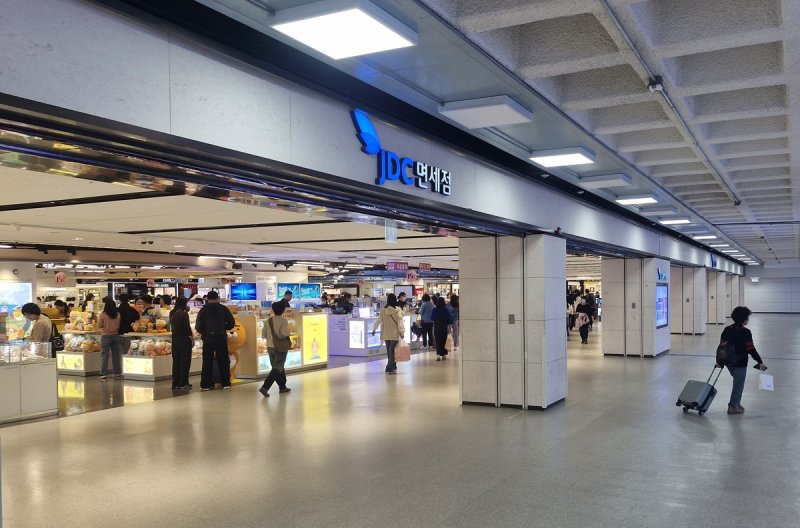
The recovery in the domestic tourism market remains limited this year as well. According to the Jeju Special Self-Governing Province Tourism Association, 10,475,270 tourists visited Jeju from January through September this year, up 3.0% from the same period a year earlier. The number of foreign tourists rose 14.5%, but the increase among domestic tourists was only 0.7%. In particular, domestic tourist numbers in September fell 9.7% from the same month a year earlier.
The JDC designated duty-free shop provides tax-free shopping to Korean and foreign visitors traveling from Jeju to other parts of the country. Its operating model differs from that of regular departure-area duty-free shops, which primarily serve travelers leaving the country for overseas destinations.
Restoring the competitiveness of the JDC duty-free shop is also directly linked to securing funding for Jeju Free International City development projects.
The proceeds from the JDC designated duty-free shop, which opened in December 2002, are used to fund the development of Jeju Free International City. The shop is a key source of revenue supporting major development projects, including the Jeju Advanced Science and Technology Complex, English Education City and Jeju Shinhwa Historical Park. If the decline in duty-free shop sales continues over the long term, it could put greater pressure on JDC’s ability to fund its own projects.
JDC is calling for policy changes, including expanding the range of items for sale and abolishing the annual limit on the number of visits. It is also working to identify distinctive brands and products and develop sales strategies. On the 26th, it posted its 10th call this year for proposals from partner companies and brands seeking to become new tenants at the designated duty-free shop, among other efforts to broaden its product range.
The task ahead is to develop concrete cooperative projects that can improve the duty-free shop’s profitability, ensure stable business operations for tenant companies and improve workers’ conditions.
JDC Chairman Song Seok-eon said, "This agreement will be an important turning point in creating an ecosystem for shared growth between the JDC duty-free shop and its tenant companies and moving forward together." He added, "We will listen to the voices of people on the ground and continue to pursue effective programs for mutual growth."
[email protected] Jeong Yong-bok Reporter