“Customs Clearance Until 11 p.m., Next-Day Delivery”... CJ Logistics Targets the Sea Express Market [On the Scene]
- Input
- 2026-11-29 14:04:10
- Updated
- 2026-11-29 14:04:10
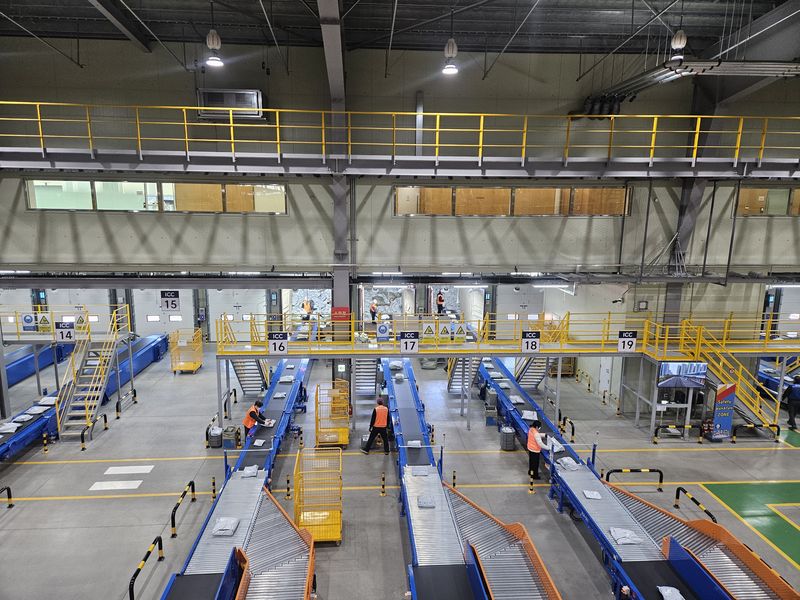
The CJ Logistics Aam Sea Express Center, visited on the 25th, is located in Incheon Aam Logistics Complex 2. Although overseas online shopping shipments surge around China’s Singles’ Day and the United States’ Black Friday, cargo moved smoothly along its designated routes. For cargo cleared normally, the time from arrival at the center to customs clearance is just three minutes.
The Aam Center has a total floor area of 29,090 square meters (about 8,800 pyeong), making it the largest privately operated express customs clearance facility in South Korea. It can process up to 180,000 shipments a day. Customs clearance, automated sorting and dispatch to the domestic parcel delivery network are all handled in one place.
Kim Gap-seop, head of CJ Logistics’ CBE Operations Team 2, said, “Cargo with standardized dimensions—50 cm in height and a combined measurement of no more than 120 cm for its three sides—is handled without human intervention through dispatch,” adding, “We have automated the process except for some stages, including unloading.”
Unlike conventional express customs clearance facilities, which typically close around 6 p.m., the Aam Center can operate until 11 p.m. Cargo cleared late in the evening can be sent to a hub terminal that same day for delivery the following day. The center has 16 customs clearance lines and can process up to 180,000 shipments a day. About two months after opening, its current average daily throughput is around 60,000 shipments. CJ Logistics plans to raise throughput to between 80,000 and 100,000 shipments by December.
The center has improved not only its processing capacity but also the speed and accuracy of customs clearance. By automating the process from verifying cargo information and conducting X-ray inspections to sorting by customs clearance status, it can handle large volumes quickly while reducing the risk of inspections being missed.
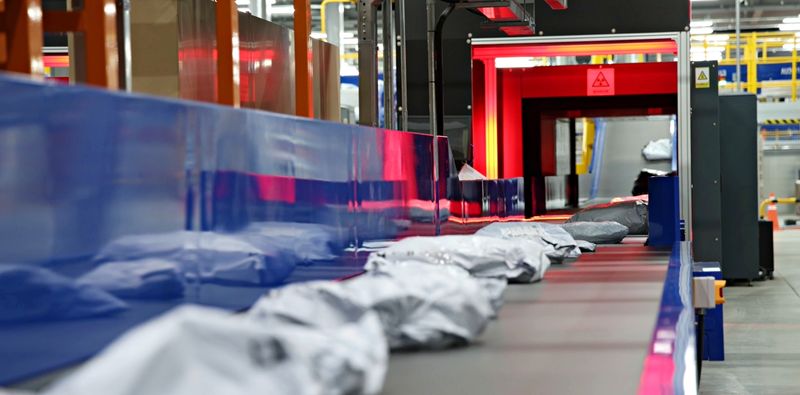
When cargo enters the customs clearance area, barcode readers capture product information and X-ray equipment checks the contents of each box. Depending on the inspection results, cargo is sent to a cross-belt sorter, an automated sorting system. Items requiring additional inspection are routed through the red lane, while those needing customs information verified are sent through the gray lane. Only cargo that has cleared customs normally proceeds through the blue lane to the domestic delivery area.
The center has also introduced a four-stage barcode scanning system, checking barcodes at key points to prevent cargo that has not completed customs clearance from moving on to delivery. The system allows the cargo’s route and customs status to be checked at each stage, which the company says has improved both processing speed and accuracy.
Jang Young-ho, head of CJ Logistics’ Global Division 1, said, “All e-commerce cargo is required to undergo visual inspection by customs,” adding, “As cargo has recently become more diverse and complex, including firearms and narcotics, we are upgrading our system to provide the underlying data as accurately and smoothly as possible.”
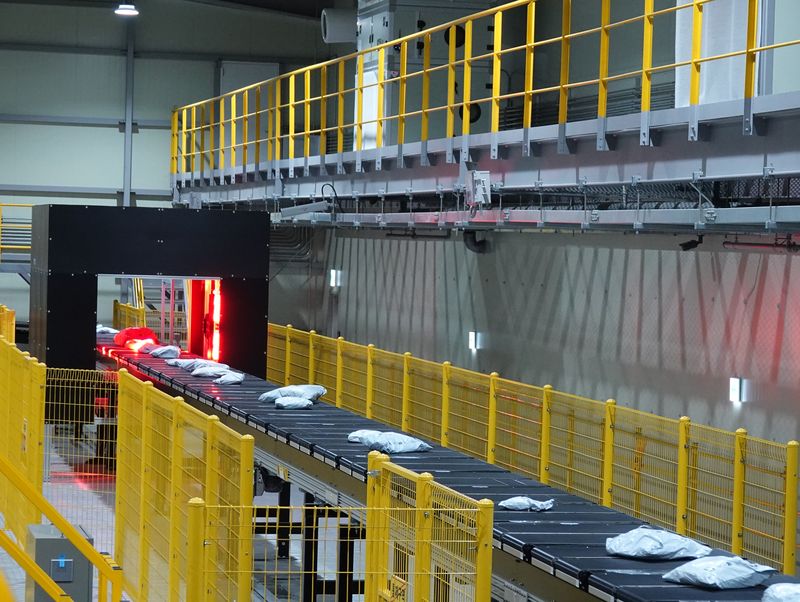
Previously, goods that had cleared customs had to be moved to hub terminals such as Gonjiam and then sorted again by destination. The Aam Center has brought that process forward by pre-sorting cargo for 270 sub-terminals nationwide and dispatching goods bound for the same area together in a single sack.
After arriving at a hub terminal, this pre-sorted cargo can be loaded directly onto trucks bound for regional terminals without being sorted again item by item. CJ Logistics says that by connecting its sea express service and domestic parcel network into a single logistics system, it can deliver goods shipped from China to consumers in South Korea in around three days.
The Aam Center plans to expand beyond overseas direct purchases to include reverse direct sales—sending Korean goods overseas—as well as its GDC business, which involves reshipping goods brought in from overseas to multiple countries.
Jang said, “We have set aside about 8,000 square meters (2,400 pyeong) at the Aam Center for reverse direct sales container operations and fulfillment,” adding, “We have completed the licensing and approval procedures for the GDC and reverse direct sales businesses, and expect to be able to launch them in earnest starting next March.”
[email protected] Lee Ju-mi Reporter