AI Transforms U.S. Black Friday ... Online Sales Surge 11% to Record High Despite High Inflation
- Input
- 2026-11-29 15:43:51
- Updated
- 2026-11-29 15:43:51
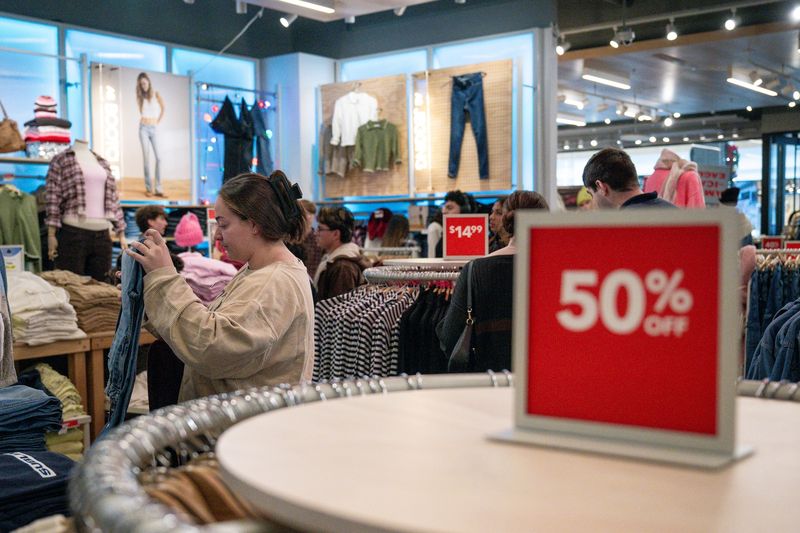
[Financial News] Artificial intelligence (AI) has changed Black Friday, the biggest shopping event in the United States. Online sales rose by double digits, opening consumers’ wallets despite high prices.
Despite high prices, online spending hit a record high. As more consumers searched for price comparisons and discounts, AI-powered shopping and buy now, pay later services also gained popularity. Visits to brick-and-mortar stores declined, but spending rose amid solid consumer demand this year.
On the 28th (local time), the New York Post and other outlets reported that Adobe Analytics’ tally showed U.S. online spending on Black Friday the previous day rose 11% from a year earlier to $13.1 billion (17.5081 trillion won), a record high. That topped the initial forecast of $12.9 billion. By contrast, visits to U.S. retail stores totaled about 930 million, down 2.2% year over year.
According to Mastercard’s preliminary tally, U.S. retail sales on Black Friday, excluding autos and gasoline, rose 5.8% from a year earlier.
Sales at brick-and-mortar stores also rose 3.8%, the highest growth rate since 2022. Sales of electronics and software climbed 7.9% from a year earlier, showing strong performance. Mastercard’s figures are nominal and have not been adjusted for inflation.
AI: a new shopping tool ... Online sales during Cyber Week (24–30) expected to rise 13%
The standout change in this year’s Black Friday shopping was the use of AI. Traffic driven to U.S. retailers’ websites by AI tools doubled from Black Friday last year. Consumers using AI were also more likely to actually purchase products.
Consumers who accessed retailers’ websites through AI had a purchase conversion rate 68% higher than those who arrived through other channels. The gap, which stood at 38% last year, widened by 30 percentage points in a year.
AI is becoming a new shopping tool for consumers who, amid high prices, have to scrutinize discounts carefully.
Salesforce, a market research firm, forecast that global online sales during this year’s Cyber Week (24–30) would reach $357 billion. Of that total, sales influenced by AI models and agents were expected to amount to $75.8 billion, up 13% from last year.
Online shopping momentum is expected to continue through Cyber Monday on the upcoming 30th, just after the Thanksgiving Day holiday. Adobe forecast that U.S. online sales on Cyber Monday would hit a record $15.1 billion, up 6.2% from a year earlier.
Use of buy now, pay later (BNPL) services, which let shoppers buy products upfront and pay for them in installments later, is also expected to increase.
Online payments made through BNPL on Cyber Monday were forecast to reach $1.09 billion, up 5.3% from last year. That would mark the second consecutive year the total exceeded $1 billion.
U.S. consumer confidence at a two-year high ... the ‘K-shaped economy’ trend also deepens
Total BNPL payments during this year’s November–December holiday shopping season are expected to reach $21.3 billion, up 6.6% from last year.
Adobe forecast that U.S. online sales over the five days from Thanksgiving Day through Cyber Monday would total $47.5 billion, up 7.4% from last year.
Adobe said consumers also took advantage of sales to stock up on household essentials, including cleaning supplies, pet products and personal care items. At Walmart Inc., affordable household goods such as $5 pillows and discounted electric cookers were popular.
Consumer-related indicators have been improving. Major U.S. retailers such as Walmart Inc. and Target recently reported results that beat market expectations, while the consumer confidence index has climbed to its highest level in about two years, buoyed in part by a stable labor market.
However, with high prices still weighing on household finances, consumers’ tendency to spend selectively stood out.
Michelle Meyer, chief economist at the Mastercard Economics Institute, said, “It shows that consumers still have the ability and willingness to spend,” while noting, “As they have all year, consumers are spending selectively.”
Bloomberg reported that the ‘K-shaped economy’ trend is deepening as the gap in spending power between high-income households and middle- and low-income households widens, prompting retailers to focus on low-priced goods and sales.
[email protected] Lee Seok-woo, International Affairs Correspondent Reporter