‘Real Estate Developer’ Steps In as Homeplus’s Relief Pitcher: Can Development Profits Provide a Way Out? [fn Market Watch]
- Input
- 2026-11-29 13:03:23
- Updated
- 2026-11-29 13:03:23
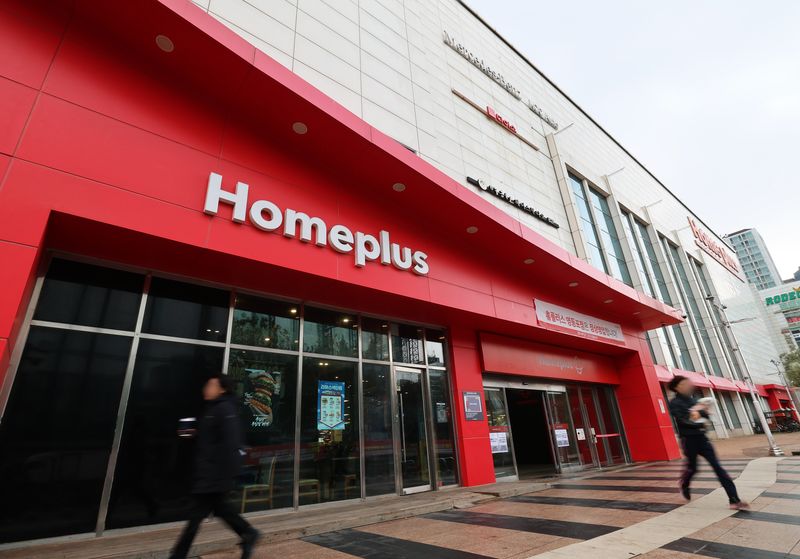
[Financial News] The acquisition of Homeplus, which is undergoing corporate rehabilitation proceedings, has entered a new phase. A real estate developer has joined forces with a strategic investor (SI) interested in the retail business and entered the bidding, drawing attention to whether the development potential of Homeplus’s real estate assets can provide a way to turn around the retail business. However, as it will take considerable time to realize development profits, securing liquidity after the acquisition and establishing a structure for consortium members to recoup their investments are expected to be key factors in whether the deal goes through.
According to investment banking (IB) industry sources on the 29th, real estate developer The Wise Group is reportedly exploring an acquisition of Homeplus by forming a consortium with an SI.
An IB industry source said, “I understand that a consortium led by The Wise Group submitted a letter of intent (LOI) to Samil PricewaterhouseCoopers, the lead manager for the sale of Homeplus, on the 26th.”
The Wise Group, which has stepped in as a potential rescuer for Homeplus, is a real estate development firm led by Chairman Shin Cheol-seung. Since beginning development of Seoul Forest A Tower, a knowledge industry center in Seongsu-dong, Seoul, in 2014, it has expanded its business by pursuing mixed-use residential development projects with Hyundai Engineering and Construction in Daejeon’s Gayang-dong, Seonhwa-dong and Yucheon-dong, among other areas.
One point to watch in this acquisition bid is the combination of a company with real estate development capabilities and a retail SI. This could make it possible to pursue an acquisition strategy that enhances the value of real estate assets alongside efforts to improve the profitability of the existing retail business, rather than relying solely on the latter.
If the acquisition goes ahead, differentiated strategies for using the assets could be considered based on each store’s location, development potential and operating profitability. Stores with high development value could have their asset value increased through mixed-use development, for example, while stores with strong retail competitiveness could continue operating as retail outlets.
The key issue going forward, however, is the time lag between cash flows from real estate development and the retail business. Real estate development projects recoup investment through a process involving permits and approvals, project financing (PF), construction starts and property sales. By contrast, restoring the retail business requires substantial working capital to be injected immediately for inventory purchases, labor costs and other expenses.
That means the company will need enough financial resources to sustain the retail business until real estate development profits are realized. The scope for reinvesting profits generated during development into the retail business may also vary depending on the collateral rights attached to each asset and the existing debt structure.
Aligning the interests of consortium members will also be a factor. The economics of the acquisition could vary depending on how the distribution of development profits, the burden of additional capital contributions and the timing of investment recovery (exit) are structured.
Homeplus has been pursuing the sale of its remaining businesses since the court approved its rehabilitation plan last September. It had initially planned to accept letters of intent through the end of October, but switched to accepting them on an ongoing basis after struggling to secure bidders. Since the 27th, it has temporarily suspended operations at 67 hypermarket stores nationwide and at its headquarters. The longer the suspension continues, the greater the costs of restoring the retail business may become. Challenges that cannot be resolved through real estate value alone also remain, including restoring business relationships with suppliers and preventing customers from leaving.
Meanwhile, the consortium has not disclosed its specific equity contribution amount, desired acquisition price or plans for securing acquisition financing. The bidder’s financing capacity will need to be verified, followed by due diligence and discussions with the court and creditors, so it is too early to predict whether a deal will actually be completed.
Another IB industry source noted, “Leveraging Homeplus’s real estate development potential could be a different approach from the existing turnaround strategy centered on the retail business. The key is to establish a financial structure that can convert future development profits into current liquidity and secure the funds needed to restore the retail business.”
[email protected] Kim Gyeong-a Reporter