The 'Wanderer of the World' Who Circled the Globe 32 Times ... Reaffirming Kim Chan-sam's Spirit
- Input
- 2026-11-29 13:50:57
- Updated
- 2026-11-29 14:13:05
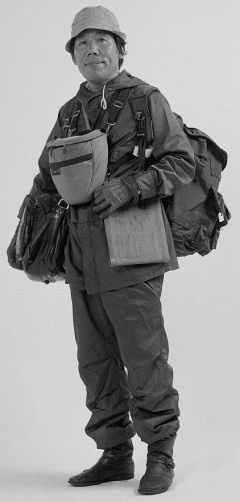
At a time when overseas travel was not freely accessible, Kim Chan-sam (1926–2003), the “Wanderer of the World,” traveled across around 160 countries with just one backpack. A gathering was held to revisit his pioneering spirit and open-minded worldview—he is regarded as South Korea’s first world traveler—and pass them on to future generations.
The Kim Chan-sam Memorial Project Association and Incheon YMCA held a symposium of experts marking the 100th anniversary of his birth and a traveler talk concert on the 27th at Haneulnuri Center on Yeongjong Island, under the theme “Kim Chan-sam’s Global Spirit: Opening the Next 100 Years.” Following an academic forum on world travelers held in Seoul in May and a ceremony marking the 100th anniversary of his birth at the Yeongjong History Museum in Incheon in June, the event examined the contemporary value of his legacy and explored ways to advance global citizenship education and global cultural tourism.
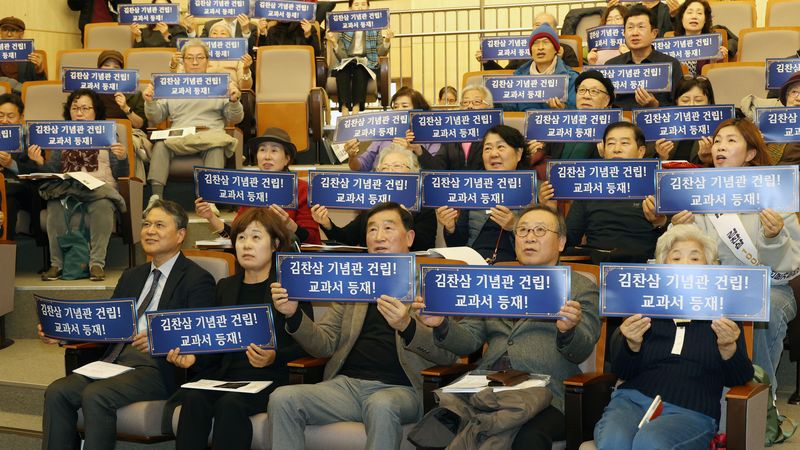
Lee Hee-soo, professor emeritus in the Department of Cultural Anthropology at Hanyang University, delivered a keynote address titled “Kim Chan-sam at 100: Global Spirit and Inclusion in Textbooks,” examining the historical and humanistic significance of his travels for Korean society.
Citing the 18th-century “Grand Tour” undertaken by European intellectuals and the dispatch of overseas missions during Japan’s Meiji Restoration, Lee explained that directly experiencing and understanding the world had played an important role in the development of nations and societies.
He summarized Kim Chan-sam’s travel philosophy in four points: field-based empiricism that breaks down an abstract worldview; cultural relativism that does not rank civilizations; documentation and popularization that turn an individual’s experiences into a social asset; and a pioneering spirit that opens paths amid crises.
Lee stressed that in the age of artificial intelligence (AI), when people can easily become trapped by algorithms and preconceived notions, Kim Chan-sam’s life—spent setting foot in places himself and respecting other cultures—reminds us of the essence of genuine global competence.
He went on to propose including Kim Chan-sam’s travel philosophy in textbooks, saying that his commitment to a global community and respect for other cultures could form the foundation of global citizenship education.
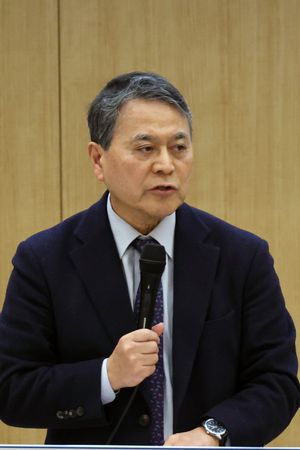
The need to build a memorial hall to preserve and make use of Kim Chan-sam’s extensive travel records was also raised. Yeongjong Island has a close connection to his life: it was where he established the World Travel Culture Center during his lifetime and shared his travel records and experiences with the public.
Cha Baek-seong, a bicycle world traveler and chairman of the Kim Chan-sam Memorial Project Association who received the 7th Kim Chan-sam Travel Award in June, stressed in his welcoming remarks, “We must now do more than remember the great path he forged; we must revive his spirit in our time and pass it on to future generations.”
Kim Hong-seop, chairman of the Incheon YMCA board, also said that concrete measures should be explored to build a memorial hall, promote global citizenship education, and advance Incheon’s global cultural tourism.
The expert discussion, moderated by Park Sang-mun, co-chair of the Open Citizen Education Forum, included Yoo Dong-hyun, former director of the Incheon Metropolitan City Museum; Choi Jeong-hak, head of the Hope Wings Network; Kim Jeom-nam, professor in the Department of Global Tourism at Howon University; and Jang Sang-hoon, director of the National Folk Museum of Korea. Jo Yeong-seon, a first-generation woman traveler and author, also joined the traveler talk concert alongside association chairman Cha Baek-seong.
Yu In-chon, former minister of culture, sports and tourism, and Jeon Seon-ik, vice chairman of Financial News, also honored Kim Chan-sam’s achievements and pioneering spirit in written congratulatory messages. Jeon said, “The teacher’s boundless curiosity and pioneering spirit are a valuable legacy of the Republic of Korea, which blazed new trails beyond the limits of its time,” and expressed hope that they would inspire future generations to pursue their dreams and take on challenges in a bigger world.
Born in Sincheon, Hwanghae Province, and raised in Incheon, Kim Chan-sam visited around 160 countries and around 1,000 cities over more than four decades, beginning with his first round-the-world trip in 1958. His total time spent traveling was 14 years, and the distance he covered amounted to 32 trips around the Earth. The complete collection “Kim Chan-sam’s World Travels,” published in 1983, sold at least 1 million copies at the time and served as a window through which Koreans could see a wider world.
[email protected] Sun-Min Jung Reporter