Oh Se-hoon: "Normalize the ROK-U.S. Alliance; Withdraw Kang Kum-sil's Nomination"
- Input
- 2026-11-29 12:01:06
- Updated
- 2026-11-29 12:01:06
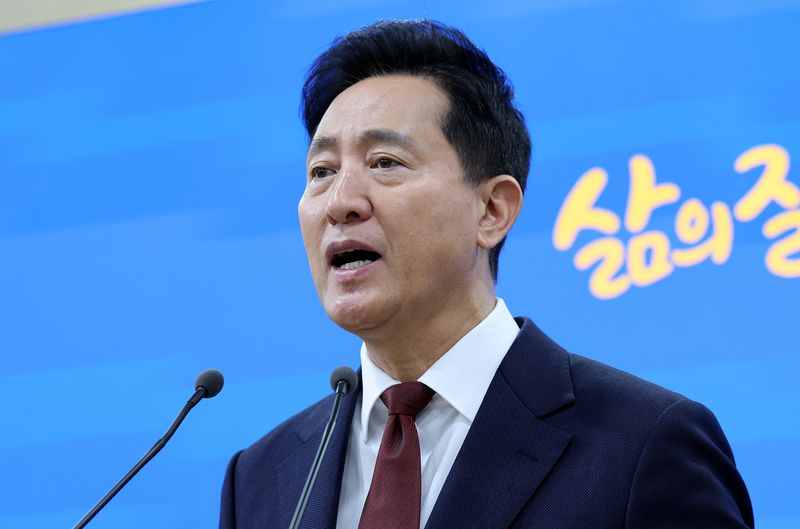
On the 29th, Oh posted on Facebook a message titled “Normalizing South Korea-U.S. Relations: The President Must Change First,” saying, “The starting point for normalizing the ROK-U.S. Alliance is a change in the president's security outlook and policy direction.”
Oh highlighted the need for security cooperation between South Korea and the U.S., citing North Korea's recent efforts to develop nuclear weapons and changes in the international situation surrounding the Korean Peninsula.
He said, “Kim Jong Un recently visited facilities producing nuclear materials, among other sites, and openly showed his determination to develop tactical nuclear weapons targeting South Korea,” calling it “an explicit threat to use nuclear weapons not merely as a means of maintaining his regime, but as a military tool that could actually be used on the Korean Peninsula.”
He added, “As the strategic alignment among North Korea, China and Russia grows stronger, it is impossible to know when or under what conditions talks between President Donald Trump and Kim Jong Un will resume.” He stressed, “The worst-case scenario—North Korea-U.S. talks proceeding while effectively tolerating North Korea's possession of nuclear weapons, with South Korea sidelined in the process and our core security interests not properly reflected—must never be allowed to happen.”
His point was that, with direct talks between North Korea and the U.S. potentially resuming, South Korea must strengthen strategic communication with the United States to avoid being excluded from key negotiations on security issues on the Korean Peninsula.
Oh also voiced criticism of the Lee Jae Myung administration's reshuffling of its diplomatic and security team.
He said, “This is a time when strategic communication and security cooperation between South Korea and the U.S. are more vital than ever. Yet the Lee Jae Myung administration has, in effect, allowed a serious rift in the ROK-U.S. Alliance to persist after causing it.”
In particular, he took issue with NIS chief nominee Kang Kum-sil's past China-related experience and views on security. He also expressed concern over President Lee's stated policy of reclaiming OPCON during his term.
He urged the president to “boldly withdraw the nomination of the NIS chief nominee embroiled in controversy over pro-China leanings, and make clear that the transfer of OPCON will be pursued in stages based on strong cooperation between South Korea and the U.S. and agreed-upon conditions, without being bound by the political goal of reclaiming it during the president's term.”
Oh said, “The transfer of OPCON is not a political event to reclaim sovereignty that was taken away,” adding, “Its essence lies in strengthening our practical defense capabilities.”
He added, “True self-reliant national defense is not about weakening the alliance, but about making the alliance's strength part of our own security capabilities.” He stressed, “The standard for judgment should not be the political timetable of the president's term, but whether we can maintain a robust combined defense posture between South Korea and the U.S. after the transfer and reliably deter North Korea's nuclear threat.”
The point is not to oppose the transfer of OPCON itself, but that practical military capabilities to counter North Korea's nuclear threat must be secured and a combined defense posture between South Korea and the U.S. maintained first.
Oh stressed that restoring trust in the ROK-U.S. Alliance requires direct action by the president, beyond replacing the diplomatic and security team.
He added, “Demonstrating a firm outlook on security and acting responsibly as a national leader—that is the way to regain the alliance's trust and ease the public's security concerns.”
[email protected] Lee Seol-young Reporter