Compensation for Land Crossed by Transmission Lines... Supreme Court: Sectional Superficies Value Must Be Reassessed as of Expropriation
- Input
- 2026-11-29 11:18:31
- Updated
- 2026-11-29 11:18:31
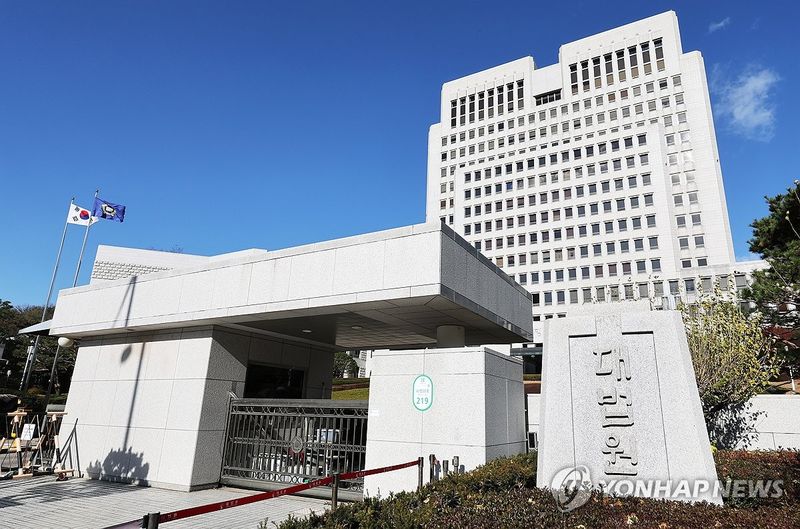
According to legal circles on the 29th, the Supreme Court’s Second Division, with Justice Oh Kyung-mi as the reporting justice, overturned a lower court ruling in favor of the plaintiffs and remanded the case to Suwon High Court. The decision, issued on the 30th of last month, came in the final appeal of a compensation lawsuit brought by two landowners, including A, against Korea Land and Housing Corporation (LH), Gyeonggi Province, Gyeonggi Housing and Urban Development Corporation, and Hanam Urban Corporation.
A and the other landowner each held a 2/9 share in a 2,049-square-meter parcel in Hanam City, Gyeonggi Province. In December 2018, a sectional superficies was established on the land in the name of Korea Electric Power Corporation for the construction and ownership of transmission lines and other electrical installations. The total rent was 102,470,800 won.
In March 2022, the Central Land Tribunal issued a ruling to expropriate their shares for 307,654,290 won each for a public housing project. In October of the same year, it increased the amount to 319,639,370 won each in a ruling on their objections. A and the other landowner filed suit seeking more compensation.
Compensation for land subject to a sectional superficies is calculated by subtracting the value of the superficies from the value of the land without the right. The higher the value assigned to the sectional superficies, the less compensation the owners receive. A and the other landowner argued that the rent specified in the agreement establishing the right should be used as the standard, while the project operators argued for the three-dimensional-use restriction rate.
There were two issues. First, when valuing a non-transferable sectional superficies for a transmission line, must the “right-establishment contract standard” be the only method used, or can the “land price differential standard,” which applies the three-dimensional-use restriction rate, also be used? Second, if the contract standard is used, must the rent set when the right was established be adjusted to the valuation date?
On December 11, 2024, the Administrative Division 4 of Suwon District Court, the court of first instance, presided over by Judge Lim Su-yeon, ordered the project operators to jointly pay A and the other landowner 21,856,010 won each. It valued the sectional superficies at 22,771,280 won, or 2/9 of the total rent at the time the right was established. On November 26 last year, the Administrative Division 3 of Suwon High Court, the appellate court, presided over by Judge Lim Sang-gi, also dismissed the appeal. It reasoned that the three-dimensional-use restriction rate method is used to calculate fees when land is “used,” and was therefore difficult to regard as a valuation method when land is “acquired.”
The Supreme Court ruled differently on both issues. The court said, “It is reasonable to hold that one may choose, between the ‘land price differential standard based on whether the right in question exists’ and the ‘right-establishment contract standard,’ whichever standard appropriately reflects the value of the sectional superficies.” It reaffirmed the legal principle set out in a ruling last October.
The court also held that the rent could not be used unchanged. Because compensation for land acquired through an expropriation ruling must be calculated based on its value at the time of that ruling, even under the contract standard, the lump-sum rent must be adjusted to the valuation date, taking into account factors such as changes in land prices and producer price inflation.
The court ruled that the lower court had misunderstood the legal principles on valuation methods by treating the lump-sum rent set when the right-establishment agreement was made as the value of the sectional superficies without adjustment.
[email protected] Kim Dong-gyu Reporter