‘Helicobacter pylori’ Must Be Eliminated to Ensure Stomach Health
- Input
- 2026-11-29 10:03:45
- Updated
- 2026-11-29 10:08:20
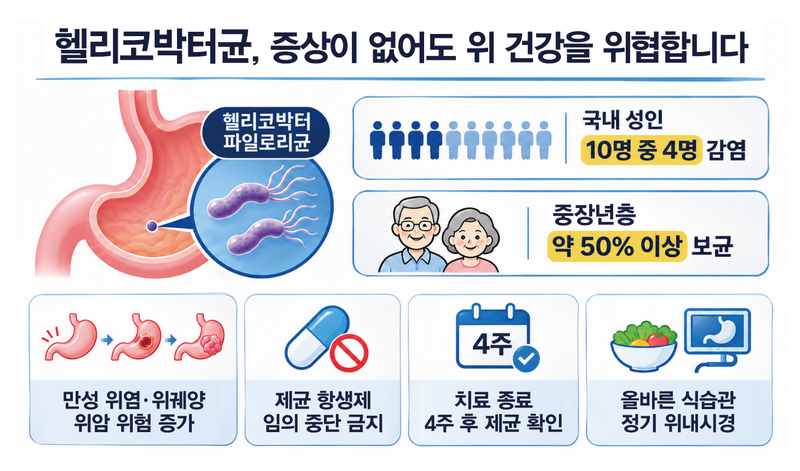
[Financial News] Even in the highly acidic environment of the stomach, one bacterium survives tenaciously and can cause chronic gastritis, peptic ulcers and even stomach cancer.
It is the bacterium Helicobacter pylori.
Although infection rates in South Korea have declined compared with the past thanks to improved hygiene and eating habits, nearly half of middle-aged and older adults still carry the bacterium, making systematic management necessary.
On the 29th, with input from Hwang Jong-ho, head of gastroenterology at On Hospital in Busan, we look at the risks posed by Helicobacter pylori, proper eradication treatment and ways to prevent infection in everyday life.
Helicobacter pylori is a spiral-shaped bacterium that lives in the mucosal layer of the human stomach.
Most bacteria die when exposed to strong stomach acid, but this bacterium secretes urease, which breaks down nearby urea into ammonia and thereby neutralizes the acid, allowing it to burrow deep into the stomach lining.
According to epidemiological surveys by the Korean College of Helicobacter and Upper Gastrointestinal Research and others, the prevalence of Helicobacter pylori among adults in South Korea reached about 67% in the late 1990s, but has gradually declined to around 40% of the adult population in recent years.
However, there are clear differences by age group. The rate is 10–20% among people in their teens and twenties, while about 50% or more of people in their 40s through their 60s and older are reported to carry the bacterium. This is because many people are infected in childhood, for example by sharing food within the family, and the bacterium remains dormant in the stomach for decades.
Hwang Jong-ho, head of gastroenterology at On Hospital in Busan, warned, “Even when people are infected with Helicobacter pylori, many have no obvious symptoms right away, so it is easy to leave the infection untreated.” He added, “But if the untreated bacterium causes persistent inflammation of the stomach lining, it can increase the risk of stomach cancer severalfold or more, through conditions such as atrophic gastritis and intestinal metaplasia.”
The discovery of Helicobacter pylori does not mean that every infected person must take medication. The medical community recommends eradication treatment mainly for those who are clearly likely to benefit from it.
Common candidates for eradication treatment include: patients with peptic ulcers, such as gastric or duodenal ulcers (including those with a history of ulcer scarring); patients who have undergone endoscopic resection for early stomach cancer or a gastric adenoma; patients with low-grade gastric MALT lymphoma; and people with a first-degree family history of stomach cancer.
In addition, eradication treatment should be actively considered, in consultation with a specialist, for patients with atrophic gastritis, in which chronic inflammation has thinned the stomach lining, or intestinal metaplasia, as well as for those expected to take aspirin or anti-inflammatory painkillers long term.
Eradication treatment typically involves taking a potent stomach-acid suppressant (a PPI or P-CAB) together with two or three antibiotics for 7 to 14 days. In light of rising antibiotic resistance rates in South Korea, another increasingly used strategy is to test for antibiotic resistance genes (PCR) during the endoscopic biopsy stage and then select medication tailored to the patient.
Hwang Jong-ho identified patients’ medication adherence as the most important factor in the treatment process.
Hwang stressed, “Patients may have to take many pills, and mild side effects such as a bitter taste in the mouth, loose stools or heartburn may occur. But if patients stop taking their medication on their own, the bacteria will not be eliminated and antibiotic resistance will only increase, making even second- and third-line salvage treatments more difficult.”
Stool may turn black when a prescription contains bismuth or metronidazole, but this is a normal reaction to the medication and is no cause for alarm. However, alcohol during treatment can cause severe vomiting and facial flushing, among other effects, and reduce the medication’s efficacy, so patients must abstain. After finishing the medication, patients should take a urea breath test (UBT) at least four weeks later to confirm that the bacterium has been completely eradicated. For an accurate result, they should avoid acid suppressants and antibiotics for two weeks before the test.
Even after successful eradication, the risk of reinfection cannot be ruled out unless good hygiene and eating habits are maintained. Helicobacter pylori is transmitted mainly through saliva or contaminated utensils, so it is advisable to stop sharing soup or stew from the same pot and instead use individual side plates and a communal ladle. If a household member has symptoms of gastrointestinal illness, getting screened together can also help prevent reinfection.
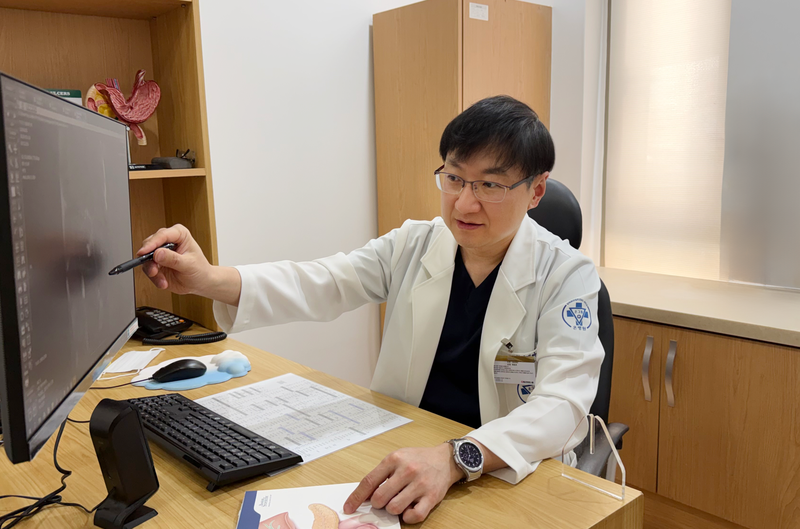
Hwang Jong-ho advised, “Salty and spicy foods, charred foods and processed meats damage the stomach lining’s protective barrier, encouraging bacterial colonization and the development of stomach cancer.” He added, “Eat plenty of cruciferous vegetables such as broccoli and cabbage, as well as fresh fruit, quit smoking and limit alcohol. Even after successful eradication, if atrophic gastritis or similar conditions are present, continue regular gastroscopic screening every one to two years.”
[email protected] Byun Ok-hwan Reporter