Retail Investors Poured in 89 Trillion Won Around the Peak... 'Buying Firepower' Shrinks as KOSPI Nearly Halves
- Input
- 2026-11-29 09:20:19
- Updated
- 2026-11-29 09:20:19
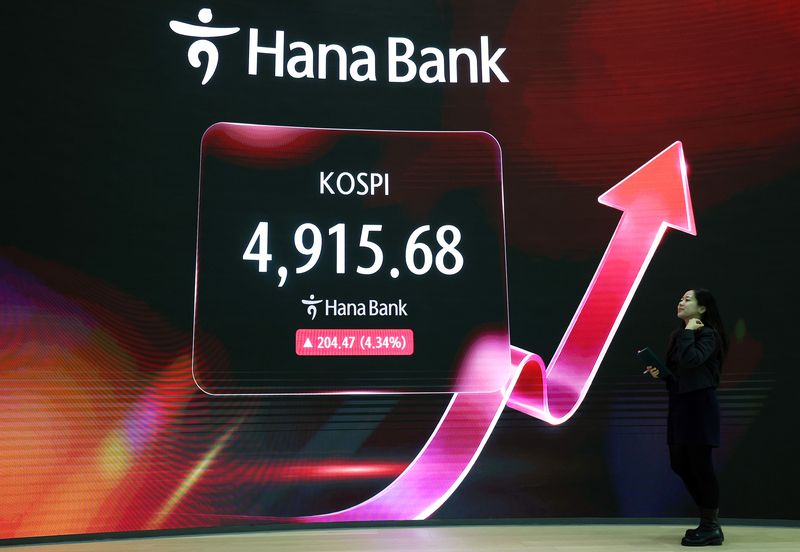
[Financial News] With KOSPI down 46% from its June peak, analysts say individual investors used up a substantial portion of the funds they could have used to buy during a downturn while the market was rising. In past sharp market declines, individual investors’ buying was strongest after share prices turned downward, but this year buying was concentrated late in the rally. With less capacity for bargain-hunting at year-end, selling by investors seeking to reduce their losses could weigh on a rebound if stock prices rise next year.
According to the Korea Exchange on the 29th, individual investors made net purchases worth 52.9 trillion won in the KOSPI Market from May 4 to June 19, before KOSPI reached its June peak. They bought another 36.1 trillion won worth from June 22 to July 7, just after the peak. About 60% of the 89 trillion won in net purchases over a little more than two months came before the peak.
In 2002–2003 and 2008, when KOSPI fell 40% or more from its peak, individual investors’ net buying was strongest late in the decline; in 2018–2020, it was strongest early in the decline. This year, individual investors’ net purchases late in the rally amounted to 0.831% of the average market capitalization over the corresponding period, exceeding the peaks in all three previous sharp market declines. During the middle of the subsequent downturn, they sold more shares than they bought. They returned to net buying late in the decline, but the amount was just 0.046% of the average market capitalization over the corresponding period.
“Because the sharp rise in KOSPI appears to have brought forward individual investors’ buying, it seems to have substantially depleted even the buying capacity they could have used during a downturn,” said Park Yuaan, an analyst at KB Securities.
Expectations for the government’s policies to stimulate the stock market may also have brought forward individual investors’ buying. During his presidential campaign, President Lee Jae Myung pledged to bring “KOSPI to 5,000” and revealed his stock account, signaling confidence in the domestic stock market. After his government took office, efforts to strengthen shareholder rights and improve corporate governance followed.
Foreign investors have historically tended to be net sellers at year-end and net buyers early in the year. From 2011 to 2025, foreign investors’ net buying as a share of market capitalization averaged -0.4% in November and -0.3% in December, then rose to 0.6% in January. If this pattern continues, the key questions will be how much of foreign investors’ selling individual investors absorb at year-end, and how much of individual investors’ selling the returning foreign buying absorbs early in the year.
KB Securities estimated that shares individual investors bought from April 9 last year through the 25th and still hold had a purchase value of 103.5 trillion won. If KOSPI reaches the 5,200 level, the average loss rate on holdings worth 25.4 trillion won among those shares would fall to 10% or less.
“Even recovering some of their losses could give investors a reason to sell,” the analyst said, identifying the 5,200 level, followed by 6,000 and 7,100–7,400, as levels where selling pressure could intensify.
[email protected] Choi Doo-sun Reporter