If Assessed Values Rise Next Year, Holding Taxes Could Reach Twice Current Levels; One Bailey’s Holding Tax Estimated at 45.44 Million Won
- Input
- 2026-11-29 08:38:07
- Updated
- 2026-11-29 08:38:07
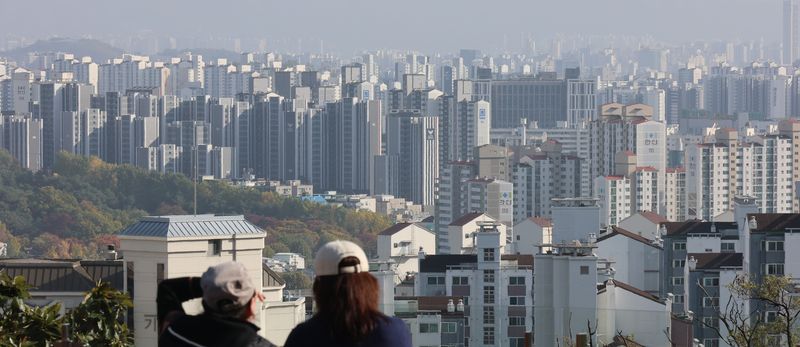
[Financial News] If officially assessed property values rise next year at the same rate as this year, the holding tax burden for owners of single homes in major Seoul apartment complexes is estimated to increase by up to around twofold, even if the government’s plan to ease the comprehensive real estate tax passes the National Assembly unchanged.
There are concerns that rising assessed values, particularly in non-Gangnam areas of Seoul and southern Gyeonggi Province, where home prices have risen sharply this year, could offset the benefits of easing the comprehensive real estate tax for owner-occupiers of a single home.
On the 29th, according to a simulation by Sellymon, a real estate tax calculation service, an owner-occupier of a single home in Raemian One Bailey in Banpo-dong, Seocho-gu, Seoul, with an exclusive floor area of 84 square meters is estimated to pay 45.44 million won in holding taxes next year, up 17.335 million won (61.7%) from this year’s 28.105 million won.
The figures were calculated for property tax and comprehensive real estate tax under the government’s tax reform proposal, which is pending in the National Assembly. The calculation assumes that assessed values rise next year at this year’s rate, that the home is owner-occupied and held under a single name, and that no tax credits apply.
If One Bailey’s assessed value rises by the same rate as this year (33%), its property tax would increase from 9.384 million won to 10.222 million won, while its comprehensive real estate tax would jump from 18.722 million won to 35.218 million won. The comprehensive real estate tax accounts for 95% of the increase in holding taxes.
At the same 84-square-meter size, holding taxes for Acro River Park in Banpo-dong would rise 50.2%, from 24.074 million won to 36.167 million won. The calculation shows an increase of 63.0%, from 1.449 million won to 21.918 million won, for an 82.51-square-meter unit in Jamsil Jugong Apartment Complex 5 in Songpa District, and an increase of 69.1%, from 10.702 million won to 18.098 million won, for an 84-square-meter unit in Eunma Apartments in Daechi-dong, Gangnam District.
Among the properties analyzed, Acro River Heim in Heukseok-dong, Dongjak District, had the highest rate of increase. After its assessed value rose 43.9% this year, a rise of the same magnitude next year would increase its holding taxes by 95.3%, from 5.746 million won to 11.222 million won—nearly doubling the burden.
In the so-called “Mayongseong” area, holding taxes rose at the highest rates in Raemian Oksu Riverzen in Seongdong District (71.2%), Mapo Raemian Prugio in Mapo District (58.1%), and Hangaram in Yongsan District (54.9%), in that order. Holding taxes for Yeouido Sibeom in Yeongdeungpo District (79.24 square meters) would also rise by 65.6%.
For an owner of three homes who lives in Acro River Park and owns one unit each in Jamsil Ricenz and Mapo Raemian Prugio, the total holding taxes on the three apartments, each measuring 84 square meters, would increase by around 60 million won (50%), from 119.967 million won to 180 million won.
The Ministry of Finance and Economy said, “If housing prices stabilize going forward and the government’s proposal for the comprehensive real estate tax is passed, the tax burden is expected to ease, including through the reduction in the burden on owner-occupiers of a single home.”
The ministry said that if the taxable threshold for owners of a single home is raised from an assessed value of 1.2 billion won to 1.4 billion won, people would not have to pay the comprehensive real estate tax on homes with a market value of up to 2 billion won, regardless of whether they live in them.
However, if assessed values rise as they did this year, the number of apartments exceeding the new taxable threshold of 1.4 billion won could increase substantially.
An owner-occupier of an 84-square-meter unit in Mokdong Hillstate in Yangcheon District received a comprehensive real estate tax bill for the first time this year, amounting to 449,000 won, after the assessed value rose 23% and exceeded the 1.2 billion won threshold, reaching 1.377 billion won.
If the assessed value remains unchanged, the comprehensive real estate tax would be zero under the government’s proposal. But if it rises at this year’s rate, it would exceed 1.4 billion won, reaching 1.686 billion won, and the tax would double to 901,000 won even if the owner lives in the home.
There are concerns that assessed values could rise even more steeply than this year, particularly in non-Gangnam areas of Seoul and southern Gyeonggi Province, where home prices have surged, leading to a heavier comprehensive real estate tax burden.
According to the Korea Real Estate Board’s weekly survey, apartment sale prices have fallen so far this year, through the third week of this month, in Gangnam District, Seoul (-2.57%), and Seocho-gu (-0.80%).
By contrast, Seongbuk-gu (17.76%), Seodaemun District (15.03%), Guro District (13.80%), Gangseo-gu (13.73%), Dongdaemun District (13.53%), Gwanak District (13.30%), and Nowon District (13.24%) were among the top-ranking areas. These were lower- and mid-ranking districts whose annual price increases last year reached no more than the 5% range.
Prices also rose sharply in Dongtan District, Hwaseong City, Gyeonggi Province (23.01%); Yeongtong-gu, Suwon-si (19.29%); Gwangmyeong-si (19.08%); and Dongan District, Anyang-si (18.86%).
[email protected] Joo Won-gyu Reporter