"Oil Supply Outlook Is Overly Optimistic," Warnings Mount
- Input
- 2026-11-29 02:55:47
- Updated
- 2026-11-29 02:55:47
"If pigs had wings, they'd fly."
David Goldwyn, who served as the State Department's special envoy for international energy affairs during the administration of former U.S. President Barack Obama, recently used the line to mock optimism about an oil-market surplus. The point was that optimistic forecasts are being made on the basis of an impossible premise.
CNBC reported on the 28th (local time) that experts' warnings that the outlook for the oil market is overly optimistic are mounting, as international oil prices have fallen sharply in November.
UBS also warned that a rebound in crude exports from the Gulf region should not be mistaken for a normalization of the market.
Oil Prices Plunge
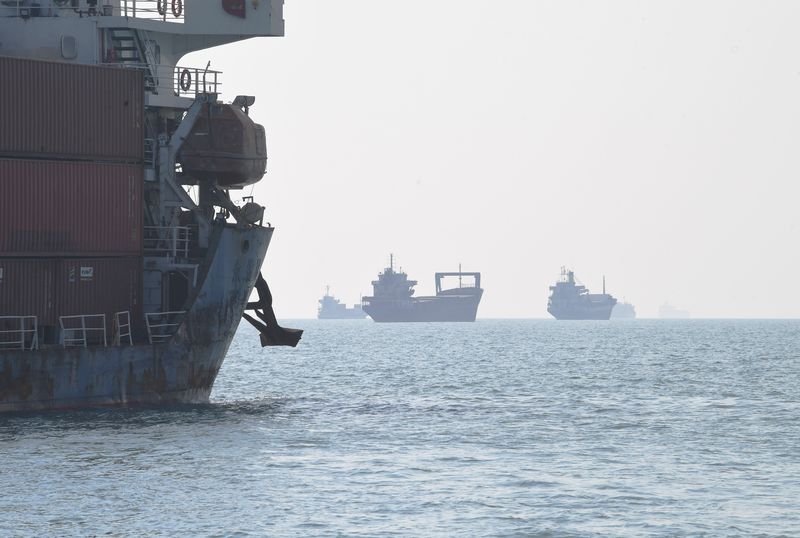
Crude prices have plunged in November. Despite Iran's blockade of the Strait of Hormuz, oil exports have continued by seizing openings, and the oil market has shifted into oversupply for the first time since the Iran war began on February 28.
Front-month Brent crude, the benchmark for international oil prices, hit $118 a barrel late last month, its highest level since the Iran war broke out, before plunging about 20%.
Over the same period, front-month West Texas Intermediate (WTI), the U.S. oil-price benchmark, also peaked at $104 a barrel before plunging about 21%.
On the 27th, Brent crude closed at $95.44 a barrel and WTI at $83.08.
Last month, markets were on edge over the possibility that the Iran war could escalate. U.S. President Donald Trump had warned that he would resume attacks on Iran after the November 3 midterm elections. But Trump has remained quiet since his ruling Republican Party suffered a crushing defeat in the election.
Selling Is Excessive
UBS market strategist Giovanni Staunovo noted in an analysis note that the sell-off in oil this month had been excessive in some respects. Staunovo said the market had "overly optimistic expectations about supply" and that "a rebound in exports from the Gulf region should not be mistaken for a normalization of the oil market."
The International Energy Agency (IEA), whose report that the oil market would return to a surplus for the first time since the war in the fourth quarter of this year triggered a sharp drop in prices, also has a more nuanced view. In its monthly Oil Market Report, the IEA said the forecast was based on the assumption that the recovery in Middle Eastern crude supply would continue, adding the caveat that "if attacks on ships continue and maritime security is undermined, the risk of a decline in supply remains."
Goldman Sachs forecasts an oversupply of 2 million barrels a day next year, while Kpler, a commodities and vessel-tracking firm, projects 3 million barrels a day. But the situation is far from straightforward.
Bob McNally, president of Rapidan Energy Group, said, "If the recovery in supply from the Arabian Gulf continues, the market will move into oversupply," but noted that the outlook would change if this key assumption were shaken.
He said the most likely scenario through the end of Trump's term was for oil prices to fluctuate widely, trading at $70–$80 a barrel during calm periods but quickly surpassing $100 if the conflict escalated. He added, "Supply disruptions are expected to widen further, and risks are expected to increase," and said, "If that happens, the projected oversupply next year will not materialize."
In a recent interview with Fox News, President Trump hinted at the possibility of resuming attacks on Iran next year.
Goldwyn, who served as a State Department special envoy during the Obama administration, said that if military conflict in the Middle East escalates, oil prices will inevitably enter a structural uptrend. This is because Iran would attack energy infrastructure, including oil export ports and refineries belonging to Gulf allies, in retaliation for U.S. airstrikes.
Attacks Continue
Although oil supplies through the Strait of Hormuz have been recovering, they are showing signs of shrinking again as Iran's offensive has intensified in recent weeks.
The number of ships struck in the Strait of Hormuz, which reached a postwar high of 35 last month, has remained high this month, with at least 20 incidents recorded.
According to Kpler, Middle Eastern crude exports averaged 12.8 million barrels a day in the week through the 25th, about 24% below prewar levels. Refined-product exports averaged 3.2 million barrels a day over the same period, about 49% below the prewar level of 6.3 million barrels a day.
Assuming a sustained oil surplus, JPMorgan expects Brent crude to fall to the upper $70s a barrel in the first half of next year and the $60s in the second half. Goldman Sachs is optimistic that Brent will average $88 a barrel next year, with WTI at $78.
Kpler warned, however, that the supply situation could be overturned at any time if Iran or Yemen's Houthi rebels attack the UAE's Fujairah oil export terminal or key energy infrastructure in Saudi Arabia, such as Ras Tanura, Yanbu or the East-West Crude Oil Pipeline.
[email protected] Song Gyeong-jae Reporter