Taiwan’s Polls Were Wrong, Too... Chiang Kai-shek’s Great-Grandson Crushes Anti-China Activist
- Input
- 2026-11-28 23:02:30
- Updated
- 2026-11-28 23:02:30
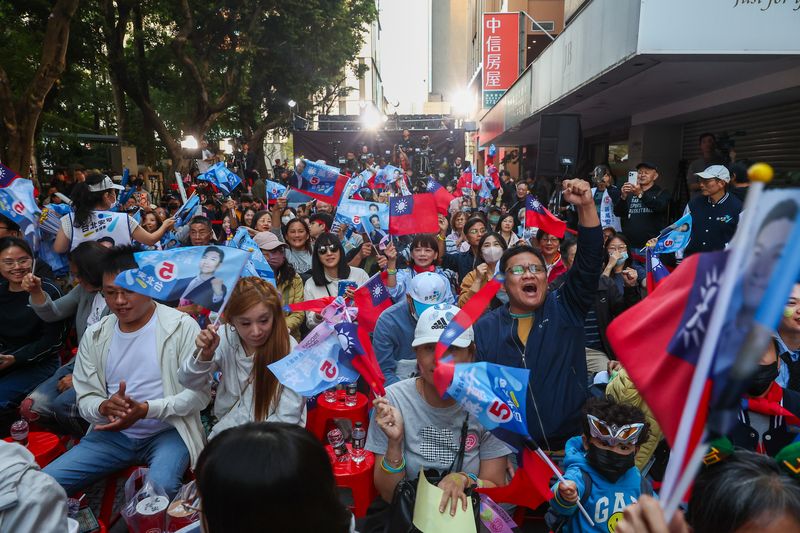
In the overall picture of the “nine-in-one” local elections, which chose leaders in 22 cities and counties, the KMT’s “defense of the capital region” and the DPP’s “reclaiming of central Taiwan” offset each other, resulting in a balance rather than a one-sided victory for either party, analysts said. In vote counts as of 9:23 p.m. (local time), the previous balance of 15 KMT seats and five DPP seats shifted: the KMT had secured victories in 11 areas, the DPP in nine and an independent candidate in one, while the remaining race in Hualien County was too close to call. The ruling and opposition parties thus ended up with an even share of local power.
In the six special municipalities, home to 70% of Taiwan’s population, the KMT and DPP each won three. The KMT held all three northern metropolitan areas, including Taipei, New Taipei, Taiwan’s most populous city, and Taoyuan, a gateway city. The DPP, seeking to rebound after its crushing defeat in the 2022 local elections, retook Taichung City, the biggest battleground in central Taiwan, and held on to its traditional southern strongholds of Tainan and Kaohsiung. It also expanded its reach by reclaiming six areas that had previously favored the KMT, including Changhua and Yilan.
Lai Ching-te, Taiwan’s president and DPP chairman, held a formal press conference at the DPP’s headquarters and said, “Elections always have winners and losers, but democracy is the eternal winner.”
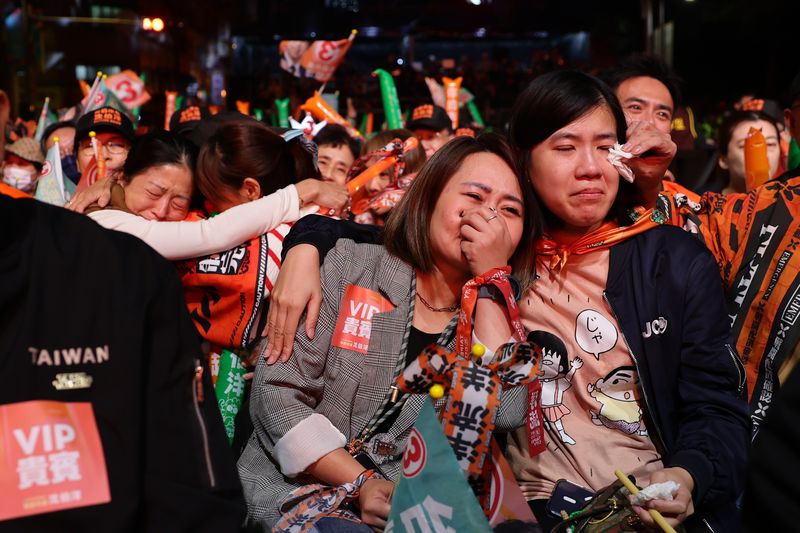
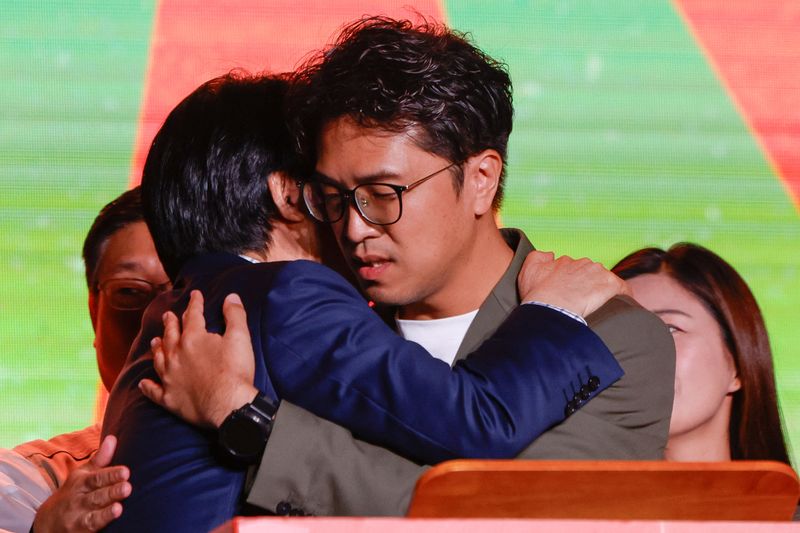
Shen declared defeat at around 7:47 p.m. Chiang Wan-an arrived at the vote-counting site at his campaign headquarters at around 8:10 p.m., his eyes welling with tears, and said, “Starting tomorrow, my city government team and I will be back at work and keep working hard.”
Major Taiwanese media cited the stronger-than-expected turnout among “shy KMT” voters as a key factor in Chiang’s victory. Liu Chia-wei, a professor at National Taipei University, told BBC Chinese that “the ‘Yangliu’ wave behind candidate Shen Po-yang was powerful online, but its ability to translate into actual votes was limited.” He added that “the ‘silent majority’ of KMT supporters, who usually kept quiet, went to the polls and tipped the balance.” The race only appeared close because of some polls and online buzz; Chiang had been ahead throughout the campaign, the analysis said. It also noted that Shen’s clear-cut support for Taiwan independence and his “resist China, defend Taiwan” platform were at odds with the moderate, pragmatic views prevalent among Taipei voters.
The DPP also suffered a narrow defeat in New Taipei City, Taiwan’s largest city outside Taipei. In the final stretch of the campaign, the DPP went all out to retake the capital region, mobilizing President Lai Ching-te and even former President Tsai Ing-wen. More than 50,000 supporters gathered on the night of the 27th for candidate Su Chiao-hui’s eve-of-election rally in Banqiao, New Taipei. Together with Su, President Lai chanted the name of Taipei candidate Shen Po-yang, who had switched to an online livestream, and appealed for “a joint victory for the Twin Norths”—Taipei and New Taipei. But after controversy over traffic restrictions, Shen canceled his in-person eve-of-election rally, the first such cancellation since direct elections were introduced in 1994, limiting his ability to build momentum on the ground. The DPP also failed to overcome the KMT’s well-established organizational network in New Taipei, scuttling its bid to retake the capital region.
In its editorials and quick commentaries, the pro-KMT United Daily News described Mayor Chiang Wan-an’s re-election and the KMT’s hold on the capital region as “a victory for people’s livelihoods and pragmatism over the DPP’s ideological divisiveness.” But it called the loss of Taichung, a key city in central Taiwan, “a painful warning that there is no room for optimism about the 2028 presidential election.”
The pro-DPP Liberty Times hailed the party’s recovery of six cities and counties, including Taichung, and its near-doubling of its local base as “a DPP counteroffensive that gave President Lai Ching-te’s administration powerful momentum.” On the Taipei loss, it said Shen Po-yang “put up a strong showing by generating a massive groundswell among citizens, despite controversy over government interference.”
The centrist online outlet Storm Media called the result “a draw with no winner,” with both the ruling and opposition parties achieving only half their goals. It said the outcome reflected Taiwan’s voters choosing sophisticated checks and balances rather than giving any one party a blank check.
[email protected] Kim Jun-seok Reporter