Fails Despite Lawsuit Over '4-Point Question'... Court: Meal Allowance Is Tax-Exempt Even When Meals Are Provided During Overtime
- Input
- 2026-11-29 09:00:00
- Updated
- 2026-11-29 12:33:27
[Financial News] A court has ruled that the tax-exempt benefit for meal allowances of up to 200,000 won per month cannot be denied even when an employee is provided meals irregularly while working overtime, such as at night. The case had appeared as a question on a national qualification exam, and the candidate who got it wrong and failed the subject will remain disqualified.
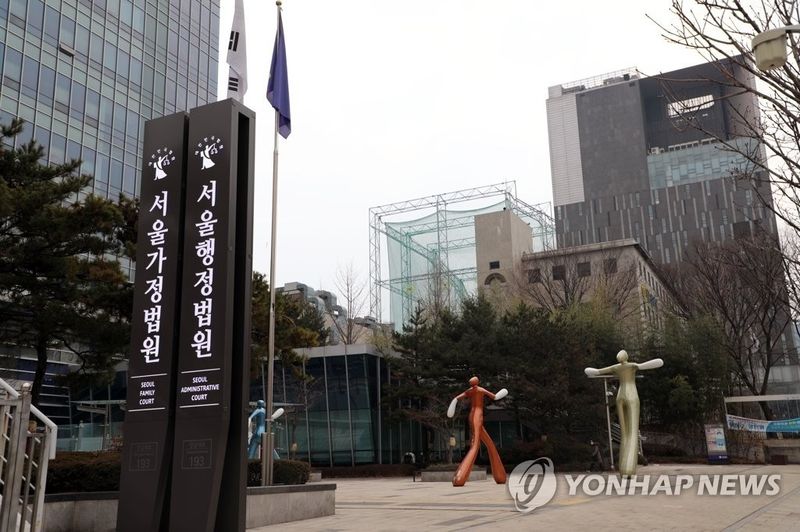
According to legal sources on the 29th, the First Division of the Seoul Administrative Court, presided over by Judge Yang Sang-yoon, ruled against the plaintiff on the 16th of last month in a lawsuit filed by candidate A to overturn a disqualification decision by the Human Resources Development Service of Korea.
In August 2024, A took the second-stage exam of a national qualification test as a candidate exempt from the first-stage exam. A scored an average of 47.87 across all subjects (383 out of a total of 800 points), exceeding the average pass mark of 45 for candidates partially exempt from the exam. However, A received 37 points in Accounting II, falling 3 points short of the subject pass mark of 40, and was disqualified.
A challenged a question worth 4 points in Accounting II. The question asked examinees to calculate total salary and earned income for the 2024 tax year for an employee who received a meal allowance of 250,000 won per month, or 3 million won per year, and was separately provided meals worth 500,000 won per year while working overtime, such as night shifts.
The current Income Tax Act defines as tax-exempt income “meals and other food provided to an employee through an in-house cafeteria or similar means” or “meal expenses of no more than 200,000 won per month received by an employee who is not provided meals or other food.” The 2024 basic interpretation of the Income Tax Act also stipulates that meals separately provided to an employee who receives a flat-rate meal allowance and works overtime are included in tax-exempt remuneration.
Applying the basic interpretation, the Human Resources Development Service of Korea treated both the meals worth 500,000 won per year provided during overtime work and the meal allowance up to the monthly limit of 200,000 won as tax-exempt.
A, however, interpreted the proviso in the Income Tax Act—“limited to those who are not provided meals or other food”—to mean that an employee who is provided a meal even once during the tax period is excluded from the tax exemption for meal expenses. A argued that the basic interpretation violates the higher-level Income Tax Act, so the answer should be corrected in accordance with the statute and the 4 points marked wrong should be awarded, resulting in a pass.
The court ruled in favor of the Human Resources Development Service of Korea. The panel held that the employees excluded from the Income Tax Act’s tax exemption for meal expenses are “employees who are regularly provided meals or other food through an in-house cafeteria or similar means.”
The panel explained, “Given that the Income Tax Act defines the tax-exempt meal allowance in terms of a period—‘200,000 won per month’—it is natural to interpret the meal provision that disqualifies an employee from the exemption as regular, rather than one-off.”
The panel noted, “When the Income Tax Act was amended in August 2022, the monthly cap on tax-exempt meal allowances was raised from 100,000 won to 200,000 won to ease employees’ financial burden in light of rising prices, including the cost of dining out.” It also pointed out, “If, as the plaintiff argues, employees who are provided a meal even once during the tax period are excluded from the tax exemption, this would excessively narrow the scope of tax-exempt meal expenses and run counter to the purpose of the legislation.”
The panel also explained, “The purpose of limiting the scope of employees eligible for the tax exemption is to prevent them from receiving both an in-kind benefit and cash for the same meal and thereby enjoying a double tax exemption.” It added, “Because the meals do not constitute regular in-house meal provision, the double tax exemption the law seeks to prevent does not arise even if they are provided alongside a meal allowance.”
The panel dismissed A’s claim, saying it was difficult to conclude that the basic interpretation in question contravened the Income Tax Act.
[email protected] Lee Chang-hoon Reporter