“No Early Voting, Overseas Voting or Electronic Vote Counting”... Why the “Country of TSMC” Insists on In-Person Manual Counting [On the Ground]
- Input
- 2026-11-28 14:21:53
- Updated
- 2026-11-28 14:23:37
According to Taoyuan Airport Corporation, about 188,000 people arrived over the three days before the election (the 25th–27th), more than 21,000 above the approximately 167,000 who departed. Arrivals peaked on the 27th, the day before the election, when more than 66,000 people came in. With no overseas voting, people have to bear the cost of airfare and take time off, but “flash return-to-Taiwan voting” (快閃返台投票)—flying back on election day to cast just one ballot and then leave—has become a signature part of Taiwan’s election culture. Local media reported stories of people who returned from South Korea, Japan, mainland China, and places including the United States, Canada and France.
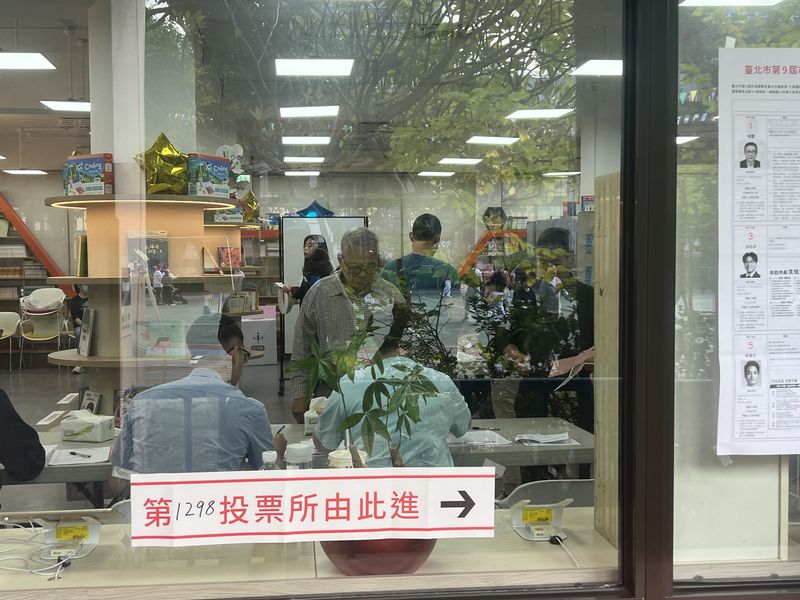
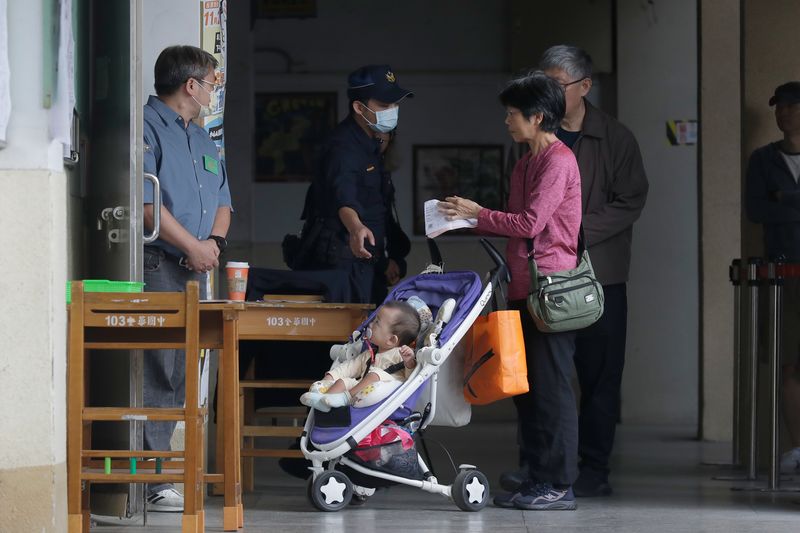
A long line of voters stretched outside Ximen Elementary School in Taipei’s Wanhua District early on the morning of the 28th, election day. Song, a restaurant owner in his 70s, temporarily closed his business despite the busy weekend period to help his employees vote. “Voting is the foundation of democracy,” he said. Parents explaining the voting process to their young children could also be seen in many places. Lee, a homemaker in her 30s, said, “I hope my children will understand the importance of democracy,” adding, “I’ve been bringing them along since the 2022 local elections.”
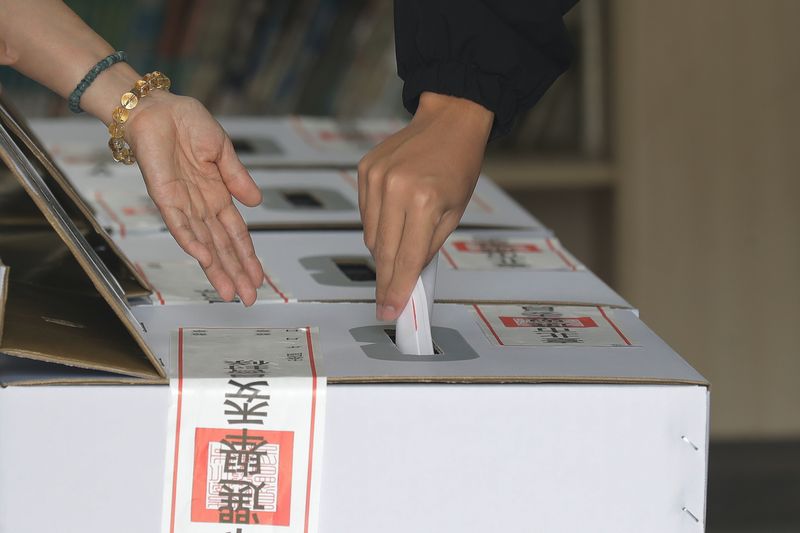
The memory of election fraud during the authoritarian era lies behind the decision to maintain this cumbersome system. The “Zhongli Incident,” when allegations of vote-counting fraud amid a power outage in 1977 escalated into mass protests, and a case of mass voting fraud in the 1992 Hualien legislative election left people distrustful, believing that “if you can’t verify it with your own eyes, you can’t trust it.” In an interview with PTS, Su Yan-tu, a researcher at Academia Sinica’s Institute of Law, described the on-site, publicly called-out vote count as “a ‘social ritual’ through which citizens see the legitimacy of democracy with their own eyes and build trust.” Liu Jia-wei, a professor in the Department of Public Administration at National Taipei University, also said that “holding up each paper ballot and preserving the physical ballots makes recounts and detailed verification possible, sustaining social trust.”
According to figures from the International Institute for Democracy and Electoral Assistance (IDEA), only 53 of the world’s 262 political entities, including Taiwan, stick to same-day in-person voting without absentee voting.
The Taipei Times cites “preventing Chinese election interference and coercion” as a key reason for not having absentee or postal voting. More than one million Taiwanese businesspeople (Taishang), students and family members live in mainland China, raising concerns that allowing overseas or postal voting could expose them to pressure or inducements from authorities or local groups. In an analysis in January, BBC Chinese also pointed to the cross-strait security environment and a lack of trust between the ruling and opposition parties as reasons discussions about absentee voting, which had continued for more than 20 years, had failed. Xiao Yi-jing, a researcher at National Chengchi University’s Election Study Center, likewise said, “With cross-strait tensions high, it is difficult to introduce a system that could invite outside interference or allegations of fraud.”
Cybersecurity concerns and distrust between political parties also factor into the decision not to use electronic voting machines or optical scanners. Since Taiwan is targeted year-round by cyberattacks originating in China, the aim is to avoid electronic or network interference. In an op-ed for the Liberty Times, Lee Zhong-xian, a professor in the Department of Electrical Engineering at National Cheng Kung University, warned that “if networks or electronic devices are involved, the process cannot be free of suspicions of hacking or manipulation,” adding that “if the outcome of an extremely close race is disputed, it could lead to severe turmoil.”
Taiwan’s Central News Agency (CNA) and the Taiwan FactCheck Center (TFC) say analog voting enhances transparency. Before counting begins, empty ballot boxes are inspected and sealed in front of observers; once voting ends, anyone can film the manual count on a smartphone at the polling station. This makes server hacking or ballot-box tampering inherently difficult. Tsai Jia-hong, a researcher at National Chengchi University’s Election Study Center, told PTS, “Taiwan’s population and land area are manageable enough for manual voting and counting, so it will be difficult to move away from the analog system until voters fully trust machines.” In effect, Taiwan has chosen a costly, trust-building safeguard over convenience.
By contrast, the ruling Democratic Progressive Party (DPP) and those urging caution cite security concerns as well as practical limits on election administration. The DPP’s legislative caucus has warned of the risk of Chinese election interference and proposed a “Democracy-Strengthening Voting Promotion Act” as an alternative. The proposal would designate election day and the preceding day as statutory holidays and subsidize travel costs for returning home. The election commission and civil society also have serious concerns. Yu Ying-lung, nominee for chairperson of the Central Election Commission, said at a Legislative Yuan confirmation hearing in January that “if full-scale transfer voting is introduced for local elections, around 9,000 different types of ballots would have to be managed nationwide, making an administrative disaster unavoidable at this stage.” Kan Chung-wei, a co-convener of the Taiwan Green Party, countered, “If a voter from a particular area votes at a polling station elsewhere and their ballot is held up during the manual count, it immediately reveals whom they voted for and could even undermine the constitutional principle of the secret ballot.”
[email protected] Kim Jun-seok Reporter