Individuals Develop, Company Completes ... Yuyu Pharmaceutical’s Jecheon Plant Builds AI Manufacturing Innovation [On-Site Report]
- Input
- 2026-11-29 12:00:00
- Updated
- 2026-11-29 12:43:59
■AI tools developed by employees, 11 of 12 adopted on the shop floor Change began with an artificial intelligence (AI) task force team (TFT) formed last August. Employees on the shop floor—not AI experts—directly ask AI about problems in their work and build tools. The company validates and refines the tools before expanding their use in regular operations. It is a model in which “individuals develop and the company completes.”
A junior staff member on the quality control team created a PC program using AI. It automatically cross-checks 30 raw-material records against 219 PDF test reports. A task that involved opening each report to check its expiration date was reduced to a few seconds. A manager on the quality assurance team solved a record-keeping problem with a general-purpose component costing about 12,000 won. Even the equipment manufacturer had been unable to offer a solution. The cost, which would have exceeded 6 million won to replace three machines, fell to about 36,000 won. Printouts that had run to around 20,000 pages per batch were reduced to one page.
Eleven of the 12 projects from the first internal competition are now being used in actual operations. Recently, employees have expanded into “physical AI,” buying chips at Yongsan Electronics Market and building devices.
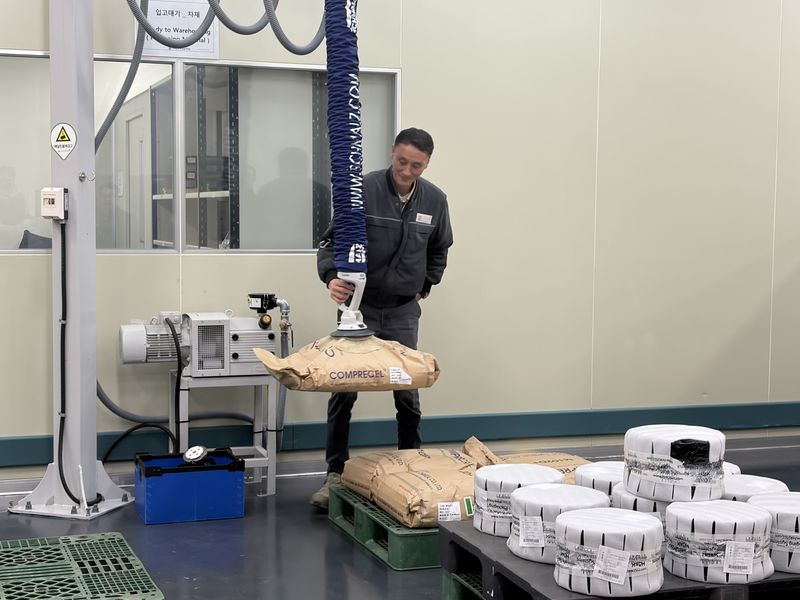
Yuyu Pharmaceutical CEO Park No-yong said, “Packaged software is difficult to upgrade or modify, but when we develop it ourselves, we own the source code and can make changes at any time as the environment or regulations change.” He added, “The ultimate goal isn’t to eliminate paper, but to turn the information on paper into a database and make it an asset we can use.”■Robots take on dangerous, repetitive tasks ... solar power cuts electricity costs by 130 million wonThe company introduced robotic automation to address local labor shortages, physical fatigue from repetitive work and the risk of back injuries. On the secondary packaging line for omega soft capsules, robots were handling the taping, product alignment and boxing, and labeling that workers had previously done one by one. Compared with the adjacent line, which had not been automated, the difference in speed was obvious to the eye.
Combining its own investment with support from the government’s “Advanced Manufacturing Robot Demonstration Project,” the company automated seven processes. Output per person per hour (UPMH) rose 166.5%, from 313 to 834. The defect rate fell from 0.4% to 0.2%. The two workers who left the line were reassigned to other processes.
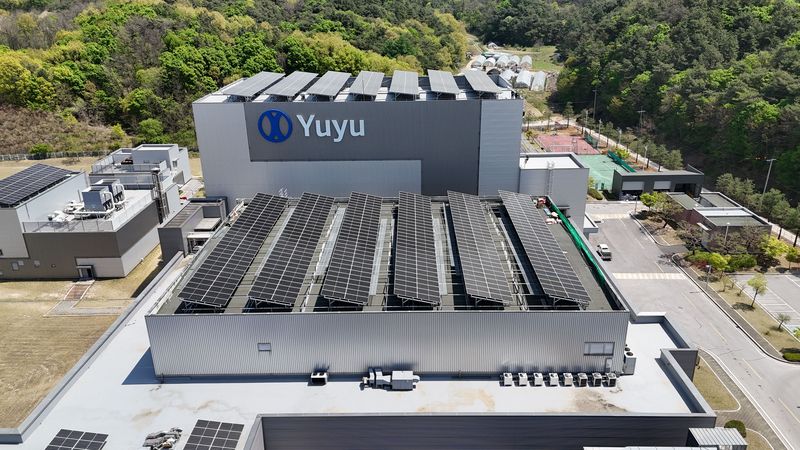
Solar power is also helping reduce energy costs. With the completion this year of Unit 3, which has a capacity of 869 kW, total generation capacity increased to 995.6 kW. Generation from January to November this year totaled 663.4 MWh. The electricity costs saved during that period amounted to about 130 million won. The company expects to recoup its investment in Unit 3 in 2.8 years.
Yuyu Pharmaceutical’s revenue last year was 96.7 billion won. It is expected to exceed 100 billion won this year.
CEO Park said, “Having strengthened our fundamentals through AI innovation, automation and solar power, our next goal is revenue growth.” He added, “We’ve formed a new product development task force, and we’ll launch several products, even in smaller categories, to increase our chances of success.”
[email protected] Jung Sang-hee Reporter