“The Crash Was Almost Over—Just When I Thought I Was Finally Safe”... JPMorgan Chase Warns of Chilling Possibility of a Major Crash in 2027 [Money Signal]
- Input
- 2026-11-28 12:18:02
- Updated
- 2026-11-28 13:32:33
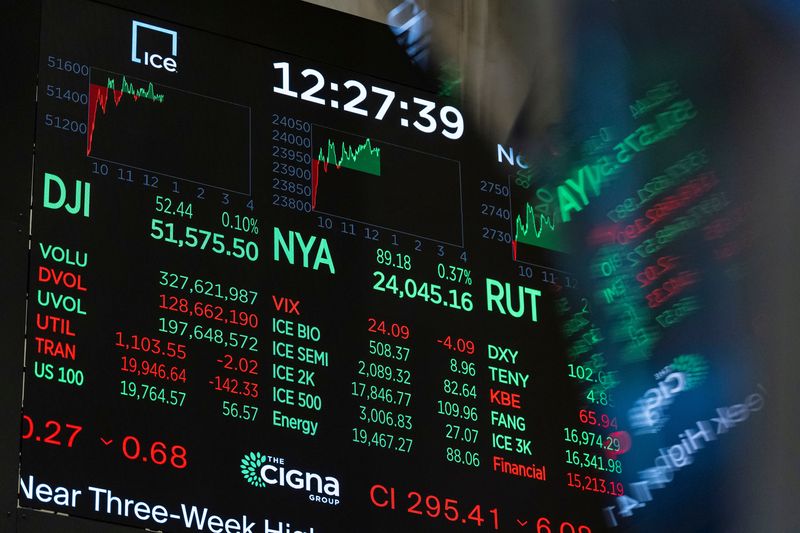
[Financial News] It finally feels like I can breathe a little easier. My brokerage account, which had been showing losses day after day, has finally shown a gain for the first time in a while. As the stocks I couldn't bring myself to sell during the crash begin to recover, I feel a glimmer of hope that if I hold on a little longer, I might get my money back. For a moment, I feel relieved: “I knew it was right not to sell.”
But what if this rebound is not the start of a new bull market, but only a brief pause before an even deeper fall? JPMorgan Chase, the world’s largest investment bank, has recently offered an analysis of the steep sell-off in AI-related stocks in which hope and fear intersect. The chilling warning is that the immediate crash may be nearing its end, but the truly frightening period could arrive in 2027.
According to MarketWatch and Investing.com, on the 27th (local time), the team of analysts led by Khurram Chaudhry, JPMorgan Chase’s head of European quantitative strategy, suggested that much of the recent selling concentrated in growth stocks and AI-related stocks may be over.
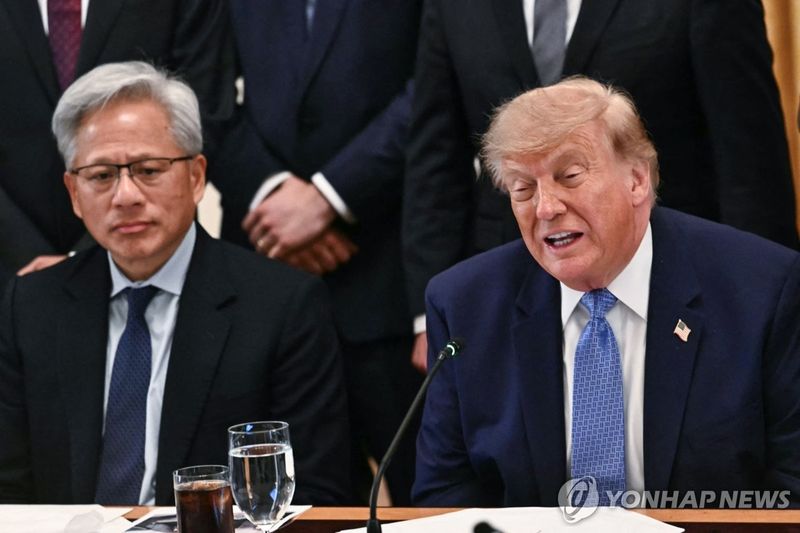
The case for a short-term rebound is clear. JPMorgan Chase’s own global investor sentiment indicator has reached such an extreme level of pessimism only five times in the past 20 years. Fear of the kind previously seen only during severe recessions has swept the market, but the assessment is that corporate earnings outlooks and economic activity have not deteriorated to the same extent. The seasonal strength that runs from Thanksgiving through the end of the year and into the new year could add to this and produce a powerful rebound.
The problem is what comes next. JPMorgan Chase revisited the “three-stage formula” that has recurred in past bear markets, including the 2000 dot-com bubble, the 2008 Global Financial Crisis (GFC), COVID-19 in 2020, and the shock of rate hikes in 2022. After stage one, a “crash,” bargain hunters step in and stage two, a “rebound,” follows. But eventually, worsening earnings and economic conditions coincide, leading to stage three, a “renewed decline” that breaks even the previous low. Historically, this process has taken an average of 18 months.
JPMorgan Chase sees the market as now on the threshold between stage one and stage two, and did not rule out the possibility that the stage-three renewed decline could hit in 2027.
The damage this scenario could inflict on individual investors’ accounts would be brutal. Imagine investing 100 million won in a stock that plunges 40%, leaving it worth 60 million won. A subsequent 30% rebound would lift its value to 78 million won and offer hope. But if it then suffers another 30% decline, the account would shrink to 54.6 million won. That would be an even deeper low than at the initial crash. The investment would have to rise by a staggering 83.2% to recover the original 100 million won.
The 45.4 million won lost would take an employee saving 1 million won a month more than three years and nine months to accumulate. During the 2000 dot-com bubble, the Nasdaq also lured investors with several rebounds, but after ultimately falling 78% from its peak, it took a full 15 years to recover to its starting point.
The real reason JPMorgan Chase is wary of 2027 is not the failure of AI technology. It is the dangerous collision between “economic slowdown” and “rate hikes.” Signs of a slowdown are already evident in the flow of orders relative to inventories in U.S. manufacturing, while financial markets have priced in the possibility of at least two additional rate hikes by the first quarter of next year.
If the economy is cooling while borrowing rates rise, companies will have no choice but to tighten their belts. Even if the interest rate on a company’s 1 trillion won in borrowing rises by just one percentage point, from 4% to 5% a year, it will have to pay an additional 10 billion won in interest annually. Investment in AI infrastructure, which requires astronomical sums, would also inevitably contract.
Wall Street is not, of course, uniformly pessimistic. According to Reuters on the 23rd, Morgan Stanley’s strategy team led by Mike Wilson offered a very different set of figures. Current share prices already reflect excessive fears that corporate earnings will fall 6% next year, while the forecast is for actual corporate earnings in 2027 to rise 14% from this year.
The market consensus, which calls for 17% growth, is also optimistic. Whether a company that earned 10 billion won this year earns 9.4 billion or 11.4 billion won next year is a completely different game.
With Wall Street’s views divided, individual investors ultimately need to keep three things in mind.
First, whether earnings forecasts for major semiconductor companies—including NVIDIA Corporation, Broadcom Inc., Samsung Electronics Co., Ltd., and SK hynix—are actually holding up.
Second, investors need to check whether global Big Tech companies such as Microsoft, Google, and Amazon are continuing to invest in data centers.
Third, they need to watch whether higher interest rates will cause companies to cut investment and consumers to close their wallets.
As the final month of 2026 approaches, global stock markets are once again seeking a rebound. But Wall Street’s clock is already ticking toward 2027.
The long-awaited rebound may finally arrive. But only the earnings figures companies prove they can deliver in the months ahead will tell whether it marks the starting point for recovering their principal or merely a brief pause before another crash.
[email protected] Jeon Sang-il Reporter