Millennials and Gen Z: 'Anti-China Activist'; Middle-Aged and Older Voters: 'Chiang Kai-shek's Great-Grandson'... China Also on Edge Over 'This Election' [Dispatch]
- Input
- 2026-11-28 13:04:43
- Updated
- 2026-11-28 13:15:35
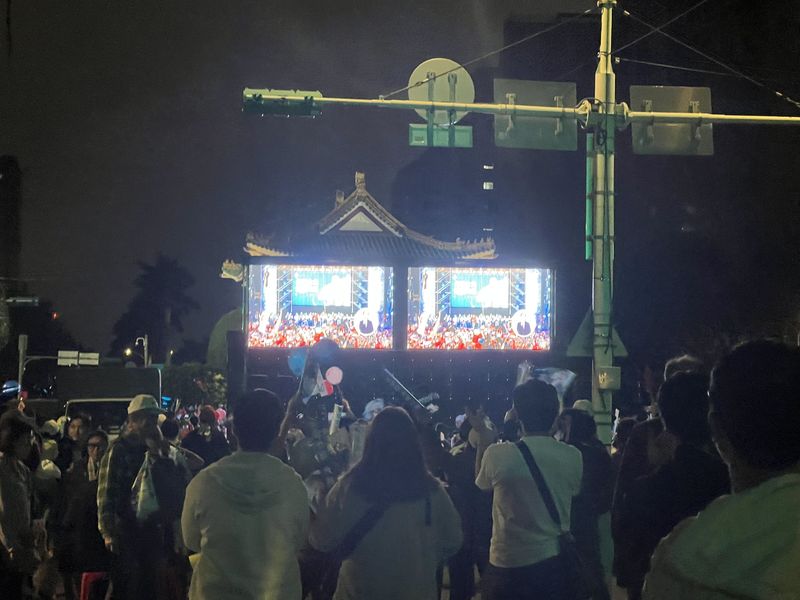
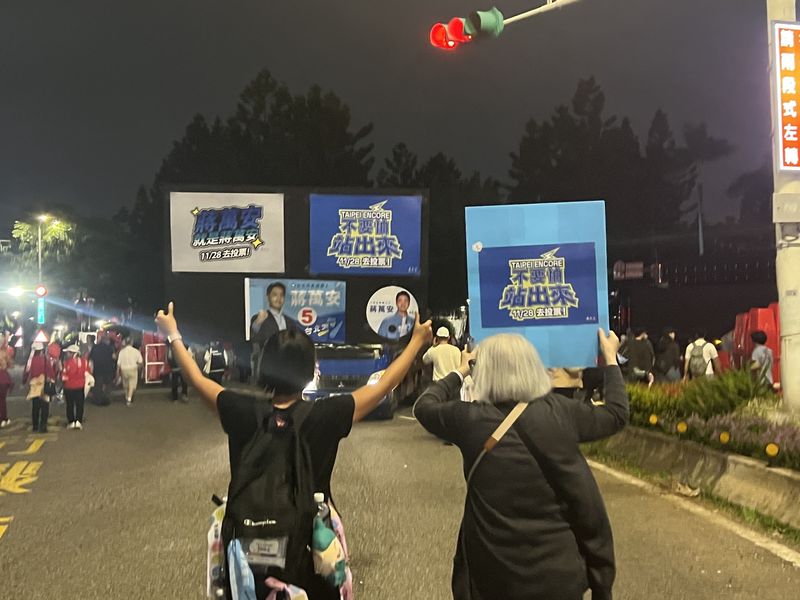
Middle-aged and older people, Chiang’s traditional support base, made up most of the crowd, but families that included people in their 20s and 30s and three generations were also noticeable. An 80-something woman surnamed Sun, who attended in a wheelchair, raised her voice, saying, “This election could put the future of Taipei and Taiwan at risk,” and, “We absolutely must not elect the dangerous one (candidate Puma Shen).” A man in his 60s surnamed Chang, a former teacher, stressed, “Candidate Chiang is a good person,” adding, “The opposing candidate isn’t even kind and is devious, so he can’t be entrusted with running the city.” A university student in his 20s surnamed Tseng said, “If we entrust city government to candidate Shen, who has little experience, Taipei’s growth will come to a halt,” and, “I support candidate Chiang, who has led the city well over the past four years.”
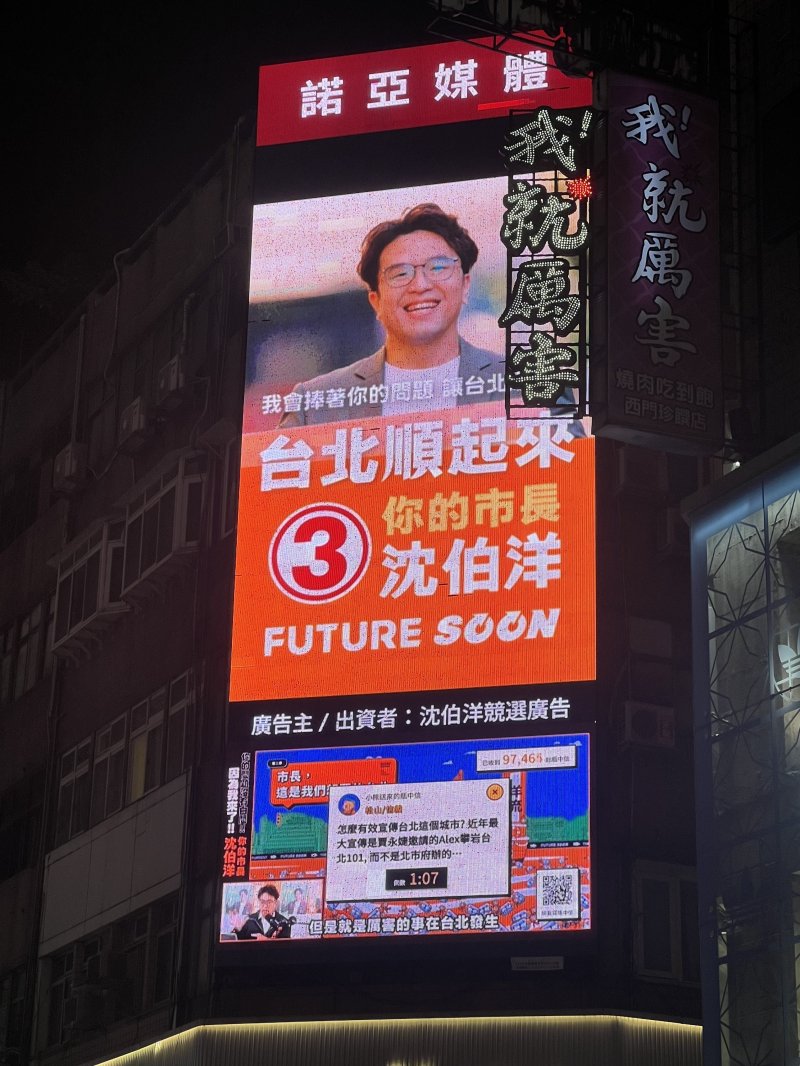
Tsai, a university student in her 20s whom we met in Ximending, an area similar to Seoul’s Myeong-dong, criticized candidate Chiang, saying, “He focused only on promoting his accomplishments and was indifferent to issues closely affecting our lives, such as food poisoning in school cafeterias and child abuse.” She added, “I was angry watching him tout attracting NVIDIA, the Taipei Dome and free milk as achievements of his four years in office.” Hsu, a company employee in his 50s who works for a foreign firm, said, “He’s nothing but Chiang Kai-shek’s legacy,” adding, “I became firm in my support for candidate Shen because Chiang lacked decisiveness on sensitive issues and kept wavering.”
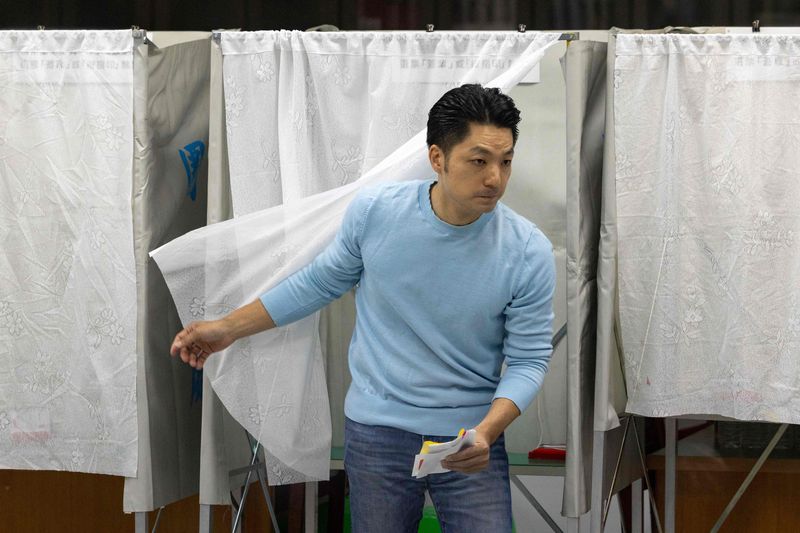
A graduate of the University of Pennsylvania Law School, candidate Chiang is a rising conservative standard-bearer who worked as a corporate lawyer in Silicon Valley, served two terms as a legislator, and was elected Taipei’s youngest-ever mayor in 2022. Mayor Chiang, who has appealed to centrist voters with a moderate and steady image, is seeking re-election on the strength of four years of administrative experience and a recent alliance with the opposition Taiwan People’s Party.
DPP candidate Puma Shen, who is challenging him, is a former professor at National Taipei University with a PhD in criminology and sociology of law from the University of California, Irvine. He studied Chinese disinformation and cognitive warfare (認知戰, a battle for public opinion) and co-founded the civilian civil-defense training group Black Bear Academy (黑熊學院). After entering politics in 2024 as a DPP legislator elected through proportional representation, Shen gained nationwide recognition when China’s State Council Taiwan Affairs Office placed him on a sanctions list of “stubborn Taiwan independence elements,” and Chongqing’s Public Security Bureau named him as a subject of an investigation on suspicion of “splitting the country.” A surge dubbed “Yangliu” (洋流), taking its name from the final character of his name, has combined with the voluntary participation of supporters to shake up the race in its final days.
Ultimately, the key to the race is how many so-called “shy KMT” voters turn out for Chiang, and how many young voters show up for Shen. Polling expert Dai Lian told local media, “Shen’s supporters are a ‘change-of-government vote’ that is expressed very dynamically online and in the streets, while Chiang’s supporters tend to avoid answering phone surveys but are older, conservative voters who reliably go to the polls—a strong, organized base.” In fact, projected vote shares estimated by the Shinmin Cross-Strait Research Association, weighted by voting intentions across age groups and past turnout, showed an exact dead heat: 48.0–52.0% for Puma Shen and 48.3–52.2% for Mayor Chiang Wan-an. Local experts predicted that Shen, backed by young and centrist voters, would have the advantage if overall turnout exceeded 70%, while Mayor Chiang, with his solid organization, would gain the upper hand if turnout fell below 70%.
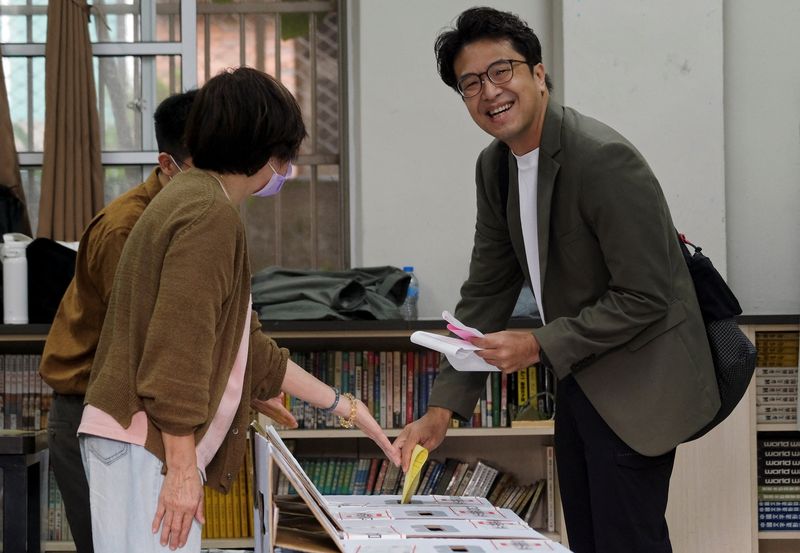
The Chiang Wan-an campaign, by contrast, countered by highlighting Shen’s long-standing hard-line, combative image, including his role in founding the civilian civil-defense training group Black Bear Academy. The two sides continued to trade barbs, with Chiang’s camp attacking Shen’s campaign for emphasizing a moderate, pragmatic image and suggesting that he was “hiding his true colors and putting on a gentle front just to win votes.”
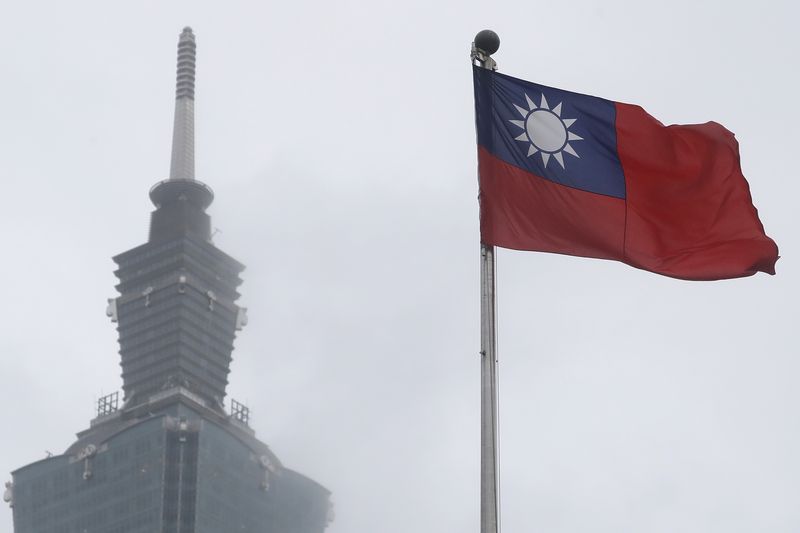
This election is also a midterm assessment of President Lai Ching-te. Analysts say that if the DPP underperforms in Taipei and other areas where it has a strong base, its ability to govern could weaken amid a divided government, with the opposition holding a legislative majority. Yang Hao-wei, a senior analyst at the International Crisis Group (ICG), told The Guardian of the UK, “Taiwan’s economy has posted high growth amid a boom in AI semiconductors, but about 70% of all workers earn less than the average wage and are struggling with high prices and housing costs.” He added, “If the DPP performs poorly, voters will interpret it as a judgment on its failure to manage people’s livelihoods by sharing the fruits of growth.” Conversely, analysts say that if the DPP recaptures Taipei and performs well in the capital region, President Lai will gain the political leverage to break through the opposition-controlled legislature and accelerate increases in defense spending and policies to strengthen defense resilience.
The calculations of China’s leaders, who are closely watching the election results, are also complicated. Even on the 27th, the day before voting, China continued its military pressure, sending People’s Liberation Army (PLA) aircraft into airspace around Taiwan as it monitored the election. Taiwanese analysts believe that if Mayor Chiang Wan-an wins re-election, practical and economic exchanges between local governments will continue through the Taipei–Shanghai Twin Cities Forum scheduled for December. They also expect Beijing to assess the electoral strength of an opposition alliance between the KMT and the Taiwan People’s Party ahead of the 2028 presidential election, while exploring opportunities for dialogue. By contrast, the prevailing view in Taiwanese political circles is that if Puma Shen recaptures the capital, China is likely to restrict local exchange channels such as the Twin Cities Forum or increase military and diplomatic pressure on Taiwan’s government.
[email protected] Kim Jun-seok Reporter