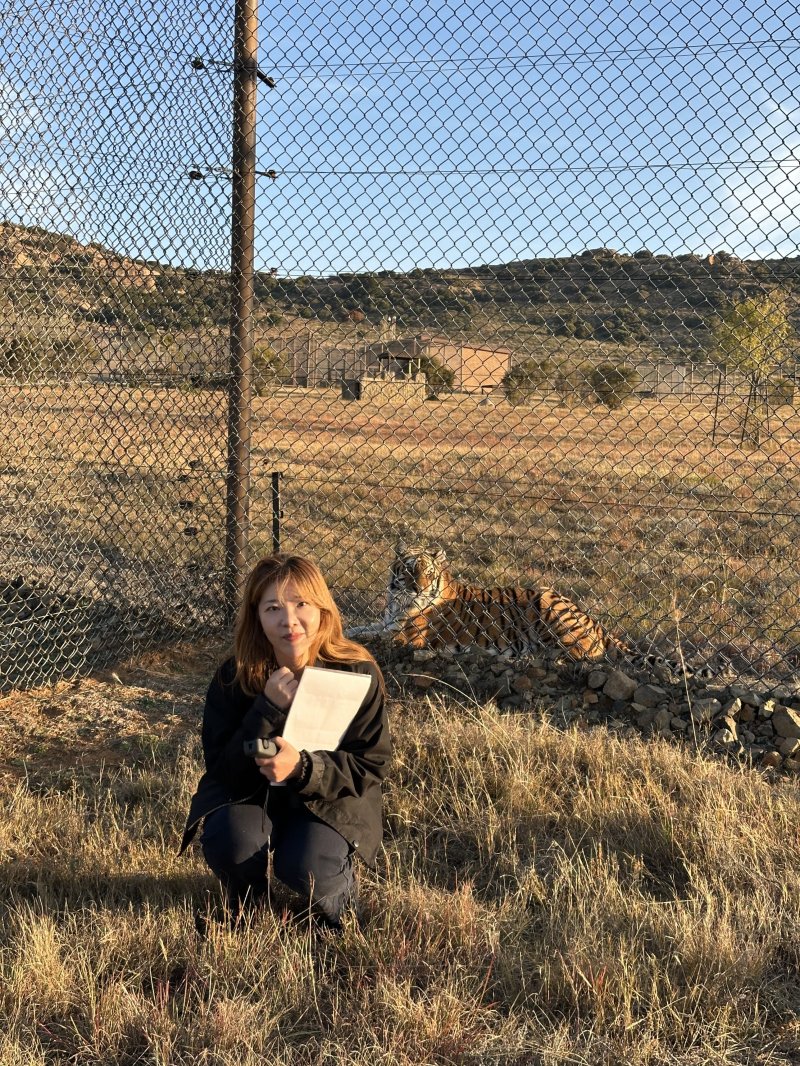
Kim Min-jeong, the PD behind Part 1, “The Blood Barcode,” of KBS’s The Business of Death, reports on tiger-rearing conditions in South Africa. Courtesy of KBS [Financial News] Tiger stripes began to look like barcodes. Tigers are sold for a price, with everything from their skins, bones, meat, claws and teeth to even their whiskers. To humans, tigers were no longer ferocious beasts or endangered species in need of protection. They had become commodities worth money from head to toe. That is why Kim Min-jeong, the PD behind Part 1, “The Blood Barcode,” of KBS’s The Business of Death, thought of barcodes when she saw tiger stripes.
Kim traveled to South Africa and Laos to uncover the reality of a brutal industry in which wildlife is sacrificed for human health. Disguised as a businessperson, she infiltrated tiger farms and tracked the wildlife-trafficking industry linked to international criminal organizations. Her findings were also reported to the Standing Committee of the Convention on International Trade in Endangered Species of Wild Fauna and Flora (CITES).
The Business of Death, which premiered on the 25th, ranked first in its time slot. In an interview with Financial News, Kim said, “Shouldn’t we take time to reconsider this industry, not only for animals but for humanity as well?” She added, “I hope it will be like a bamboo clapper, jolting greedy people back to their senses.”
Here is a Q&A with PD Kim.
—What was the reaction from people around you after the broadcast?▲Most people said, “It’s astonishing,” “It’s shocking,” or “I can’t watch it to the end.” Some also said they couldn’t believe such things were happening in the world today. Colleagues at work encouraged me, asking if it had been dangerous. On the night of the broadcast, I was so worried about the ratings that I couldn’t sleep properly. After it aired, friends told me we had beaten Sul Kyung-gu and Jeon Do-yeon on the Blue Dragon Film Awards broadcast, which aired in the same time slot, and I had to laugh. I’m relieved that the major documentary I worked on for the first time as a producer has been well received.
—What led you to make the program?▲Since college, I had wanted to make nature documentaries about birds and animals. Around the time I needed to move to another team, I heard that a special documentary called The Business of Death was in the works. I was drawn to the proposal, “The brutal story of wildlife illegally poached and traded for medicinal ingredients and food.” I hesitated, wondering whether we could report on it as the proposal intended, but I thought it was a subject worth tackling and worked up the courage to do it.
—Why did you choose tigers as the subject of the first episode?▲The tiger was originally the subject of Part 2. But the more I researched, the more shocking facts came to light. I was especially surprised to learn that the tiger-bone wine industry was connected to criminal organizations. That was also why it moved from Part 2 to Part 1. Tigers hold a special place in the hearts of Koreans. They also have the largest following of any wild animal. I thought their very presence would have great appeal. I believed the story would come together by pursuing answers to two questions: Why were tigers moved across a continent to South Africa, and why did Laos become the center of the tiger-bone wine industry?
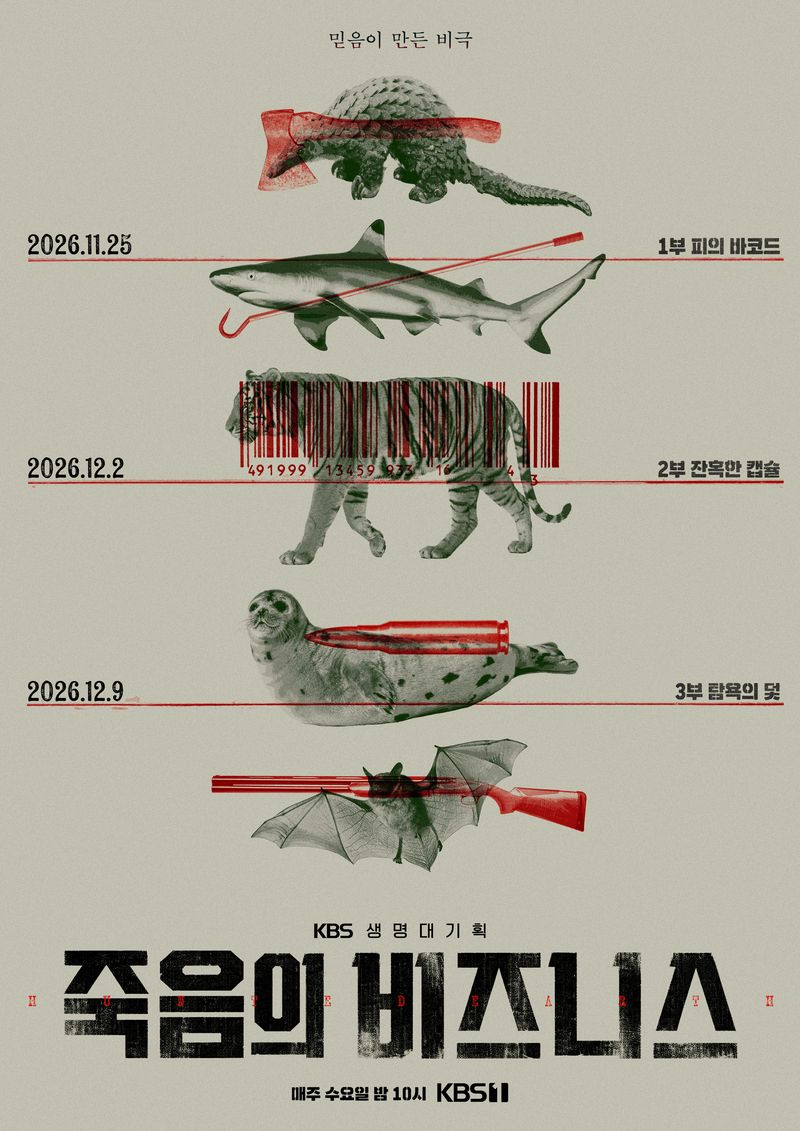
Title card for Part 1, “The Blood Barcode,” of KBS’s The Business of Death, which aired on the 25th. It likens the stripes of tigers reduced to commodities to barcodes. Courtesy of KBS —The title of Part 1, “The Blood Barcode,” is striking.▲It’s not just the bones; every part of a tiger is worth money. The body is dismantled and sold part by part: its skin, meat, claws, teeth, sexual organs and even whiskers. As I thought about tigers turned into commodities, their stripes caught my eye. They looked like barcodes. In fact, a tiger’s stripes are like human fingerprints: every tiger’s stripes are different. I thought that, too, made them similar to barcodes.
—Undercover reporting overseas must have been difficult.▲I wanted to capture the hidden story of how this industry operates in 2026. Undercover reporting was unavoidable if we were to do that. At first, I had no idea where or how to begin overseas. I sent repeated emails to prominent international NGOs working on wildlife issues and held video calls in my halting English. After a lot of effort, we were introduced to an investigator experienced in undercover work. It was our first time doing undercover reporting overseas, and they said it was also their first time working with a Korean broadcaster.
—What was the most tense moment during the reporting?▲It was when we went inside tiger farms in South Africa and Laos to film. We were disguised as businesspeople, but getting inside was difficult right up to the end. The people there were suspicious, too, so it was hard to find someone willing to let us in. In Laos especially, we were close to giving up because we still hadn’t managed to film even after the entire agreed shooting period had passed. In the end, we succeeded in filming at the farm only on the final day.
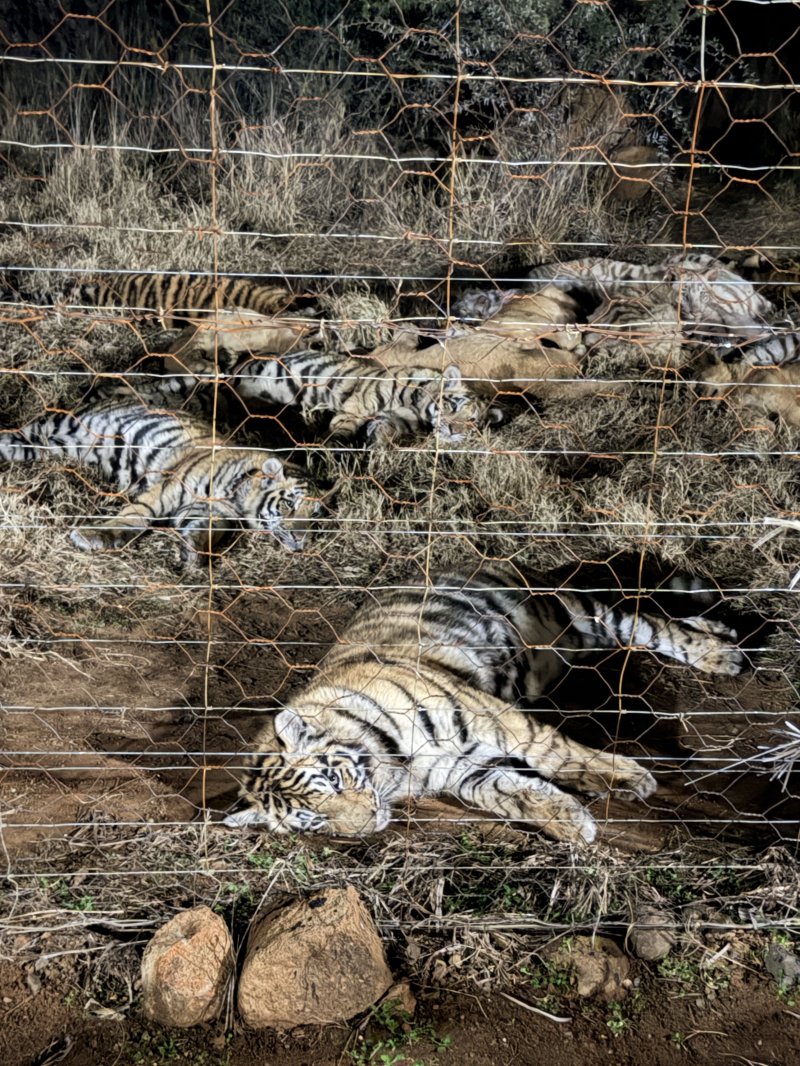
Tiger cubs are being kept in large numbers inside a wire enclosure at a tiger-experience facility in South Africa. The KBS team behind The Business of Death investigated tiger breeding and trafficking in South Africa and Laos. Courtesy of KBS —What was the most shocking scene?▲It was coming face to face with live tigers at the farms. The moments that hurt the most were seeing tiger cubs kept in large numbers at a South African tiger-experience facility and seeing a photo of a tiger at a Laotian farm, terrified just before slaughter.
—Why broadcast the brutal scenes without filtering them? Some might criticize them as somewhat sensational.▲We knew there could certainly be criticism like that. But we agreed that showing the scenes of wildlife being mercilessly killed as they were fit the program’s original purpose. Viewers might find it somewhat uncomfortable, but as a reportage documentary, we wanted to show the actual scenes without holding anything back. We hoped people who watched would feel, “Humans are really too cruel,” and “I feel sorry for the animals.” Judging by the YouTube comments after the broadcast, it seems we succeeded to some extent.
—The findings were also shared with the international community.▲Our findings were reported to the 81st meeting of the CITES Standing Committee, held in Geneva, Switzerland, last November. Debbie Banks, campaign leader at the UK’s Environmental Investigation Agency (EIA), which worked with us, asked if we could share our findings with CITES. EIA is an investigative NGO that tracks illegal wildlife trade and investigates criminal networks. I think one achievement was laying bare tiger-trafficking networks involving tiger-bone wine and tiger-bone paste.
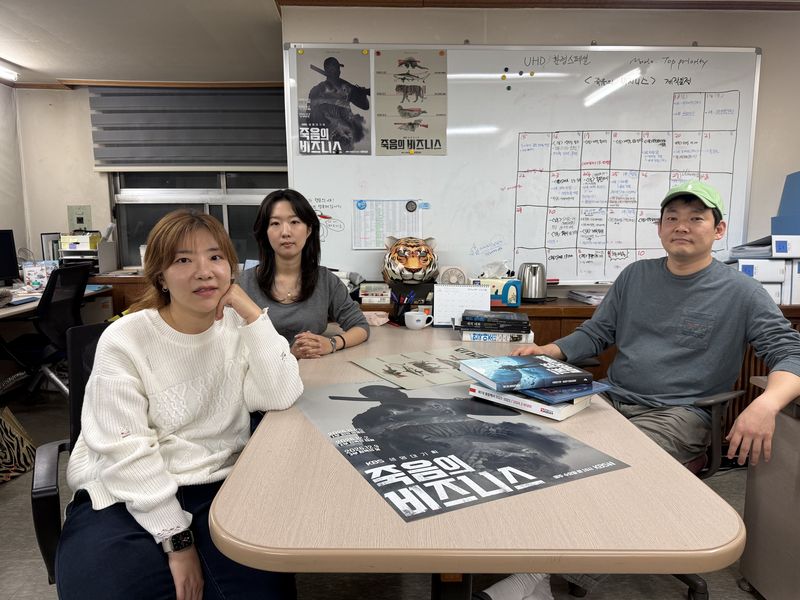
PDs Kim Min-jeong, Heo Yu-rim and Jeong Seung-an (from left), who made KBS’s The Business of Death. Across three episodes, the team examines the reality of wildlife sacrificed for human health and desire. Courtesy of KBS —What stories will Parts 2 and 3 cover?▲Even more brutal and shocking stories are yet to come. While Part 1 was an account of reporting on the tiger-bone wine industry, Parts 2 and 3 broaden the scope and the concepts. Part 2, “The Cruel Capsule,” looks at marine ecosystems destroyed for the modern health-supplement industry, including omega-3 and squalene. Part 3, “The Trap of Greed,” warns of the bushmeat (wild animal meat) markets prevalent in Southeast Asia and Africa, and the risk of zoonotic disease outbreaks that could follow.
—What message do you ultimately want to convey to viewers?▲It has been about three years since the COVID-19 pandemic that shut down the world ended. We are gradually forgetting those terrible memories. But the risk of zoonotic diseases from eating wild animals is always there. Shouldn’t we take time to reconsider this industry, not only for animals but for humanity as well? I wanted to warn that reckless destruction of ecosystems could ultimately hasten humanity’s extinction. I hope The Business of Death will be like a bamboo clapper, jolting greedy people back to their senses.
KBS’s three-part documentary project The Business of Death will air Part 2, “The Cruel Capsule,” on December 2 and Part 3, “The Trap of Greed,” on December 9, both at 10 p.m.
Official poster for KBS’s The Business of Death. Under the theme “Tragedy Made by Belief,” the three-part series explores the tragedy inflicted on wildlife by human health and desire. Courtesy of KBS [email protected] Kim Gyeong-min Reporter