“Where Can I Make a Call Without a Cellphone?”... Searching for Disappearing Pay Phones [Recorder of the Low Places]
- Input
- 2026-11-29 06:00:00
- Updated
- 2026-11-29 06:00:09
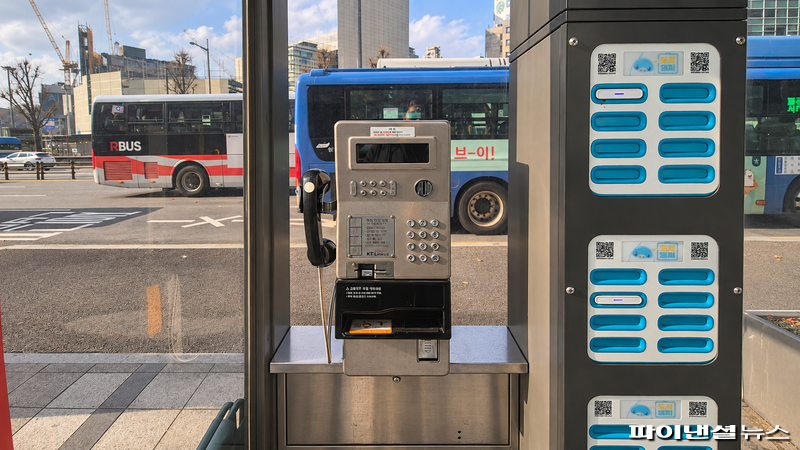
As cellphones have become a routine way to stay in touch, pay phones on the streets are rapidly disappearing. But they remain necessary for people who cannot afford to use a cellphone or who suddenly lose access to their means of communication. We went out to find pay phones around Seoul Station and Jongno and, through conversations with local residents, examined the need for basic communications services that anyone can use. [Editor’s note]
[Financial News]“If I lost my cellphone? I don’t know. I don’t even know where there’s a pay phone around here.”A, an office worker in their 30s whom the reporter met at Seoul Station on the 26th, said this when asked what they would do if they had to contact family or acquaintances without a cellphone. They said that because they usually kept in touch by cellphone, they had never had reason to find out where a pay phone was.
The reporter set out to find pay phones around Seoul Station and Jongno, imagining a situation in which they could not use a cellphone. After walking around Seoul Station, they found one pay phone near Exit 4. Around the entrances to Jonggak Station, the reporter could not find any within the area they searched.
As cellphones have become a routine way to stay in touch, pay phones are rapidly disappearing. But they remain necessary for people who cannot afford to use a cellphone or who have lost theirs. Pay phones are included in the universal services mandated by law so that even people without a personal means of communication can access basic communications services.
There used to be around 30 pay phones in Seoul Station plaza... looking for them today
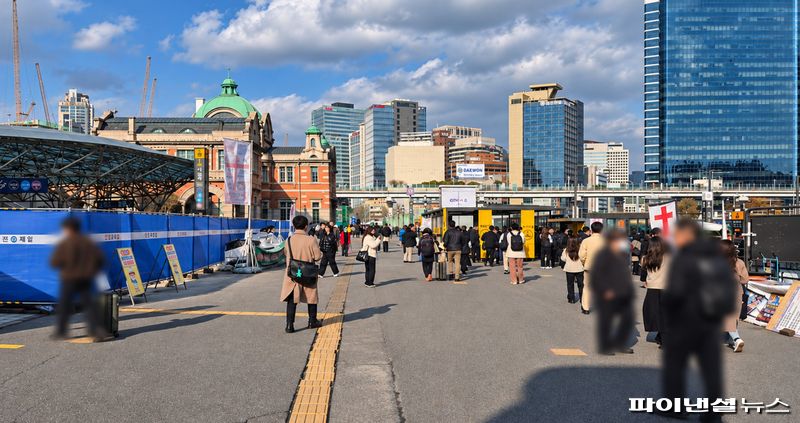
Seoul Station is a busy place for all kinds of people, from travelers arriving from other parts of the country to commuters. There are many situations that call for a phone call, such as letting family know you have arrived after getting off a train or confirming a meeting place with an acquaintance.
The reporter searched for pay phones around the station and its entrances. After checking several places, they found a phone near Exit 4.
It is said that there were around 30 pay phones in Seoul Station plaza as recently as the early 2000s. But as cellphone use spread and the number of users declined, pay phones began to be removed in stages around 2005. By 2013, only two remained in front of the entrances to Seoul Station plaza.
Middle-aged and older people who experienced a time when pay phones were a routine means of communication differed from younger generations accustomed to cellphones in their memories of and experience using pay phones.
B, a woman in her 20s, said, “I know what a pay phone looks like, but I don’t remember ever using one.” She said that if she lost her cellphone, she would probably borrow a phone from someone nearby to make a call.
C, a man in his 50s, said, “I used to look for a pay phone as soon as I arrived at Seoul Station and call home. I carried a phone card, too.” He added, “Now that everyone uses cellphones, I’ve been going about my life without even realizing how many pay phones had disappeared.”
Hard to find around Jonggak Station, too... residents don’t know where they are
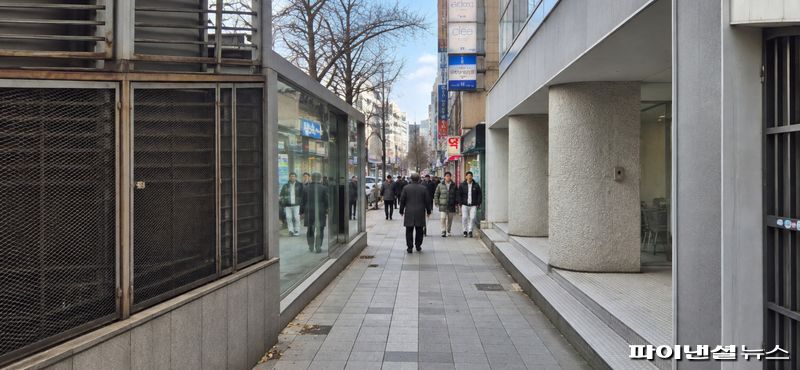
After Seoul Station, the reporter also searched for pay phones around Jonggak Station in Jongno District. The area is busy with office workers and residents, with office buildings, restaurants and shops clustered together.
The reporter looked around the subway entrances and nearby streets but found no pay phones. They did not inspect the station interior or every nearby building, but it was difficult to find a pay phone on the street without specific information about its location.
D, an office worker in their 40s whom the reporter met in Jongno, said, “I’ve worked around here for quite a while, but I don’t know where there’s a pay phone.” They added, “If I suddenly didn’t have my cellphone, I think I’d have to go into my workplace to borrow a phone or ask a nearby shop.”
E, a woman in her 60s, said, “There used to be pay phones at subway stations, but they’re hard to find these days.” She added, “Some older people don’t have cellphones, so I wish there were at least a few around.”
You can search online for pay phone locations, but this option is difficult to use for someone who has actually lost their cellphone.
Even if you find a pay phone, you have to remember the other person’s phone number. That is because using contacts saved on smartphones has reduced the need to enter phone numbers manually.
F, an office worker in their 30s, said, “I have my parents’ numbers memorized, at least, but I hardly know the numbers of friends or coworkers.” They added, “I usually just tap a name to call, so there’s no need to remember the number.”
Around 13,000 pay phones nationwide... down by more than half in four years
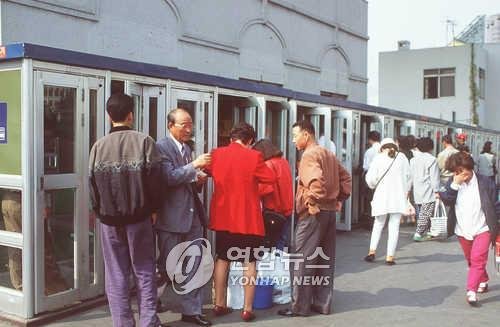
The number of pay phones has continued to decline since cellphones became widespread. The nationwide total, which exceeded 560,000 in 1999, had fallen to around 180,000 by March 2008.
According to Ministry of Science and ICT data included in the National Assembly’s review report on a partial amendment to the Value-Added Tax Act, the number of KT pay phones fell from 35,175 in 2021 to 28,819 in 2022, 24,299 in 2023 and 21,481 in 2024. By the end of September last year, it had dropped to 13,028.
Among these, the number of pay phones intended to provide “universal service”—so everyone can access basic communications services at reasonable rates, anytime and anywhere—fell from 26,439 in 2021 to 9,081 by the end of September last year.
Pay phone use has also fallen sharply compared with the past. According to data KT submitted to the National Assembly, in 2023 the average pay phone was used 30.8 times per month, with an average monthly call time of 25.7 minutes.
However, some data show that the number of uses per phone has risen as the number of installed pay phones has fallen. According to last year’s National Assembly review report, pay phones nationwide were used about 1.21 million times per month, or an average of 92.8 times per phone.
Even when usage declines, maintaining phones and communications networks and dealing with breakdowns or damage to facilities require money and staff. KT is pursuing a plan to reduce the number of pay phones with low usage and relocate facilities mainly to places considered important for public services, such as sites where disasters or emergencies may occur.
Universal service lets people stay in touch even without a cellphone
Whether to operate a pay phone is not determined solely by its profitability. It is a service guaranteed by law so that people without a personal means of communication can still access basic telecommunications services.
Article 4 of the current Telecommunications Business Act requires telecommunications service providers to provide universal service or compensate for losses incurred in doing so. Article 2 of the Enforcement Decree of the same Act defines pay phone service as a wired telephone service covered by universal service.
There are also standards for installing pay phones. The Ministry of Science and ICT’s “Standards for Calculating Compensation for Losses Incurred in Providing Universal Service, etc.,” revised on October 14, stipulates that the appropriate number of pay phones should be calculated by taking into account population, distance and the characteristics of installation sites.
Pay phones remain a necessary means of communication for people who cannot afford to buy a cellphone or who have difficulty using the service because of the cost of phone bills. They can be used not only to contact family or acquaintances, but also to request support from welfare organizations or seek help in an emergency.
Pay phones still needed despite fewer users... an emergency means of contact when phones are lost or disasters strike
Even people who usually use cellphones sometimes need a pay phone, such as when they lose their phone, its battery runs out or a mobile network outage makes it difficult to place a call.
The Broadcasting and Communications User Information Portal, “Wise User,” also advises people to check in advance where nearby pay phones are located in case of a communications outage.
However, pay phones may also be difficult to use if the facility or wired communications network fails. Accessibility and the condition of the facilities are also important if pay phones are to serve as an emergency means of communication.
Residents had differing views on maintaining pay phones. Some said the cost of maintaining facilities with few users should be considered, while others felt that pay phones were needed at places such as train stations, subway stations and hospitals.
If someone without a cellphone needs to make a call in an unfamiliar place, they may have to ask a nearby shop or a passerby for help. That is why, when assessing the need for pay phones, it is important to consider not only how often they are used but also whether other means of communication are available nearby.
G, a man in his 70s whom the reporter met at Seoul Station, said, “These days everyone carries a cellphone, but there are people who don’t, right?” He added, “When you urgently need to get in touch, you should be able to make at least one phone call.” He continued, “I hope they don’t get rid of all of them just because people don’t use them. You may not use them every day, but there are times when you really need them.”
We record earnest stories of life in print. Even if the words are rough-hewn, we present as they are the things we gather on the ground. From alleys and markets to someone’s workplace, records of the ordinary days we’ve passed by find their way to you, our readers.[Recorder of the Low Places]To receive Recorder of the Low Places easily, please subscribe to the reporter’s page.
[email protected] Han Seung-gon Reporter