U.S. Air Force, U.K. Department for Work and Pensions and FIFA Also Breached... Hacking Threatens the Global Economy
- Input
- 2026-11-28 06:12:04
- Updated
- 2026-11-28 06:12:04
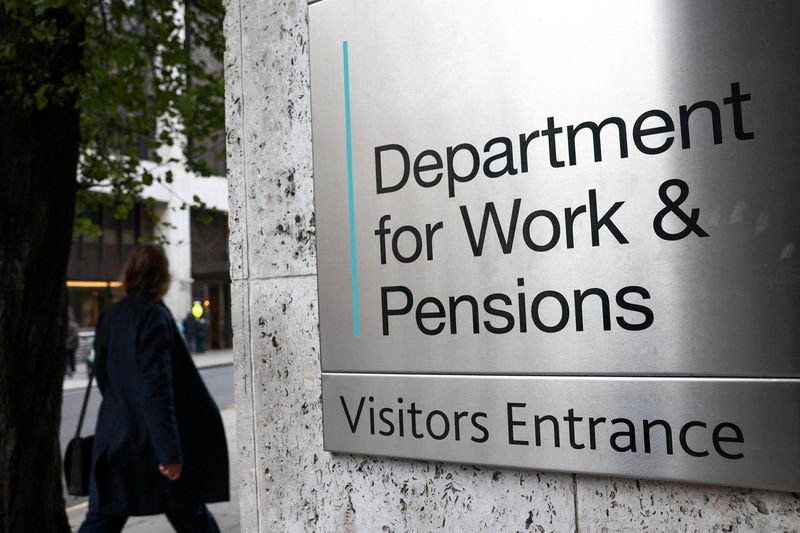
The U.K. government has also been breached in a hacker attack, the Financial Times (FT) reported on the 27th (local time).
Fears are growing that the global economy could be shaken as major U.S. institutions, as well as Europe and Asia, are exposed to hacking attacks.
With AI making hacking easier than ever, the possibility can no longer be ruled out that the global economy—tightly interwoven through computer networks like a dense web—could grind to a halt all at once.
U.S. grapples with a string of IT outages
In the United States, which is at the forefront of the AI race, IT outages suspected to be linked to hacking have occurred one after another recently.
Services were limited after major banks, including Microsoft (MS) and JPMorgan Chase, experienced IT outages. On the 13th, disruptions to the Federal Aviation Administration (FAA) computer network led to a nationwide ban on aircraft takeoffs.
The Federal Bureau of Investigation (FBI), which is supposed to catch hackers, also had its Crime Information Center (CIC) network breached, while some services of the U.S. Treasury Department’s Financial Crimes Enforcement Network (FinCEN) were taken offline because of “unauthorized access.”
Reports emerged on the 27th that a hacker broke in during an upgrade to “Cloud One,” a key U.S. Air Force cloud system, and accessed areas related to logistics, air-defense radar, ammunition tracking and control.
It was previously determined that hackers had also infiltrated the computer networks of the Central Intelligence Agency (CIA) and the Director of National Intelligence (DNI), and that some information had been leaked.
211 member countries and FIFA also breached
According to the FT, the U.K. Department for Work and Pensions’ benefits payment system suffered an outage, leaving most of it inoperable. The system managing £330 billion in welfare benefits (about 576 trillion won) was shut down.
FIFA, based in Zurich, Switzerland, also suffered a hack that exposed personal and corporate information. Information belonging to 211 member countries and sponsor companies around the world is believed to have been leaked.
In France, hackers switched off the power to supermarket refrigerators and blood bank freezers, or raised their temperatures, forcing food and blood to be discarded.
Hackers also infiltrated the computer networks of major supermarket chains in the U.K., disrupting supplies of fresh food. In Germany and Ireland, outages in hospital networks brought emergency rooms, blood services and testing systems to a halt.
Hacking damage surges in Asia-Pacific, including South Korea
The Asia-Pacific region, including South Korea and Japan, is also being battered by hacking attacks.
Hacking damage is reaching record levels in South Korea. Police figures show that 3,732 hacking crimes had been reported through October this year, already surpassing the 3,544 cases recorded for all of last year.
In Japan, the number of detected hacking attacks reportedly surged 82% last month compared with the same period a year earlier.
Hacking attacks are also surging in Southeast Asia, including Vietnam, Malaysia and Indonesia.
Could the global economy grind to a halt?
Hacking is surging because hackers are using AI. In the past, only highly trained professional hackers could identify system vulnerabilities and write code to break into systems. Now, even non-experts can do it with AI’s help.
This means systems can be disrupted by hacking attacks anytime, anywhere.
This suggests that the global economy, linked by computer networks, could grind to a halt all at once.
In its Financial Stability Report on the 26th, the Bank of England’s Financial Policy Committee cited outages involving Microsoft and Google Cloud, warning that a failure to respond could have repercussions across the financial system.
In a report in May, the head of the World Economic Forum’s Cybersecurity Center expressed concern that cyberattacks on financial institutions or critical infrastructure could cause cascading damage across the real economy, extending beyond individual companies.
Cybersecurity expert Bruce Schneier said in an interview with the U.K.’s Guardian on the 22nd that systems for communications, finance and capital, among others, are excessively interconnected and concentrated, creating interdependence. He warned that this is increasing the risk of collapse. He said that if critical backbone infrastructure such as SWIFT, the international interbank payment system, were attacked and collapsed, it would be humanity’s worst day.
The International Monetary Fund (IMF) and the Organisation for Economic Co-operation and Development (OECD), among others, have also expressed concern that hacking could adversely affect overall macro-financial stability.
Rafe Pilling, Sophos’s director of cyber threat intelligence, said recent hacking incidents one after another had heightened concerns about the resilience of systems that underpin our daily lives. He was pessimistic that this digital infrastructure would face far greater pressure in the new year.
[email protected] Song Kyung-jae Reporter