“An Electric SUV That Doesn’t Lean Even With 1,156 Horsepower” ... Porsche Cayenne Electric [Gittongchan Mobility]
- Input
- 2026-11-29 05:59:00
- Updated
- 2026-11-29 05:59:00
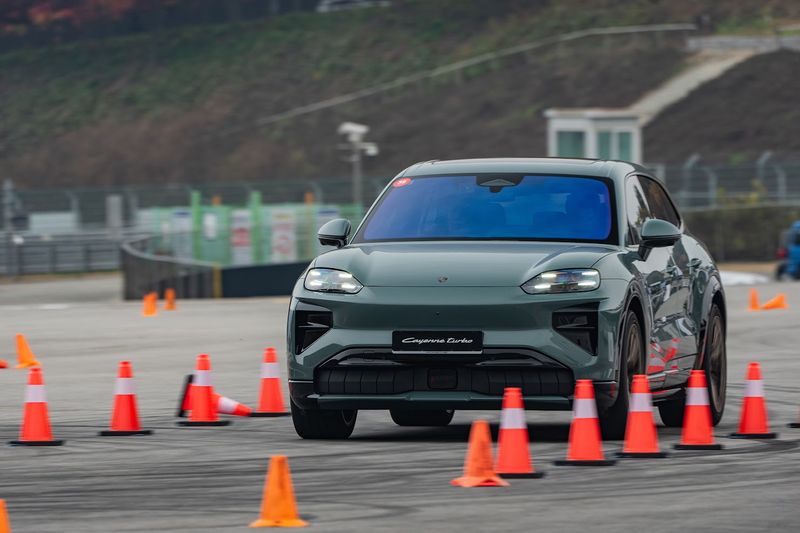
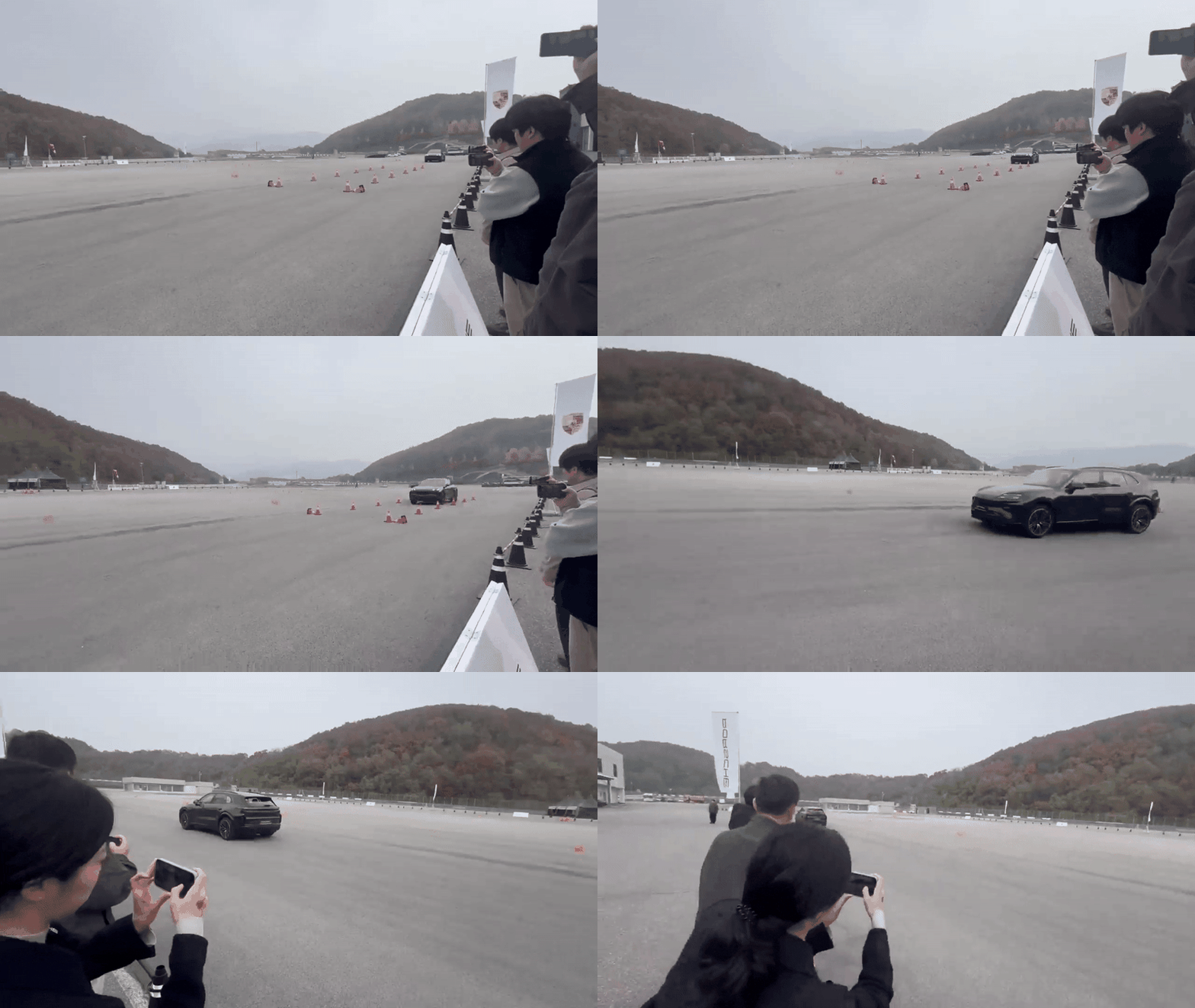
I attended the Porsche e-Performance Track Experience at Yongin Speedway in Gyeonggi Province on the 13th. During the morning, I drove the Taycan Turbo S, the Macan GTS Electric and Taycan GTS, the Cayenne Turbo Electric, and the Cayenne Electric and Cayenne S Electric, one after another. At the end, I got back into the Cayenne Turbo Electric. In just over an hour, I drove all three Cayenne Electric models consecutively on the same track.
The Cayenne Electric is Porsche’s second all-electric SUV, following the Macan. All three models use a 113-kWh battery, an 800V system and electronic all-wheel drive. They differ in output and chassis configuration. With launch control, maximum output is 442 hp for the base model, 666 hp for the S and 1,156 hp for the Turbo. They take 4.8, 3.8 and 2.5 seconds, respectively, to accelerate from a standstill to 100 km/h.
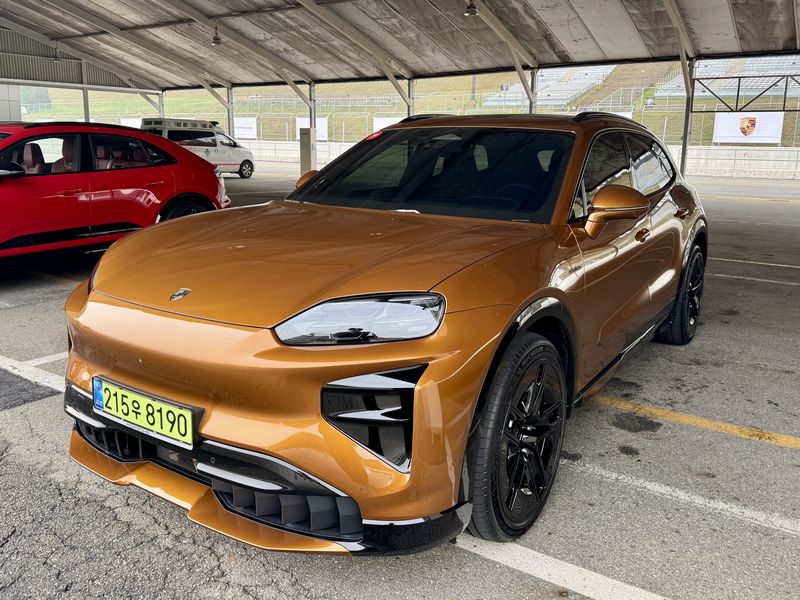
The system that keeps the car level is Porsche Active Ride. It minimizes body movement, improving both ride comfort and driving control. It is an optional feature available on the Cayenne S and Turbo. The base model uses adaptive air suspension and Porsche Active Suspension Management (PASM). The base model was stable for a large SUV, too. Still, it was the base model that leaned a little more in corners.
On the track, rear-axle steering, which turns by up to 5 degrees, also made a big difference. In turns, the rear wheels move as well, guiding the body inward. The vehicle, with an overall length of 4,985 mm and a wheelbase of 3,023 mm, felt smaller than it really was. Porsche Torque Vectoring Plus (PTV Plus) comes standard on the Turbo. Even when accelerating out of a corner, the car’s line remained largely steady.
The S struck a good balance among the three models. It isn’t as powerful as the Turbo, but it has more output in reserve than the base model. The rear-axle motor uses the same direct oil-cooling system as the Turbo. The technology comes from Formula E.
Prices in South Korea start at 142.3 million won for the Cayenne Electric, 163.8 million won for the Cayenne S Electric and 189.6 million won for the Cayenne Turbo Electric. South Korea-certified driving range on a single charge (combined, at ambient temperature) is 512 km for the base model, 517 km for the S and 468 km for the Turbo.
The acceleration differences among the three models matched the figures on the spec sheet. What really set them apart was how well they handled that power. If you prioritize body stability over output, the S and Turbo, along with the Active Ride option, are worth considering.
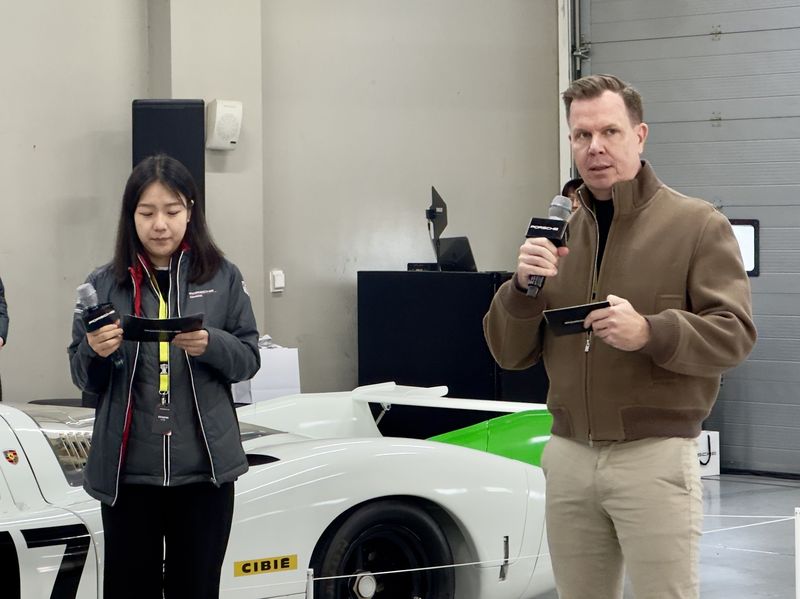
Mathias Busse, head of Porsche Korea, explained at the event, “Porsche’s electrified models each have their own character, but they all share sports cars as their roots.”
He added, “We will further enhance Porsche’s distinctive values and deliver the sportiest and most attractive cars in every vehicle segment.”
[email protected] Kim Dong-chan Reporter