"Up 31%, So Why Still Down 31.62 Million Won?"... The 'Cruel Math of a Market Crash' That Left NVIDIA Investors Who Bought at the Peak Reeling [Money Signal]
- Input
- 2026-11-27 20:30:00
- Updated
- 2026-11-27 20:30:02

[Financial News] The stock surged more than 31% in a single day. After day after day of steep losses, investors’ accounts finally showed a vivid gain for a change. It seemed like enough to heal a substantial part of the damage they had suffered.
But when measured against the original investment, the excitement on the ticker quickly fades. The extreme price swings recently seen in NVIDIA, the leading U.S. AI chip stock, laid bare the cruel reality of investment returns for individual investors weathering the market crash.
According to Reuters, NVIDIA closed up 31.5% from the previous trading session on the New York stock market on the 23rd (local time). It was the biggest one-day gain in about 23 years, since May 2003. Investor sentiment surged after news broke that the board had unanimously approved the return of founder and CEO Jensen Huang. According to AFP, NVIDIA’s market capitalization grew by more than $900 billion in a single day, helping the Nasdaq (6.51%), S&P 500 (4.73%) and Dow Jones Industrial Average (3.01%) all rebound sharply.
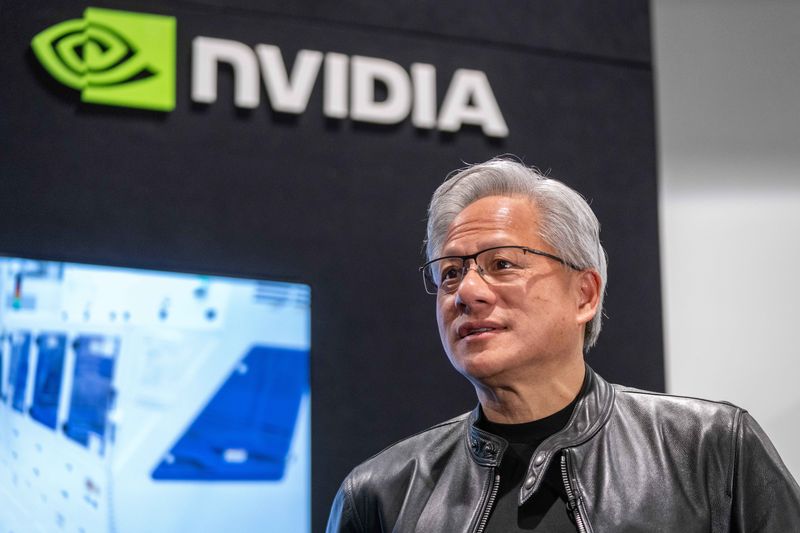
But even after a record-breaking surge not seen in 23 years, investors caught at the peak are not smiling. According to Reuters analysis, immediately after its 31.5% surge, NVIDIA was still 32% below its high in early October. It was also about 5% below its share price just before Jensen Huang’s resignation was announced.
The reality looks even harsher when the numbers are translated into account balances. According to the French daily Le Monde, just before its sharp rebound on the 23rd, NVIDIA was down about 48% from its October peak. Someone who had invested 100 million won at the peak would have seen the value of their investment shrink to 52 million won, then rise to 68.38 million won thanks to the 31.5% surge. They recouped 16.38 million won in a single day, but their loss against the principal still stood at 31.62 million won. An employee saving 1 million won a month would need more than two years and seven months to save that much.
Losses and recoveries in the stock market are never symmetrical. A 20% drop requires a 25% gain to break even; after a 30% drop, the gain needed is 42.9%; and after a 50% loss, the stock must rise by a full 100% just to return to its starting point. NVIDIA, now 32% below its peak, would likewise need to climb about 47% more after its record surge on the 23rd to regain its previous high. That is the cruel math hidden behind the flashy news of a 31% one-day surge.
Wall Street is not entirely optimistic, either. Jensen Huang’s return eased concerns about a leadership vacuum, but expectations have actually been lowered. According to Business Insider, Bernstein, a global investment research firm, raised its rating on NVIDIA to “Outperform” but kept its target price at half its previous level, cutting it from $400 to $200. Dan Ives of Wedbush Securities, a prominent tech-stock bull, also maintained a positive view while lowering his target price by 25%, from $300 to $225. The moves reflect continuing uncertainties, including corporate governance and export restrictions. In fact, the relief rally over Jensen Huang’s return visibly weakened in a single day on the New York stock market on the 24th.
NVIDIA’s stock rising 31.5% on the 23rd did not mean that semiconductor sales or operating profits rose by 31.5% that day. The market simply repriced the stock as the founder’s return briefly eased fears about the future. Ultimately, for NVIDIA to regain its former glory, it must prove with numbers that demand for AI chips will hold up, Big Tech will continue investing, and the company can generate profits consistently.
The stock market ticker loudly displays how much prices have risen compared with the day before, but an ordinary investor’s fortunes are determined by how much of their original investment remains. For those who bought at the peak and are still far from recovering their principal, even after the biggest surge in 23 years, what they need most now is not another roller coaster ride.
It is the company’s steady earnings that will prove the long wait was not in vain.
[email protected] Jeon Sang-il Reporter