[Interview] Lee Un-ju: “The Era of Exporting K-Factories, Not K-Cars, Is Coming”
- Input
- 2026-11-28 09:00:00
- Updated
- 2026-11-28 10:14:34
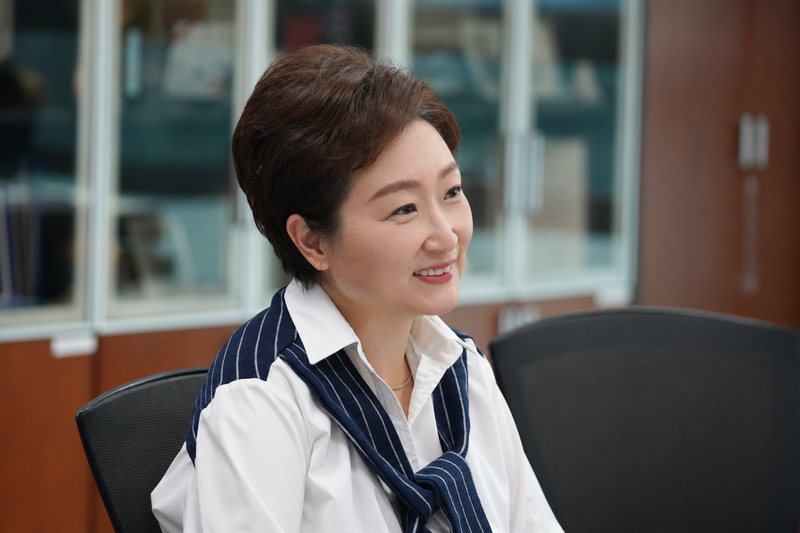
Paradoxically, some believe that the solution to overcoming the crisis also lies in manufacturing. But that means first redefining what manufacturing is. The idea is to reconfigure the parts and technology ecosystem of traditional manufacturing to build advanced industries—and, if countries want to build factories at home, for Korea to export the ability to design those factories.
Lee Un-ju, a Democratic Party of Korea lawmaker and former auto company executive, identified reshoring (bringing overseas production back home) and onshoring (expanding domestic production capacity) in strategic high-tech industries as prerequisites in an interview with this newspaper on the 19th. The idea also aligns with the “K-Initiative” put forward by the Lee Jae Myung administration to help Korea move from a follower to a leading nation.
“Take a Car Apart, and You Can See the Industries of the Future”
Lee describes the auto industry as a “comprehensive art form,” because it takes the interplay of numerous industries—from finance, steel and electronics to design—to bring a car into the world. Conversely, Lee believes that taking apart a finished product like a car and examining the individual technologies and components packed inside it can reveal the blueprint for new industries.Electric vehicles and robots are prime examples. Component technologies used in EVs, such as motors and thermal management systems, can be applied to robotics, while autonomous driving technology is also part of the physical artificial intelligence (AI) field. The fact that Tesla in the United States and Hyundai Motor Company have embarked on developing humanoid robots is also tied to these industrial connections.
Lee said, “Just as internal combustion engine cars were important in the manufacturing era, EVs and self-driving cars are extremely important in the physical AI era.” Lee assessed that “if Korea’s EV industry collapses, related upstream and downstream industries such as robotics, physical AI and batteries will also struggle to develop.”
This same concern led Lee to urge President Lee during the last presidential election to introduce robust support measures for reshoring and onshoring in strategic high-tech industries. Lee also recently introduced a bill as its lead sponsor that would provide a tax credit of 4 million won for each EV produced domestically—a move intended to keep in Korea the production base that will serve as the foundation for future advanced industries.
Korea to design factories for the world ... The next five years will be pivotal for control of mother factories
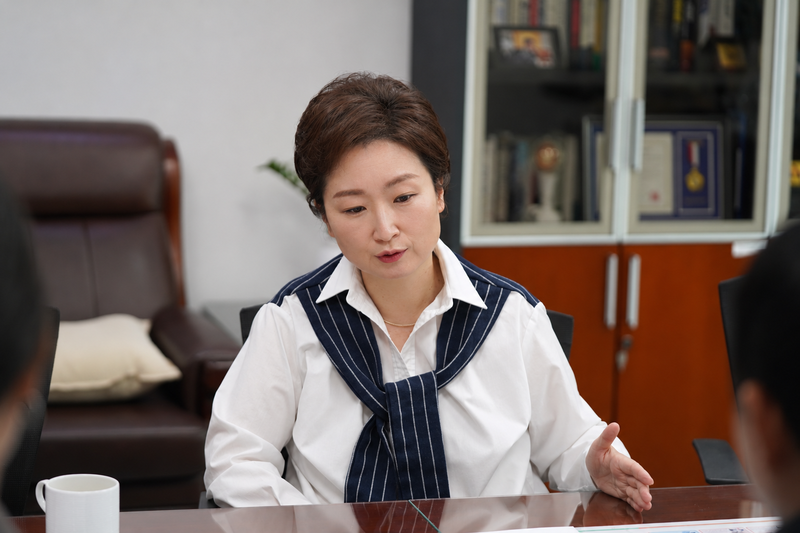
In other words, while countries’ efforts to bring manufacturing back home pose a threat to exports of finished products, they could instead create an opportunity to export manufacturing systems. Lee’s view is that, just as global companies maintain sites around the world while concentrating their core capabilities at headquarters, Korea must retain the mother factory that brings together R&D capabilities and production know-how.
Manufacturing AI, in particular, develops on the basis of data gathered on actual production lines and workers’ accumulated skills, making it difficult to separate R&D from production. Even if local production is unavoidable to enter overseas markets, losing the domestic production base itself could also mean losing the ability to innovate manufacturing processes.
Lee asked rhetorically, “If we don’t have a mother factory in Korea, would we conduct R&D on manufacturing AI here?” Lee added, “We must never let another country take this lead from us,” and said, “Which country takes that lead will be decided within the next five years.”
“Engineer-Type Workers” to Form a New Middle Class ... Lessons from the U.S. Rust Belt
The contest for leadership in mother factories is not limited to technological competition between countries. Lee believes that the nature of manufacturing will change in the physical AI era, as will the way the middle class is formed.For example, a worker alongside a humanoid robot might check its movements, teach AI the know-how gained on the production line and directly contribute to improving processes. Lee calls workers who combine production with R&D in this way “engineer-type workers.”
Lee said, “There will be more workers with blended roles, blurring the line between production workers and engineers.” Lee added, “Those people are likely to become major assets in physical AI and owners of intellectual property. I think their incomes will also rise considerably.”
The U.S. Rust Belt is the cautionary example Lee has in mind. The United States built a broad middle class on manufacturing, but economic polarization deepened as the country experienced the hollowing out of its manufacturing sector.
Lee believes that workers’ roles must change in quality, since manufacturing may not generate as many jobs in the AI era as it did in the past. While manufacturing once built the middle class through large-scale employment, engineer-type workers could form a new middle class in future advanced manufacturing.
The key question is which country will give rise to this new middle class. Lee said, “If the mother factory is in the United States, who will export those production lines around the world, conduct R&D and own the intellectual property?” Lee added, “It will be young American workers.”
The warning is that even if Korean companies thrive in global markets, the country’s middle class could decline if the added value generated by technological standardization and intellectual property goes overseas. Lee stressed, “It is extremely important to secure a mother factory for physical AI in Korea. It is especially important for the young workers of the future.”
[email protected] Jiwon Song Reporter