[What's in Store for Stocks This Week?] Sidecars Clock in at a Roller-Coaster Market... Dramatic Reversal After Jensen Huang's 'One-Day Reign'
- Input
- 2026-11-28 06:00:00
- Updated
- 2026-11-28 06:00:08
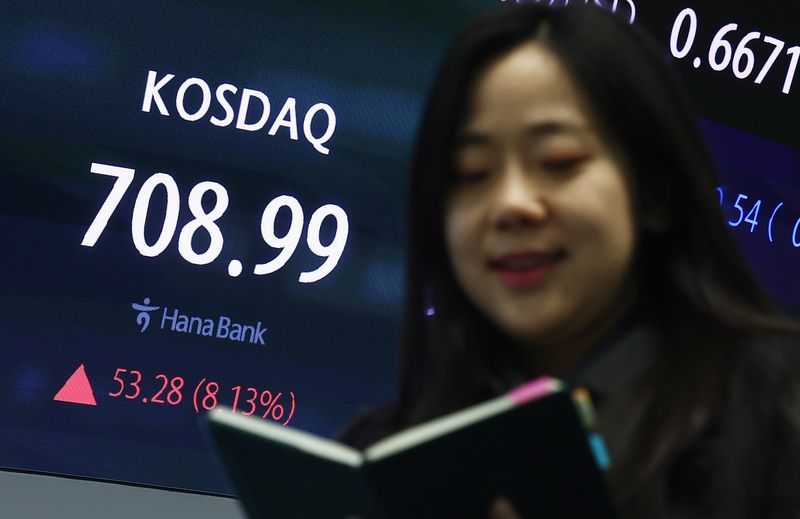
[Financial News] Monday brought screams; Tuesday saw fireworks. On Wednesday, investors plunged back into a 'mental breakdown,' and only on Friday did they finally breathe a sigh of relief. South Korea's stock market this week was a 'blockbuster thriller' that tested investors' heart endurance. According to the financial investment industry on the 28th, sidecars (temporary suspensions of the effectiveness of program-trading quotes) clocked in so frequently this week that the market displays seemed ready to catch fire. Volatility reached extremes, with sidecars triggered 102 times cumulatively so far this year as of that day.
'Jensen Huang's return as CEO of NVIDIA'—an enormous piece of good news—collided head-on with a megaton of bad news: 'AI bubble concerns, a Bank of Korea rate hike, and the U.S. warning of tariffs on overproduction.'
Monday's 'wails,' Tuesday's 'fireworks'... but a 'one-day reign'
The week began in sheer terror. On the 23rd, battered by the spillover from a plunge in U.S. semiconductor stocks, the KOSPI tumbled 5.81% intraday, triggering a sell-side sidecar at 11:33 a.m.The KOSPI closed down 3.31% at 4,708.54, while the KOSDAQ sank to 635.45 (-1.58%), its lowest level since December 9, 2024. Stocks that had ridden AI optimism were among the first to be hammered, including Samsung SDS (-15.42%), seen as a beneficiary of AI data centers, and SK Telecom (-7.32%), an investor in Anthropic.
Lim Jeong-eun, an analyst at KB Securities, described the market's precarious start to the week, saying, "With key events on the calendar—including Dell's earnings and the U.S. Personal Consumption Expenditures (PCE) price index this week, as well as next month's Federal Open Market Committee (FOMC) meeting and Consumer Price Index (CPI) release—a volatile market is likely to persist for the time being."
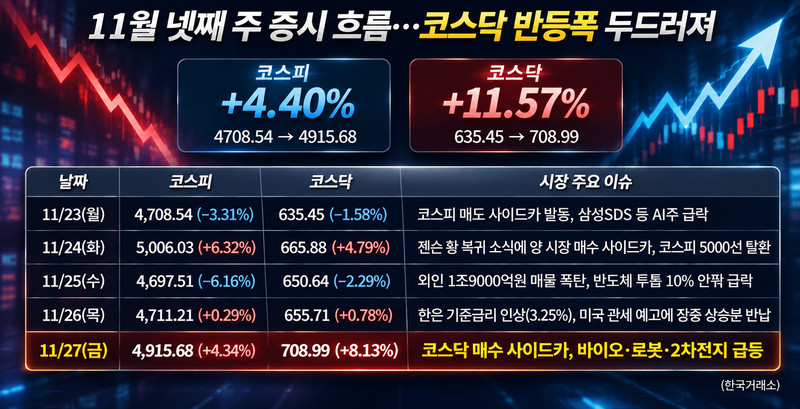
Sentiment swung 180 degrees on the 24th. News that NVIDIA CEO Jensen Huang was returning sent investor sentiment soaring, and within 30 minutes of the opening, buy-side sidecars were triggered on both the main board (9:06 a.m.) and the KOSDAQ (9:28 a.m.). Foreign investors (1.0162 trillion won) and institutional investors (963.5 billion won) returned to net buying for the first time in eight trading days.
Together, they bought about 2 trillion won, sending the KOSPI up 6.32% to close at 5,006.03 and reclaim the 5,000 mark for the first time in three trading days.
But the 'Jensen Huang effect' lasted just 24 hours. On the 25th, foreign investors unleashed a 1.9085-trillion-won barrage of selling, sending the KOSPI plunging 6.16% to 4,697.51.
Not only did it give back all of the previous day's gains in a single day, but for the first time since January 13, both the 4,700 level at the close and the 4-quadrillion-won market-cap level fell at once, with market capitalization at 3,848 trillion won.
Despite Dell's strong earnings, concerns over the profitability of AI servers persisted. Anthropic's share price fell below its IPO price, and BNP Paribas lowered its rating and price target for Micron, citing delays in data-center investment. Samsung Electronics (-9.82%) and SK hynix (-10.97%) took direct hits.
Na Jeong-hwan, an analyst at NH Investment & Securities, said, "Jensen Huang's return as NVIDIA CEO sent tech stocks sharply higher, but the rebound proved fleeting as existing concerns, including doubts about the sustainability of AI investment, remained unresolved." He concluded, "Concerns about the memory-price upcycle have added to doubts about the sustainability of AI investment."
Withstood the 'one-two punch' of rates and tariffs... non-semiconductor stocks came to the rescue on Friday
The market still could not catch its breath on the 26th. It initially appeared to be gaining momentum, rebounding to 4,817.77 early in the session, but after taking a heavy one-two punch—a Bank of Korea Monetary Policy Board benchmark rate hike (from 3.00% to 3.25% annually) and the U.S. Trade Representative's (USTR) warning of 'overproduction tariffs' under Section 301 of the Trade Act of 1974—it ended nearly flat, up 0.29% at 4,711.21.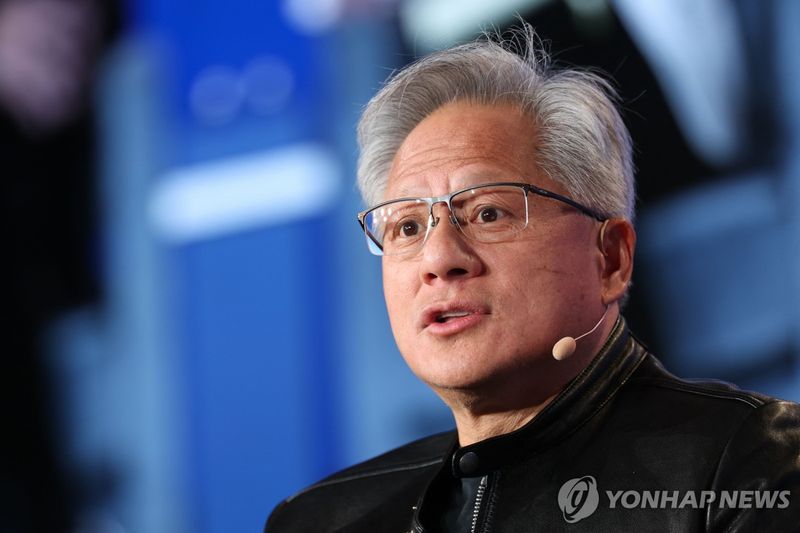
Kang Jin-hyuk, a senior analyst at Shinhan Investment & Securities, explained, "Buying in response to the previous day's sharp drop came in, but the KOSPI's gains narrowed after the Bank of Korea Monetary Policy Board raised the benchmark rate from 3.00% to 3.25% annually."
The unscripted drama's surprise ending played out on the final trading day, the 27th. With the U.S. market closed for Thanksgiving, external AI-related selling pressure briefly paused for breath, while hopes for market-stabilizing measures—including the government's move to begin preparing a securities market stabilization fund—provided a spark.
The rescue team that took the field that day was not the semiconductor sector, but the 'non-semiconductor contingent.' On the KOSDAQ, bio, robotics, and secondary-battery stocks surged across the board—including ABL Bio (+26.25%), LigaChem Biosciences (+21.16%), Peptron (+15.07%), Rainbow Robotics (+13.49%), and EcoPro (+13.28%)—triggering a buy-side sidecar and lifting the index by as much as 8.13% to 708.99.
The KOSPI also surged 4.34% to close at 4,915.68, buoyed by net buying from both foreign investors and institutions. Its weekly return, which had remained around -3.3% through Thursday, miraculously turned positive at +0.94% compared with the previous week's close of 4,869.96.
'Never average down in a falling market'... brokerages' survival guide for next week
Friday's dramatic rebound put out the immediate fire, but the mood at Yeouido research centers remains serious. That's because the underlying causes of the market's roller-coaster swings—the test of AI-industry profitability, U.S. tariff pressure, and the Fed's rate path—remain shrouded in uncertainty.Kim Hyo-jin, an analyst at Shinyoung Securities, warned, "This year, 65% of the KOSPI's decline came in June and July. It looks similar to the dot-com era." She added, "AI profitability and the Fed's rate path are unlikely to change in the short term. Looking out over a one-to-two-year horizon, the risks have grown. This is not a good time to increase exposure even to U.S. stocks or to average down every time the market falls."
Hwang San-hae, an analyst at LS Securities, also advised, "The rebound lasted just one day despite Jensen Huang's return because easing management uncertainty alone was not enough to dispel concerns about AI regulation." He added, "Rather than trying to buy at low prices, a conservative approach—buying after confirming signals of a trend reversal and improved supply-demand conditions—is likely to be effective." He continued, "For now, investors should focus on defensive areas supported by cash flow and shareholder returns, as well as company-specific earnings momentum."
Brokerages warn that blindly chasing stocks in a volatile market where sidecars have become routine could be poisonous. Next week, the main focus will be on U.S. inflation and employment data and the direction of trade negotiations, as well as whether the rotation into non-semiconductor sectors seen on Friday proves to be a one-off bounce or leads to a sustained recovery.
[email protected] Kang Jung-mo Reporter