General Act on Digital Assets Faces Opposition Even From Government and Ruling Party... “Could Violate the Constitution”
- Input
- 2026-11-27 15:56:12
- Updated
- 2026-11-27 15:56:57
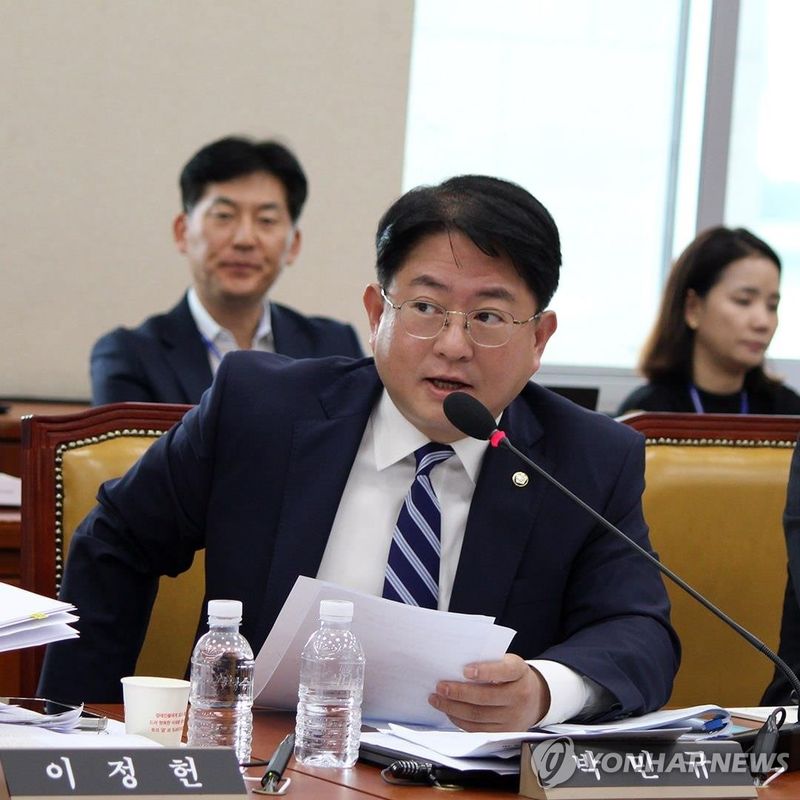
[Financial News] Opposition has emerged even within the government and ruling party to the General Act on Digital Assets recently unveiled by financial authorities. Park Min-gyu, a DPK lawmaker (Photo) publicly opposed restrictions on the stakes held by major shareholders in digital asset exchanges. According to political circles on the 27th, Park, who served on the ruling party’s Digital Asset Task Force (TF), said, “Applying stake regulations to existing operators could infringe on property rights,” adding, “I will revise this provision during the National Assembly’s review.”
Park, a member of the National Assembly’s National Policy Committee, wrote on Facebook that “limiting major shareholders’ stakes is a post hoc regulation on existing operators and carries a significant risk of being unconstitutional, including through infringement of property rights.”
He also said that he had flagged the government’s proposed restriction on voting rights for excess shares as potentially unconstitutional ahead of the previous parliamentary audit.
He also warned that if the state of legal violation continued without the shares being sold, the consequences could go beyond an administrative surcharge to include suspension of exchange operations or revocation of authorization, potentially driving existing operators out of the market.
The government’s draft Digital Asset Act, unveiled by the Financial Services Commission (FSC) on the 24th, includes a provision that would generally cap major shareholders’ stakes in exchanges at 20% to ensure the exchanges’ public nature and neutrality. An exception will be set out in an enforcement decree allowing them to hold up to 34% with FSC approval.
Shares exceeding the limit would carry no voting rights, and the FSC could issue a corrective order regarding excess holdings. The stake regulations would be deferred for three years after an exchange is designated, and smaller and midsize exchanges, among others, could have the deferral extended by up to another three years.
The FSC sent the National Assembly a government draft containing these provisions. On the 26th, Yoo Dong-soo, a DPK lawmaker and chair of the National Policy Committee, introduced as lead sponsor the Act on Innovation in the Digital Asset Industry and Protection of Users (Digital Asset Act), which incorporates these provisions unchanged.
Park said the FSC’s legal review should also be scrutinized to determine whether it was sufficient. In materials submitted to his office on August 30, the FSC said that at the time it had no record of legal review or consultation concerning the stake cap.
Park said, “The FSC explained when it unveiled the government’s draft this time that it had conducted a thorough review, but it has not yet submitted any materials to my office to support that claim.”
He also cited as problems the excessive delegation to an enforcement decree of matters that should be set out in law, and the overlapping imposition of administrative fines and criminal penalties. He added, “When a consolidated bill is drafted in the subcommittee after the public hearing, we will make sure to correct any provisions that may be unconstitutional and sufficiently strengthen the provisions needed to foster the industry.”
The National Policy Committee will hold a public hearing on the Digital Asset Act on December 3 to gather views from industry and lawmakers. Full-scale discussions of the bill are expected to begin, centered on the government draft introduced as lead sponsor by Yoo Dong-soo and bills previously introduced by lawmakers.
[email protected] Han Young-jun Reporter