K-water President Yang Seung-jo: “Water-Disaster Response Capacity in Border Areas Must Be Strengthened”
- Input
- 2026-11-27 15:54:01
- Updated
- 2026-11-27 15:54:01
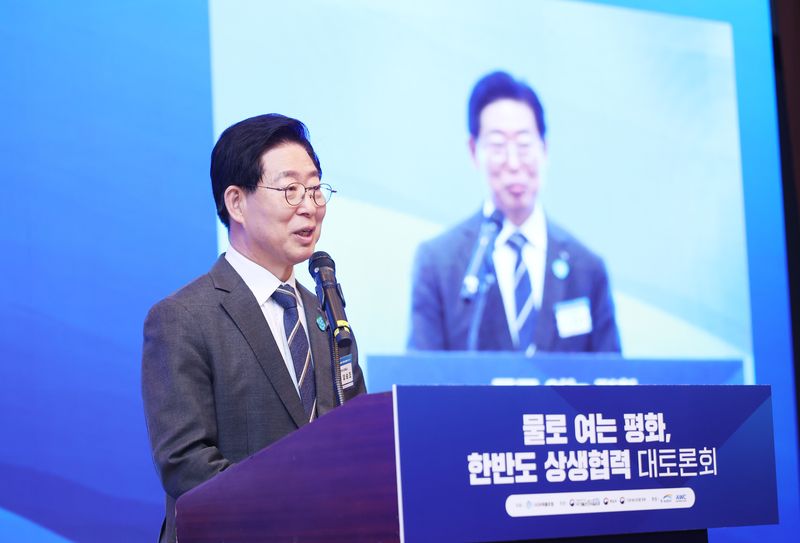
On the 27th, K-water held the “Peace Through Water: Grand Forum on Win-Win Cooperation on the Korean Peninsula” at the Seoul Garden Hotel in Mapo District, Seoul, together with the National Assembly Water Forum, the National Water Management Committee, the Ministry of Unification and the Ministry of Climate, Energy and Environment (MCEE).
In his congratulatory remarks, President Yang noted that the operation of upstream dams on shared rivers between North and South Korea, including the Imjin and Bukhan rivers, is directly linked to the safety of downstream residents. He said response systems must be strengthened to prevent harm to residents, including by securing release information in advance and disseminating it promptly.
K-water plans to continue technical preparations to monitor hydrological conditions in border areas and prepare for disasters.
The forum featured roundtable discussions on responding to the climate crisis on the Korean Peninsula, as well as presentations on flood and drought response, cooperation linking water and energy, and ways to coordinate with the international community. In a plenary discussion, local governments, private companies and international experts discussed water and environmental issues and practical measures. Based on the views presented, K-water plans to develop concrete measures with the government, the National Assembly and relevant agencies to strengthen water safety in border areas.
“It is above all important to ensure that residents can enjoy safe everyday lives without worrying about water-related disasters,” Yang said. “As a water-management specialist institution, we will work with relevant agencies to strengthen disaster response capacity in border areas and build a robust water-safety network that leaves no one behind, supporting a peaceful future for the Korean Peninsula.”
[email protected] Choi Ga-young Reporter