Gwangju's First Self-Driving Pilot Car to Hit the Streets...120 Vehicles to Be Deployed by Year-End
- Input
- 2026-11-29 11:00:00
- Updated
- 2026-11-29 11:00:04
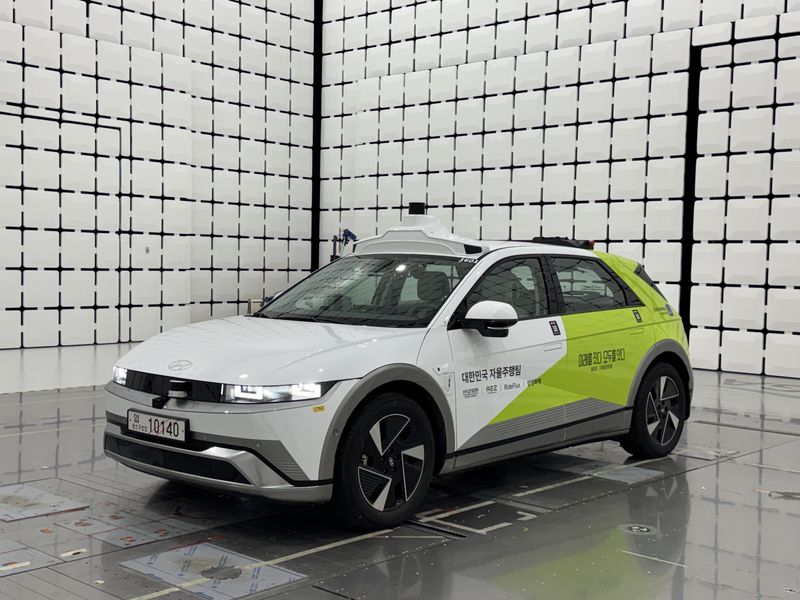
[Financial News] The country's first citywide autonomous-driving pilot, covering all of Gwangju, is set to begin driving on public roads.
According to MOLIT on the 29th, the deployment of this “first vehicle” means the project has completed preparations—including vehicle manufacturing and modification, safety checks, and the establishment of operational infrastructure—and is moving on to testing the technology on public roads. The initial operating areas for the pilot are major arterial roads around Gwangju Songjeong Station, Pyeongdong Industrial Complex and Cheomdan District. MOLIT plans to expand the areas in stages, taking into account each vehicle's level of technology and operating conditions.
Until the first half of next year, the vehicles will operate in “system-priority mode,” in which the autonomous-driving system recognizes and assesses its surroundings and controls the vehicle, while a test driver remains in the driver's seat. Operating hours will be from 7:30 a.m. to 6 p.m. on both weekdays and weekends, and will gradually be extended once the pilot system is established. Outside the operating areas, human-driven data-collection vehicles will also travel around Gwangju to gather data on road and traffic conditions. The data will be processed according to AI data-standardization guidelines jointly developed by the Korea Transportation Safety Authority and autonomous-driving developers, and used to improve the performance of autonomous-driving AI.
Operations are managed from the planning stage. The transportation platform operator draws up weekly operating plans by company and purpose, and dispatches vehicles only according to approved plans. During operation, a control system monitors vehicle locations and speeds, battery levels and the status of the autonomous-driving systems in real time. If any irregularities are detected, or if road closures, construction or accidents occur, operations are adjusted or halted.
So far, 105 dedicated software-defined vehicles (SDVs) have been delivered to Hyundai Motor Company, Autonomous A2Z (A2Z) and RideFlux, where they are undergoing modifications and inspections for autonomous-driving functions. To ensure that all 200 vehicles can be deployed without disruption, the Korea Transportation Safety Authority established a “Task Force for Responding to Temporary Operating Permits for Autonomous Vehicles” on the 18th and increased the dedicated staff responsible for checking safe-operation requirements from two to five. Each company's first pilot vehicle will have any issues identified and corrected in advance through preliminary verification tests.
Gwangju was designated the country's first autonomous-driving pilot city in January. The project is funded with 61 billion won in national funds and will run for three years, from 2026 to 2028. Some cities and provinces have previously designated parts of their cities as pilot operating zones and run fewer than 10 autonomous vehicles on specific routes, but this is the first time 200 vehicles are being deployed across an entire city. The pilot vehicles are dedicated development vehicles based on the Hyundai Ioniq 5, with key components such as steering, control and sensors duplicated. As of the 15th, 67 vehicles had been delivered, so 38 more were added in just over 10 days. MOLIT aims to begin field operations of Level 4 driverless autonomous vehicles in late 2027 or early 2028.
“The Gwangju pilot city has entered the full-scale demonstration phase with the first vehicle now on the road,” said Park Jun-hyung, director general of MOLIT's Mobility and Automotive Bureau. “Alongside ensuring safety, we will use the newly launched initiative team to speed up the deployment of follow-up vehicles and expand the pilot, actively supporting efforts to advance autonomous-driving technology development and its transition to commercialization.”
[email protected] Jeong Gyeong-su Reporter