Reserve Dronebot Units to Break Through the Manpower Cliff, Expand to 100 by 2030
- Input
- 2026-11-27 16:25:06
- Updated
- 2026-11-27 16:30:59
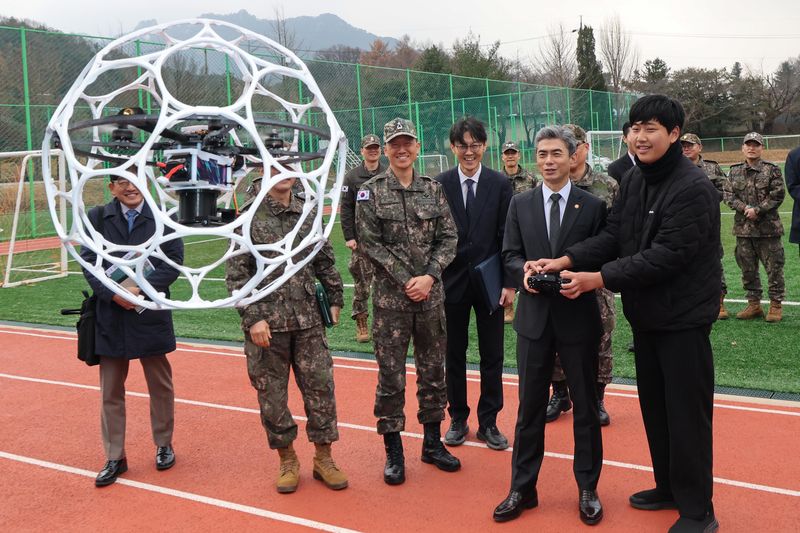
The Ministry of National Defense said Minister Kang Shin-chul visited the Army’s 72nd Infantry Division (Mobilization Division) on the 27th, inspected operations at a reserve drone demonstration unit using advanced science and technology, and encouraged troops, including standing reservists.
The on-site inspection was arranged to encourage the qualitative upgrading of reserve forces and the restructuring of unit formations around unmanned systems, amid a future security environment in which reductions in active-duty troop levels have been set due to the declining school-age population.
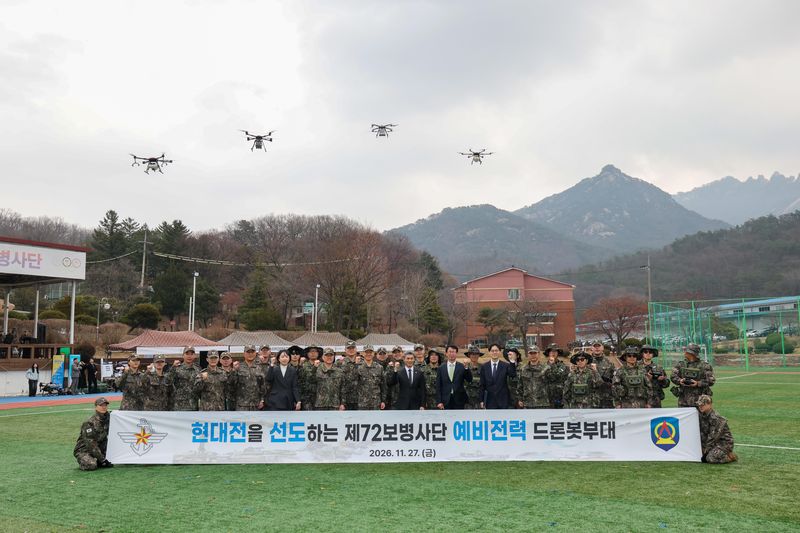
The Ministry of National Defense is working to transform existing manpower-centered mobilization and reserve units into a future-oriented force structure centered on unmanned combat systems such as drones and robots. As a leading model, it has organized a “Dronebot Company” in the 72nd Infantry Division and is operating it on a trial basis. Under this approach, highly skilled civilian drone piloting and maintenance specialists are selected as standing reservists, enabling a combat-ready reserve drone unit to operate in peacetime.
Based on the results of the pilot operations, military authorities plan to increase the number of reserve dronebot units to 10 next year, then expand it substantially to a total of 100 by 2030, dramatically boosting the combat power of the reserve forces. To support this effort, they plan to expand the total number of standing reservists, including “drone-specialist standing reservists,” to around 50,000 by 2040, and rapidly upgrade the drones, robots and other advanced equipment assigned to the units to the same level as that of active-duty units.
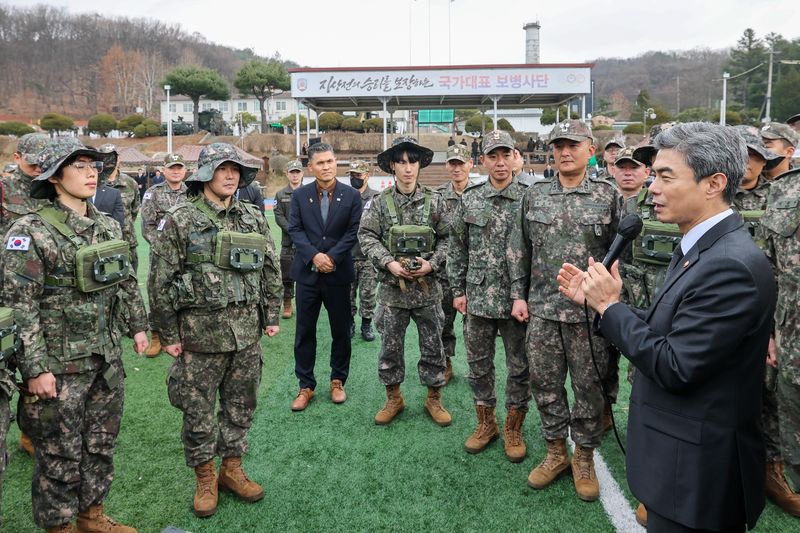
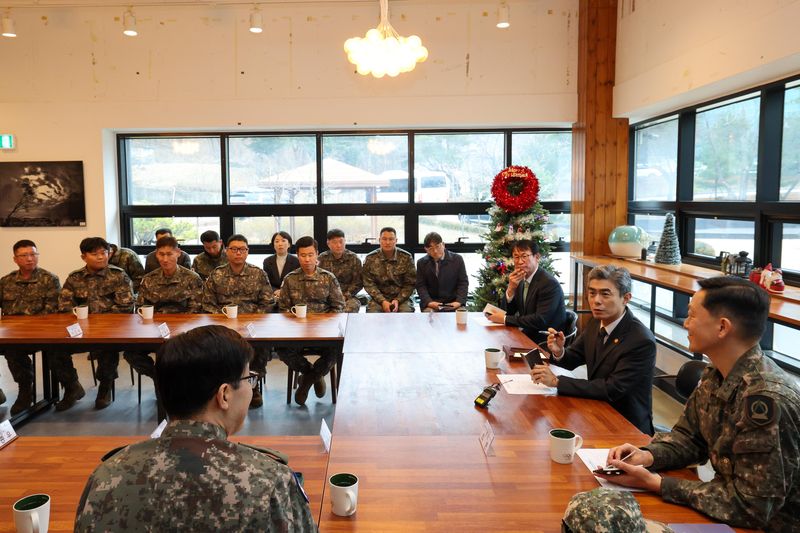
Minister Kang Shin-chul spoke with standing reservists training intensively using their civilian drone expertise and emphasized, “Reserve forces with combat readiness and expertise are now a core component of our military,” and, “We will develop the active and reserve forces together as one community of warriors and build a strong military that can prevail against any threat.”
As demonstrated by the Russia-Ukraine war, modern warfare is rapidly shifting toward a “hybrid mass-saturation tactic” that combines expensive precision weapons with the mass deployment of cost-effective suicide drones costing tens of millions of won each. North Korea, too, is rushing to deploy attack drones and suicide drones operationally while fortifying areas around the Military Demarcation Line (MDL).
Ukraine, which is fighting a full-scale war where lives are at stake, is reportedly breaking through the barriers posed by rigid military requirements (ROC) and operating an innovative ecosystem in which tactical drones made by civilian startups are listed on the military’s own procurement app, modeled on an online shopping mall, allowing frontline commanders to purchase and deploy them immediately according to operational conditions. This has reportedly enabled the country to build a drone production network capable of producing 3 million units a year.
South Korea’s military is also pursuing plans to secure 50,000 drones and train “500,000 drone warriors” by 2029, while incorporating advanced drone technology from competitive civilian small and midsize firms through initiatives such as defense drone competitions. Bringing together as standing reservists experts who work with the latest drone technology in civilian settings during peacetime is expected to be a key link in easing the rigidity of “government-led procurement” and directly channeling the flexibility of the civilian ecosystem into military capabilities.
The Ministry of National Defense plans to comprehensively reform the structure of reserve units, personnel management, and education and training so that active-duty and reserve forces can work together effectively to prevail in future warfare.
[email protected] Lee Jong-yoon Reporter