“Bread and Milk Instead of a Meal”: School Meal Services Disrupted at 31.9% of Schools Nationwide, 753 Care Classrooms Shut
- Input
- 2026-11-27 16:00:00
- Updated
- 2026-11-27 16:00:03
According to figures from the Ministry of Education, as of 11 a.m. that day, 23,562 of the 180,722 education-sector public service workers at 16 provincial and metropolitan offices of education and national schools had joined the strike, for a participation rate of 13.0%. By region, Gyeonggi had the most participants, at 5,582, followed by integrated Jeonnam-Gwangju with 2,528, Gangwon with 1,996, Jeonbuk with 1,897, Gyeongnam with 1,640, Chungbuk with 1,359, Seoul with 1,321 and Incheon with 1,313.
As participation in the strike was concentrated among school meal workers, disruptions to meal services spread across schools nationwide. Of the 12,597 schools eligible to provide meals, only 8,583 served them as usual. The remaining 4,014 schools, or 31.9%, were unable to operate meal services normally.
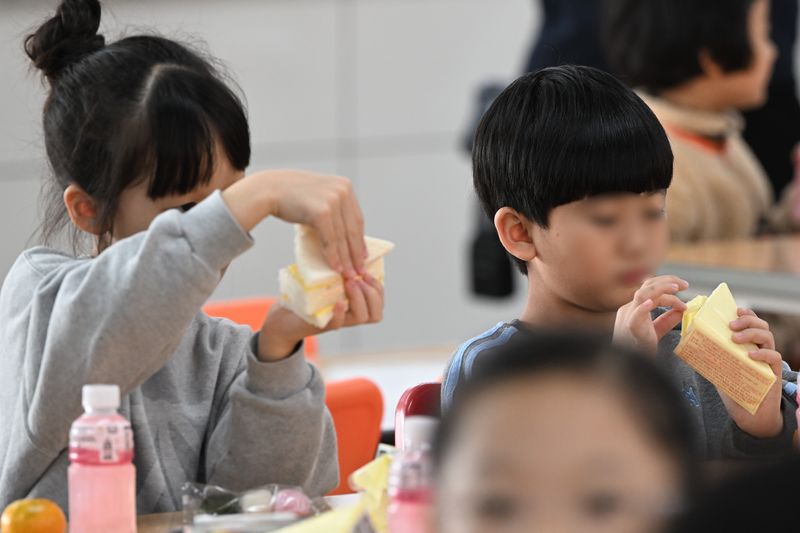
Among schools affected by meal-service disruptions, 3,698 served substitute meals such as bread and milk instead of a hot meal, while 30 asked students to bring their own packed lunches. Another 123 substituted meals by purchasing outside lunch boxes or using other means, and 163 did not serve meals at all, citing scheduled exams or adjustments to the academic calendar. By region, Gyeonggi had the most schools affected by meal disruptions, including substitute meals and packed lunches, at 926, followed by integrated Jeonnam-Gwangju with 429, Gangwon with 423, Jeonbuk with 370, Gyeongnam with 271, Chungbuk with 246 and Seoul with 153.
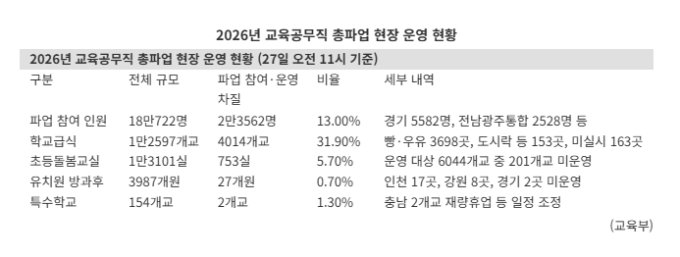
Care services and early childhood and special education also faced staffing shortages. Of the 6,044 schools nationwide operating elementary care classrooms, 201 were unable to provide care, and 753 of the 13,101 care classrooms in total closed. After-school programs stopped operating at 27 kindergartens out of 3,987 nationwide, including 17 in Incheon, eight in Gangwon and two in Gyeonggi. Two special schools in Chungnam adjusted their academic calendars, including by declaring discretionary days off.
The day before the strike, the Ministry of Education and provincial and metropolitan offices of education had set up strike-response situation rooms at their headquarters and local education support offices, and prepared emergency measures such as advance notices to families and simplified menus. However, because current law limits the use of outside replacement workers during a strike, the authorities' measures remained stopgaps, such as serving substitute meals or assigning existing school staff to the work.
A Ministry of Education official said, “The Ministry of Education and the 16 provincial and metropolitan offices of education will continue to do their utmost to reach an agreement in this year's collective wage negotiations.”
[email protected] Kim Man-gi Reporter