Limits on Warrant-Hearing Participation, Long-Distance Transport... What Are the SCIA's Practical Investigative Challenges?
- Input
- 2026-11-29 06:00:00
- Updated
- 2026-11-29 06:00:07
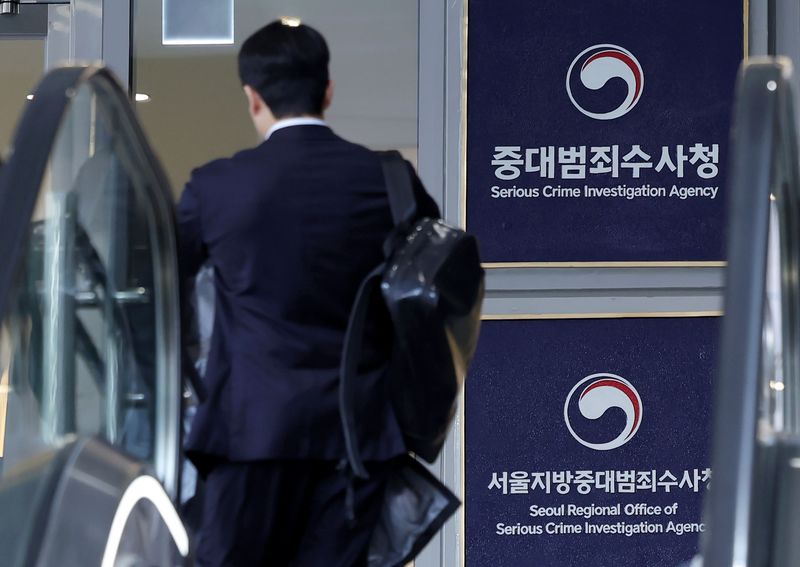
[Financial News] As it approaches the two-month mark since its launch, the Serious Crimes Investigation Agency (SCIA) is facing various difficulties in practical investigative work, including the warrant application process. One key challenge is that investigators find it difficult to explain directly why detention is necessary at a pre-arrest detention hearing (a substantive review of an arrest warrant). The agency also faces the burden of scanning paper records and transporting suspects over long distances because of the use of distant detention facilities. SCIA plans to address these issues by submitting written opinions and consulting relevant agencies.
According to legal circles on the 29th, investigators in the field at SCIA are frustrated by restrictions on their participation in pre-arrest detention hearings (substantive reviews of arrest warrants). Article 201-2 of the current Criminal Procedure Act stipulates that prosecutors and defense attorneys may attend the hearing and state their opinions. SCIA investigators, who are judicial police officers, are not given the opportunity to present their opinions directly during the hearing.
In cases previously investigated directly by the prosecution, the prosecutor in charge of the investigation could explain directly why detention was necessary. But with SCIA's launch, the person in charge of the investigation and the party permitted to state opinions at a warrant hearing have become separate. An SCIA investigator said, “We have no choice but to put all our arguments in the warrant application, and it is frustrating that the investigative agency cannot immediately challenge false claims by the suspect's side on the day of the hearing.”
SCIA said, “It is true that, under the current Criminal Procedure Act, SCIA investigators face restrictions on attending pre-arrest detention hearings,” but added, “When necessary, we plan to actively submit written opinions so that the need for detention can be adequately substantiated.”
The Public Prosecution Office takes the position that the institutional separation of roles is unavoidable. An official from the Public Prosecution Office said, “The investigative agency's views can be heard fully during consultations before a warrant application or an interview before an arrest warrant is sought,” adding, “For matters involving complex legal issues, a prosecutor from the Public Prosecution Office can explain them.”
The inadequate computer network is also adding to the workload. When applying for search-and-seizure or arrest warrants, SCIA investigative teams currently scan paper records into electronic files, save them to a USB drive and deliver them to the Public Prosecution Office. The Public Prosecution Office then registers the files in the Korea Information System of Criminal Justice Services (KICS) and applies to the court for the warrants.
SCIA said the measure was “arranged in consultation with the Public Prosecution Office to comply with the Act on Electronic Documents in Criminal Proceedings,” and explained that a separate record-scanning process would no longer be necessary once Phase 2 of KICS goes live. SCIA initially said Phase 2 was expected to go live early next month.
SCIA, which has no detention facility of its own, is also facing difficulties transporting suspects. Last month, ahead of SCIA's opening, the government designated eight police stations and six correctional facilities across the country to hold suspects. However, some facilities are far from SCIA headquarters, causing difficulties during investigations because of the need to transport suspects over long distances. SCIA said, “We plan to continue consulting with the Korean National Police Agency, taking into account the burden of transporting and guarding suspects when distant detention facilities are designated, as well as the need to ensure suspects' right to a defense.”
SCIA is also working to establish the jurisdiction for warrant applications. On the 24th, the Public Prosecution Office circulated nationwide its criteria for handling warrant applications submitted by SCIA. In principle, the provincial Public Prosecution Office corresponding to the location of a provincial SCIA branch serves as its counterpart, but dedicated Public Prosecution Offices and departments have been designated based on expertise in each type of crime.
For example, the Seoul Southern Public Prosecution Office handles financial and virtual-asset cases, the Seoul Eastern Public Prosecution Office handles voice-phishing cases, and the Seoul Central Public Prosecution Office handles warrant matters in unfair-trade cases such as collusion. Cases handled by the Narcotics Joint Investigation Division of Suwon SCIA and the Joint Investigation Division for National Finance Crimes of Daejeon SCIA are assigned to the Suwon and Daejeon Provincial Public Prosecution Offices, respectively.
The Public Prosecution Office says that jurisdiction for forwarding cases is determined separately, taking into account such factors as the venue for trial under the Criminal Procedure Act.
[email protected] Choi Eun-sol Reporter