Bronze Plaque Unveiled to Mark Hangang Railway Bridge's Designation as a Civil Engineering Heritage Site
- Input
- 2026-11-27 15:34:50
- Updated
- 2026-11-27 15:34:50
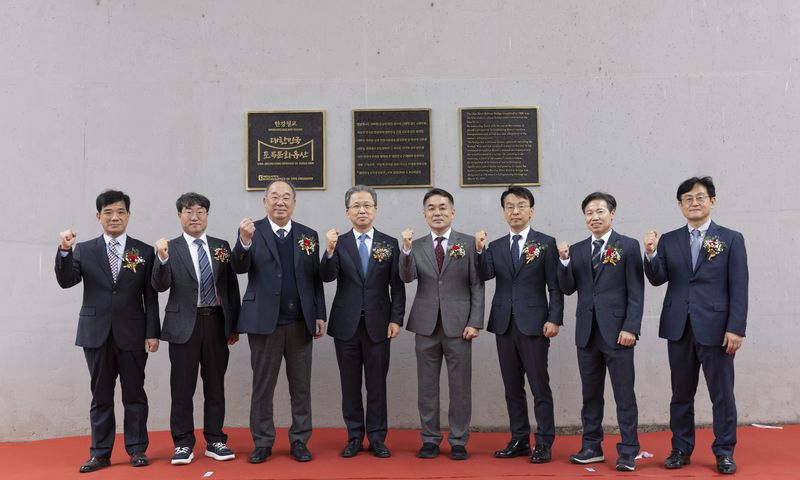
Korea National Railway said it held a ceremony on the 27th to unveil a plaque marking the Hangang Railway Bridge's designation as a Korean Civil Engineering Heritage site, near a pier at the bridge's northern end in Ichon-dong, Yongsan District, Seoul. The event was organized to commemorate the Korean Society of Civil Engineers' designation of the bridge as a Korean Civil Engineering Heritage site last March. Around 30 people attended, including officials from Korea National Railway, the Korea Railroad Corporation (Korail) and the Korean Society of Civil Engineers.
Opened in July 1900, the Hangang Railway Bridge was the first modern bridge across the Han River and a key piece of infrastructure that completed the opening of the entire Gyeongin Line. It later endured the upheavals of Korea's modern and contemporary history, suffering destruction from bombings during Japanese colonial rule and the Korean War, followed by emergency repairs.
The Hangang Railway Bridge, which now consists of four bridges running parallel to one another, brings together construction techniques that were among the most advanced of their time, from the truss structure it had when it opened to methods introduced during postwar reconstruction and the expansion to four tracks. The bridges are regarded as a living museum that offers a glimpse of the development of Korean railway construction technology across different eras. They continue to serve as a main artery for rail transport in the Seoul metropolitan area, carrying the Gyeongbu Line and Seoul Subway Line 1.
The Korean Civil Engineering Heritage designation, overseen by the Korean Society of Civil Engineers, was established to identify, preserve and promote historic civil engineering structures that have made major contributions to the development of the country's civil engineering technology and economic growth. Hangang Bridge in Seoul, Chungju Dam, Soyang Dam and the Gyeongbu Expressway have previously been included. The Hangang Railway Bridge has also joined their ranks, officially recognized for overcoming the limitations of waterborne transport on the Han River and land transportation, and for driving logistics innovation on the Korean Peninsula over more than a century.
Korea National Railway Chairman Jeong Jin-hyeok said, "I hope this plaque-unveiling ceremony will help raise public interest in the historical and cultural value of the Hangang Railway Bridge," adding, "We will continue to work not only to ensure thorough and safe facility management but also to preserve the cultural heritage value of our railways."
[email protected] Kim Won-jun Reporter