69% of Domestic Solar Modules Are Chinese-Made... Debate Over the Effectiveness of a 'Korean-Style IRA'
- Input
- 2026-11-27 15:33:46
- Updated
- 2026-11-27 15:33:46
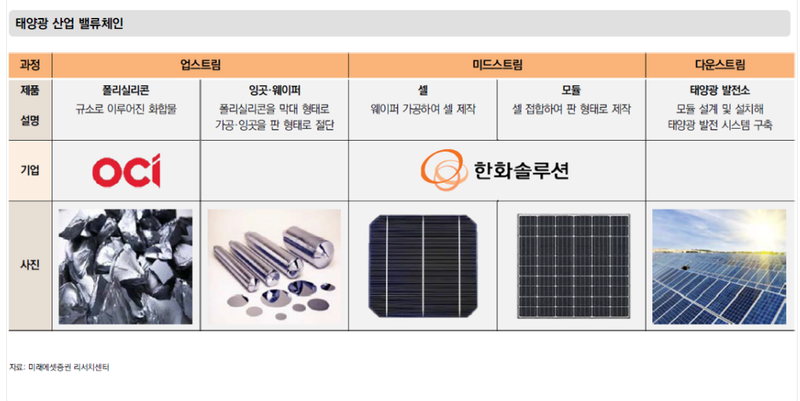
[Financial News] With the National Assembly reviewing an amendment to tax laws to establish a Domestic Production Tax Credit, the solar industry is calling for direct refunds and the transfer of tax credit rights to third parties to be allowed. Chinese-made products accounted for 69.3% of domestic solar module supply last year, but under the government’s proposal, domestic manufacturers with insufficient corporate tax liabilities would find it difficult to use the credits immediately, even if they increase production.
According to the government and industry on the 27th, the National Assembly’s Finance, Economy and Planning Committee Tax Subcommittee has been reviewing an amendment to the Restriction of Special Taxation Act, including the establishment of a Domestic Production Tax Credit, since the 23rd.
In August, the government announced in its tax reform plan that it would introduce a Domestic Production Tax Credit in six key sectors, including solar power, wind power, secondary batteries and semiconductors. Under the plan, an amount calculated by multiplying the production volume of eligible products directly produced and sold in Korea by a standard credit amount would be deducted from income or corporate taxes. The credit would be available through the end of 2036.
The government proposal includes a provision allowing credits unused in a given year to be carried forward for the next 10 years, but it does not include direct refunds or the transfer of credit rights. As a result, companies with insufficient corporate tax liabilities due to losses or other reasons would find it difficult to reduce their immediate production costs, even if they accrue credits.
The United States supports solar cells, modules and other products made domestically through the Advanced Manufacturing Production Credit (AMPC) under the Inflation Reduction Act (IRA). Companies that meet certain requirements can receive a direct refund of the credit or transfer it to a third party.
At a public briefing on the Korean Green Transformation (K-GX) strategy on October 7, President Lee Jae-myung proposed paying subsidies to loss-making companies upfront and deducting them from future tax credit amounts. The government is reportedly leaning against pursuing direct subsidies, having taken into account factors such as fairness and feasibility. However, the Ministry of Finance and Economy and the Ministry of Planning and Budget said on the 5th that a decision had not been made on whether to introduce them.
The expansion of Chinese products’ share of the domestic market is behind the solar industry’s emphasis on the effectiveness of the production tax credit.
According to data obtained from the Korea Energy Agency by Shin Jeong-hun of the Democratic Party of Korea (DPK), Chinese-made modules accounted for 2,601 MW, or 69.3%, of the 3,753 megawatts (MW) of solar modules supplied domestically last year, based on facility confirmations under the Renewable Portfolio Standard (RPS). The share of domestically made modules fell 47.7 percentage points in six years, from 78.4% in 2019 to 30.7% last year.
Investment in domestic mass production of next-generation solar cells is also tied to the design of the production tax credit. Industry, academia and research institutions in Korea are pursuing the development and demonstration of key processes for tandem solar cells, which combine silicon and perovskite to increase power-generation efficiency. The industry’s target for full-scale mass production is around 2029.
Some in the solar industry say that if direct refunds or the transfer of credit rights prove difficult to introduce, temporary purchase subsidies for domestically produced products or separate financial support programs should also be implemented.
An industry official said, “To maintain the domestic production base and invest in next-generation facilities, companies with insufficient tax liabilities should also be able to use the credit benefits immediately.”
[email protected] Kim Mi-hee Reporter