[Interview] Yoo Sang-bum: “We Won’t Be Rushed by the December 2 Deadline ... No Concessions on the Future Fund”
- Input
- 2026-11-28 09:00:00
- Updated
- 2026-11-28 09:00:00
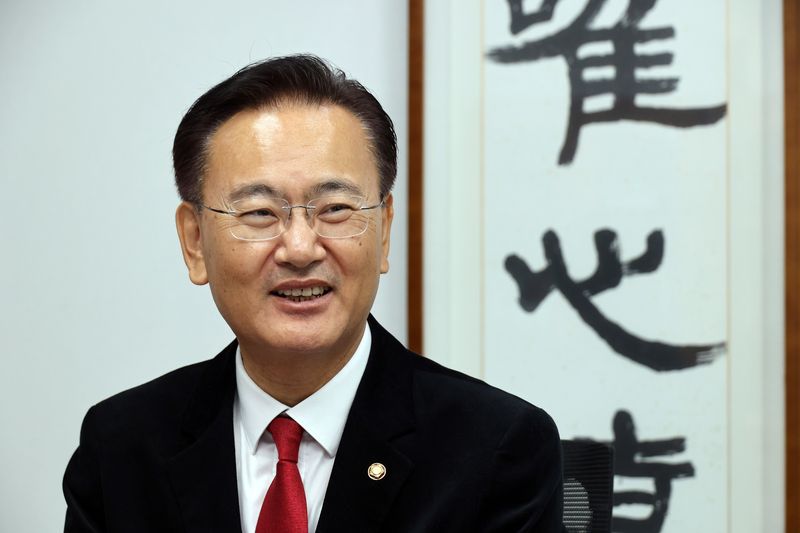
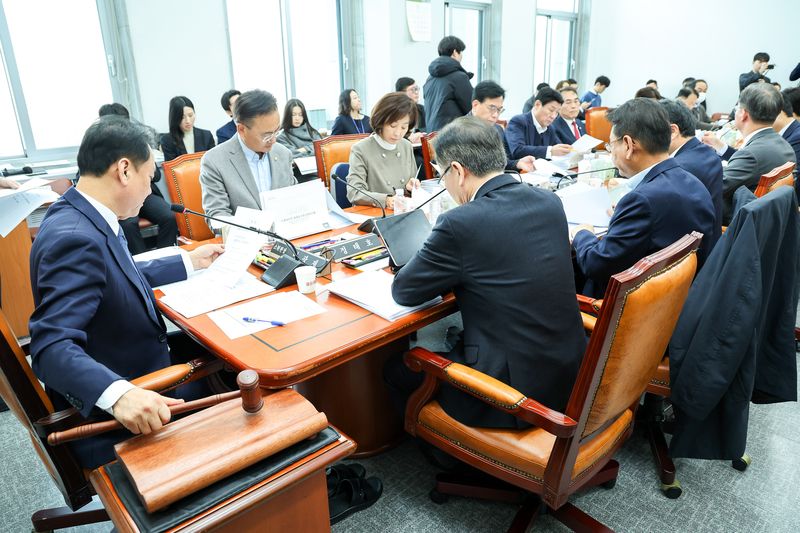
[Financial News] This is nothing short of a budget war. The National Assembly’s Special Committee on Budget and Accounts is locked in a fierce battle over the 2027 government budget proposal, worth 821 trillion won, and the 162-trillion-won Future Fund. The struggle over various contentious budget items has continued well past midnight. The Democratic Party of Korea has said it will make some adjustments to the government’s original proposal and pass it by the statutory deadline of December 2. The People Power Party, by contrast, plans to block the original proposal, even if that means missing the deadline.
The central issue is the Future Fund. The government plans to set aside additional semiconductor tax revenue in the fund while investing 45 trillion won of it in the future. It describes the fund as a strategic investment platform for channeling large tax revenues into productive spending and says it can also help stabilize public finances by strengthening fiscal capacity. The People Power Party, however, says, “Let’s pay down the debt first.” The party has also introduced a bill to establish a “Sustainable Future Fund,” requiring at least 50% of any increase in tax revenue to be deposited into the fund and stipulating that the reserves be used only to stabilize public pension finances and repay national debt.
In an interview with Financial News on the 23rd, People Power Party lawmaker Yoo Sang-bum, the opposition’s budget committee secretary at the National Assembly, summed up the government’s budget proposal as “a budget that piles cash in the coffers while borrowing money.” He said, “It sets aside 104.4 trillion won in surplus funds in the Future Fund while issuing 100.1 trillion won in deficit government bonds. The administration is on a spending spree while the public is buried in debt,” adding, “Tax revenue has risen temporarily because of the semiconductor boom, but spending has been increased for programs that recur every year.”
Here is a question-and-answer session with Rep. Yoo.
“The Administration Is on a Spending Spree, the Public Is Buried in Debt ... We Support Investment but Oppose the Government’s Proposal”
—The government’s 2027 budget proposal is a “super budget” totaling 820.9 trillion won, up 12.8% from this year. It has been described as reflecting President Lee Jae Myung’s expansionary fiscal stance. What do you see as the proposal’s biggest features and problems? Are there any aspects the opposition could view positively?▲It is a budget that piles cash in the coffers while borrowing money. It sets aside 104.4 trillion won in surplus funds in the Future Fund while issuing 100.1 trillion won in deficit government bonds. The administration is on a spending spree while the public is buried in debt. Tax revenue has risen temporarily because of the semiconductor boom, but spending has been increased for programs that recur every year. I agree with the direction of investment in AI and semiconductors. I support investment, but not a blank check.—The People Power Party is calling for fiscal rules to be enshrined in law, citing concerns about worsening fiscal soundness. President Lee Jae Myung, by contrast, has emphasized that “the fundamentals of our fiscal health are getting stronger,” saying the managed fiscal balance and national debt ratio as a share of GDP are improving. How do you assess the government’s claims? Why do you believe it is essential to legislate fiscal rules?▲A government that does not pay down debt in years of plenty will not be able to do so in lean years either. The ratios may be improving, but national debt will increase by 106 trillion won next year alone, and interest on government bonds costs 110.7 billion won a day. When tax revenue is short, the government issues bonds; when tax revenue rises, it issues bonds too. If government spending expands during a boom and drives up prices and interest rates, ordinary people face a heavier burden from loan interest. That is why fiscal rules must be enshrined in law.—The government is pushing to establish a Future Fund worth 162 trillion won. The People Power Party says surplus funds should be used to repay government bonds. Does the party oppose the creation of the fund itself? What do you think of the government’s argument that investment in future industries, including securing a decisive lead in semiconductors, is unavoidable? Is there room for a compromise between the ruling and opposition parties?▲The administration calls it a “fiscal reservoir,” but it is not a reservoir; it is a slush fund. The government says the fund is meant to prepare for declining tax revenue, yet it plans to spend 45.4 trillion won in the first year, and there is no legal basis for it. When asked to repay government bonds, the government says it is doing so for the “sound development of the government bond market.” That is sophistry. We oppose establishing the fund in its current form. Future investments can be included in the regular budget and reviewed by the National Assembly. Repaying at least half of the surplus funds and putting parliamentary oversight mechanisms in place are the starting points for a compromise.—The government has nearly doubled the previous year’s budget for three mega-projects, including AI and semiconductors. The People Power Party has identified some education spending and spending related to the Industrial Base Credit Guarantee Fund as “problematic projects.” Do you support the broader direction of increasing investment in future industries? Do you plan to seek cuts to those projects as well? What criteria will you use to decide whether to reduce their budgets?▲Budget committee chair Lee Kwang-jae has also said there will likely be many budgets that hand out money just because they use the word “AI.” I agree with the direction of investment, but public spending should not replace investment that the private sector would make. The criteria are the specificity of project plans, verification of results and the possibility of parliamentary oversight. For example, 423.6 billion won in special contributions to the Industrial Base Credit Guarantee Fund would support private investment projects tied to the mega-projects through guarantees and funds. We called for a 300-billion-won cut because there was insufficient evidence of demand.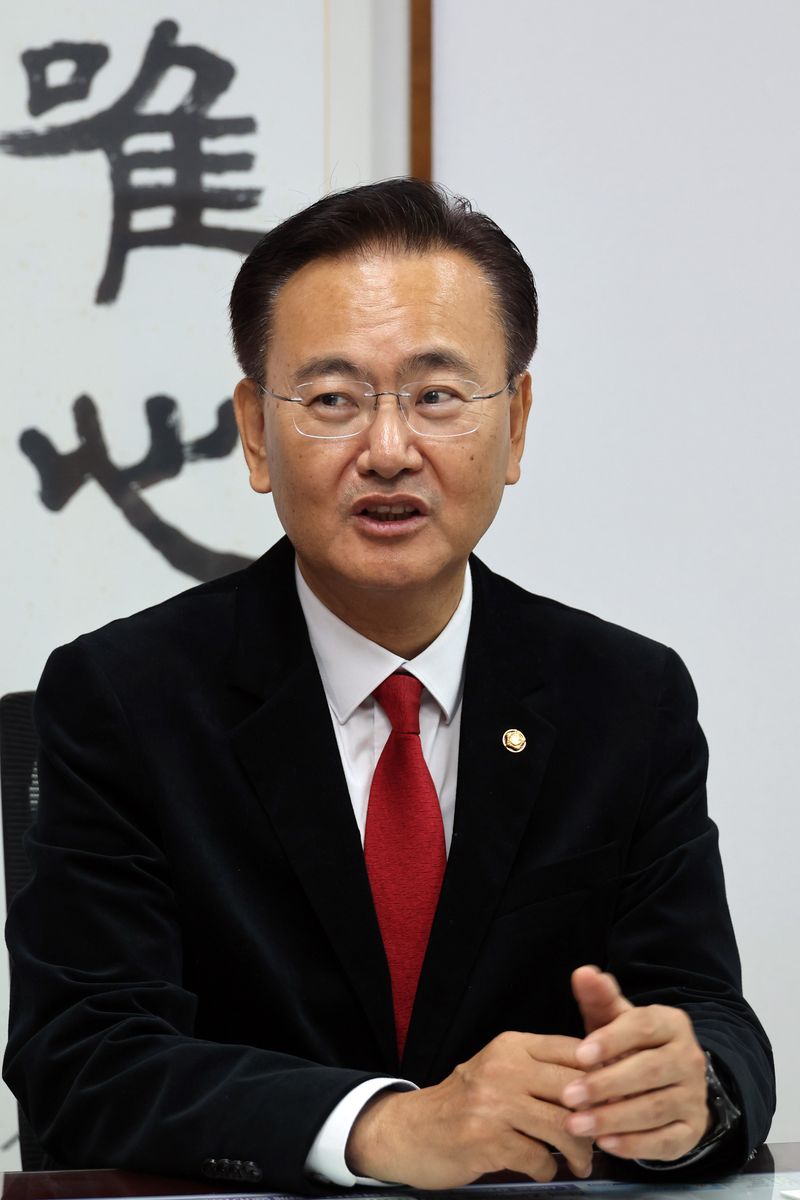
“We’ll Seek 27 Trillion Won in Cuts and Secure Half-Price Tuition at Private Universities ... We Won’t Rush It Through Under Deadline Pressure”
—The People Power Party is seeking major cuts to the government’s budget proposal. What are the three projects that should be cut first? In particular, which cuts do you believe must be secured in negotiations between the ruling and opposition parties, and what scale of cuts are you seeking?▲We must first fix a fiscal structure that piles up cash while borrowing money. First is the Future Fund’s 104.4 trillion won in surplus funds; second, fund investments, which have grown to 5 trillion won; and third, 4.7 trillion won for Frontier AI. The party has already proposed 27 trillion won in cuts. Even if we cannot secure all of them, we will make sure at least one goes through. At least 52 trillion won—half of the surplus funds—must be used to repay government bonds.—Party leader Jang Dong-hyeok announced a proposal to increase spending by about 11.6 trillion won for “five key livelihood budget priorities,” including half-price tuition at private universities and the Youth Monthly Rent Support Program. How do you plan to address the funding challenge of seeking major cuts to the government budget while also pursuing a substantial increase in spending? Which measures must be secured in negotiations with the ruling party?▲We are not proposing to issue government bonds to fund the increases. We want to return to the public money the administration intends to spend improperly. The party’s proposed cuts total 27 trillion won, while its proposed increases total 11.6 trillion won—less than half as much. Cutting unnecessary and nonessential spending is what will allow us to increase the livelihood budget. We intend to make sure that half-price tuition at private universities and youth rent support are included.—December 2 is the statutory deadline for passing the budget proposal. Given the current differences between the ruling and opposition parties, what do you see as the biggest obstacle to negotiations? What principles can the People Power Party absolutely not compromise on, and what can be negotiated? If reaching an agreement by the deadline becomes difficult, what steps are you considering?▲We cannot pass a budget that piles up cash while borrowing money just because we are under pressure from the statutory deadline. The biggest issue is the Future Fund, for which the government wants to approve the budget first despite having no legal basis. We cannot compromise on the National Assembly’s budget review authority or repayment of government bonds. The scale of projects and pace of implementation can be negotiated. The statutory deadline cannot serve as a license for a hasty review. If the ruling party forces the proposal through with its majority, it must also take responsibility.[email protected] Lee Hae-ram Reporter