“₩1.1 Billion Gone in Two Months”... Korean Retail Investor in U.S. Stocks Posts Confession About Switching From Jeonse to Monthly Rent After a 90% Plunge
- Input
- 2026-11-28 15:00:00
- Updated
- 2026-11-28 15:00:03
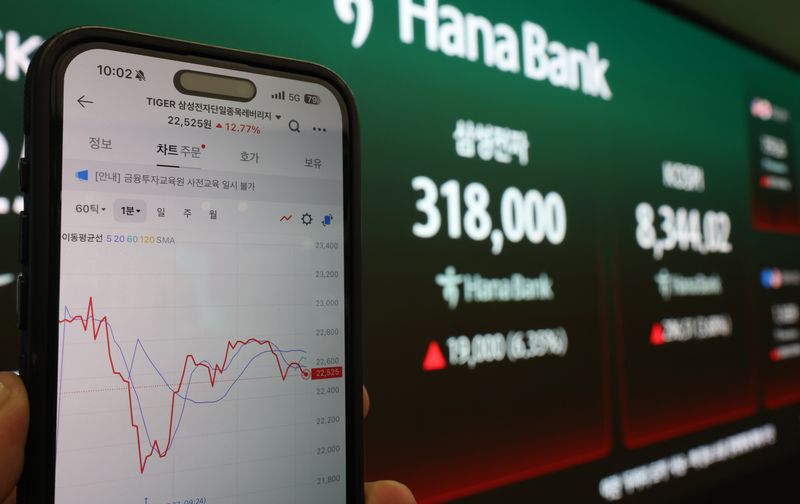
[Financial News] #. “As of this moment, 1.1 billion won has vanished.”A story about an individual investor who lost 1.1 billion won in two months after investing in a 3x leveraged U.S. semiconductor exchange-traded fund (ETF) has drawn attention. U.S. semiconductor stocks have plunged day after day, driving the ETF’s price down to roughly one-tenth of its June peak. In response, individual investors have shared accounts of similar losses in a series of comments.
On the 25th, a post titled “I Think I’ll Have to Give Up” appeared in a U.S. stock investment community. The author, identified as A, wrote, “As of this moment, 1.1 billion won is gone,” adding, “I’ve given back all my gains this year and all my 2025 gains; now it looks like even my 2024 gains will disappear.” A added, “I watched all those gains vanish in just two months.”
The losses have affected everyday life, too. A said, “When the jeonse lease on my 36-pyeong apartment expires, I’ll have to move to a two-room villa rented on a monthly basis,” adding, “I wanted to take the whole family to a buffet at a nice hotel at the end of the year, but this is how things turned out.” The product A invested in is believed to be the Direxion Daily Semiconductor Bull 3X ETF (SOXL).
SOXL down 60% this month alone... nearly 90% below its peak
SOXL tracks the daily return of the U.S. semiconductor index at three times the rate. If the index falls 10% in a day, SOXL is structured to fall around 30%. According to the U.S. financial outlet 24/7 Wall Street, SOXL hit an all-time high of $300.77 on June 22 and has since fallen nearly 90%.
The losses accelerated sharply this month. On the 5th, the PHLX Semiconductor Sector Index (SOX) plunged 12.2%, and SOXL fell 38.71% in a single day. It then plunged 31.83% on the 20th and 24.55% on the 24th, closing at $32.60. The drop on the 24th was especially shocking because it came right after a 39.93% surge the previous day.
The market cheered the return of NVIDIA CEO Jensen Huang, but gave back those gains within a day. In the post, A also expressed regret, writing, “If only I’d closed out without overthinking it when Huang returned, I could have saved my 2024 gains.” Market watchers cite growing concerns about AI and data center regulation following the U.S. midterm elections, new U.S. export regulations, and turmoil among NVIDIA’s leadership as factors behind the steep decline.
Korean investors in U.S. stocks bought the dip... and deepened their losses
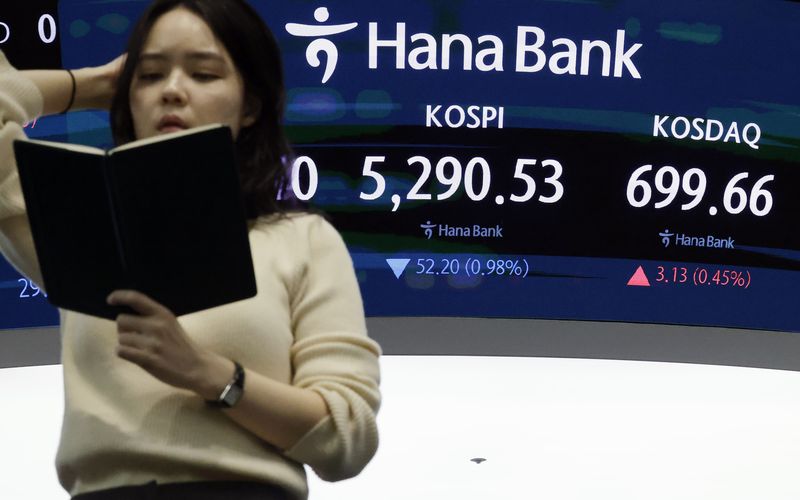
The problem is that Korean investors bought large amounts of SOXL even as prices fell. According to the Korea Securities Depository, domestic investors’ net purchases of SOXL totaled $2.96785 billion (3.9697 trillion won) in October, the highest among overseas stocks. The concentration of Korean investors in SOXL drew criticism throughout the year. As of the end of August, the value of domestic investors’ holdings in custody amounted to about 30.8% of SOXL’s total market capitalization.
Investors sharing similar predicaments came forward in a series of comments. One investor wrote, “I’d made around 1.2 billion won in profits since 2020, but gave it all back this year and moved into loss territory,” adding, “I went for a consultation about monthly rent today.” Another investor admitted, “I managed to hold on until it hit 1 billion won, but now that it’s reached 1.4 billion, it’s getting tough.” One comment read, “I want to go back to two months ago.”
Some also questioned the investment strategy itself. One commenter said, “With single-theme leveraged investments, something like this will happen eventually, no matter what you do,” adding, “The biggest problem is that backtesting—using historical data to validate a strategy—can make people believe they’re prepared for a downturn like this.”
[email protected] Kim Hee-sun Reporter