KENTECH Dreams of Becoming the 'Lifeblood' of Honam Mega-Projects, Prepares to Emerge as a World-Class Energy Engineering University [On-the-Scene Report]
- Input
- 2026-11-28 14:00:00
- Updated
- 2026-11-28 14:00:02
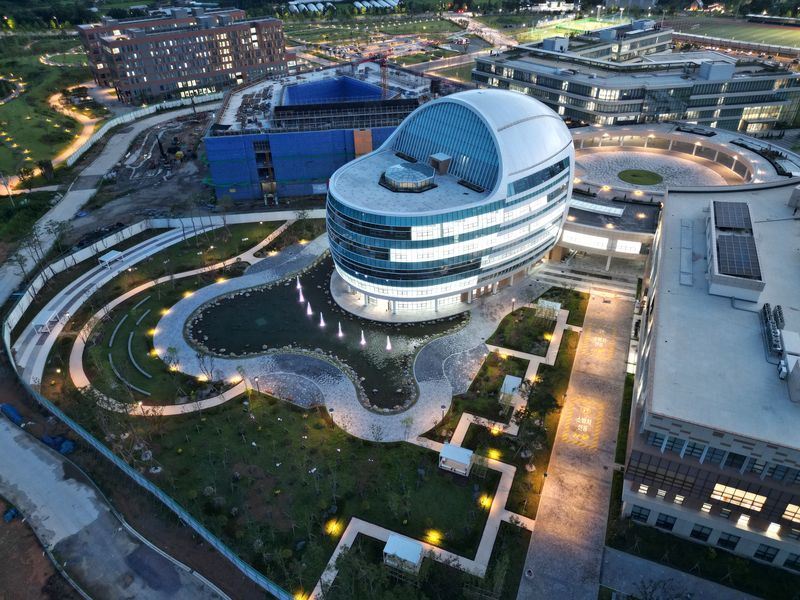
But that first impression quickly faded. On the 20th, I arrived at KENTECH's campus in Naju-si, Jeonnam-Gwangju Integrated Special City, in a light autumn drizzle. KENTECH is located in the heart of Naju Bitgaram Innovation City, known as the home of the headquarters of Korea Electric Power Corporation (KEPCO), the country's largest public energy company. Only then did the university's founding purpose—training energy talent and promoting industry-academia collaboration—naturally come into focus.
The campus was bustling, in keeping with KENTECH's founding goal of supporting South Korea's transition to renewable energy and becoming the “lifeblood” of Honam's mega-projects. A cradle for some of the country's top energy talent, KENTECH aims to build on Honam's energy-industry ecosystem and become a world-class research university by 2050, standing alongside the California Institute of Technology (Caltech) in the United States.
As if not a moment should be wasted, KENTECH has connected its main buildings to make it easier for students to get around. It was also notable that the university minimized vehicle access to campus, enabling students and staff to safely use electric-powered personal mobility devices (PMs).
■ Students, not professors, at the center... undergraduate questions become papers in international journals
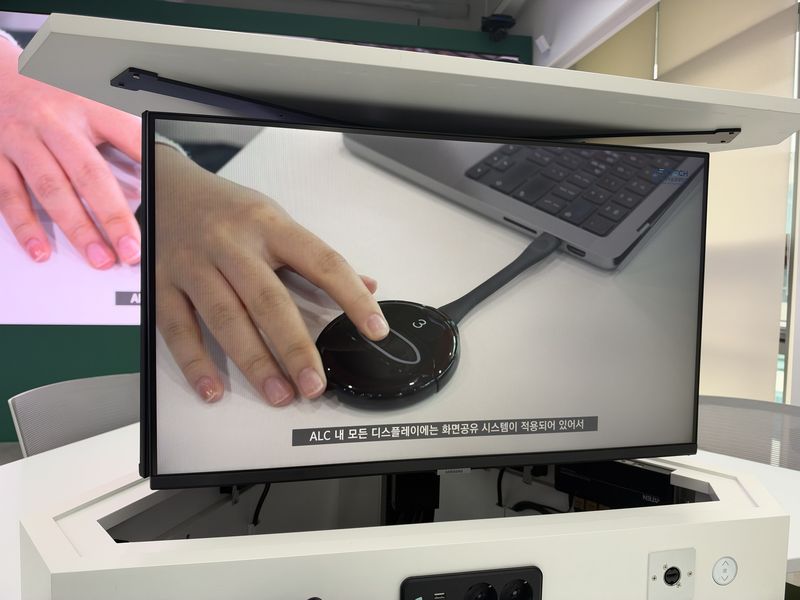
Inside the classroom, the desk arrangement and teaching aids stood out as quite different from those in a typical university classroom. KENTECH calls these rooms “ALCs” (Active Learning Classrooms).The most striking feature inside the ALC was the “Station Desk.” Designed so that all the students seated around it can see the same monitor, the desk was developed in-house by the university for KENTECH's distinctive discussion- and project-centered classes. The university also holds a related patent. The desk creates an environment where students can share project updates and discuss them freely while seated around it.
To keep classes centered on students rather than professors, the rooms have electronic boards, mobile whiteboards and glassboards that can be written on not only at the front but also along the sides. An AI-based system that automatically adjusts the camera angle to the speaker has also helped make classes more engaging.
KENTECH's approach to learning is also producing tangible research results. According to the university, Kim Dae-hyeok, who was a second-year undergraduate at the time, published a paper as first author last February in Physical Review E, an international journal in the field of physics. Titled “Structural and dynamical crossovers in dense electrolytes,” the study used computer simulations to analyze the conditions under which the structure of highly concentrated electrolytes and the characteristics of ion movement change.
Last July, Noh Geon, then a fourth-year undergraduate, took first place in the undergraduate category of the poster competition at the IEEE PES General Meeting, an international conference on power and energy. The research focused on optimizing power-grid operations by taking the condition of transmission lines into account. It applied problem-solving methods learned in classes and labs to a real-world energy system.
■ From a microscope costing more than 6 billion won to a semiconductor cleanroom... KENTECH builds research capacity
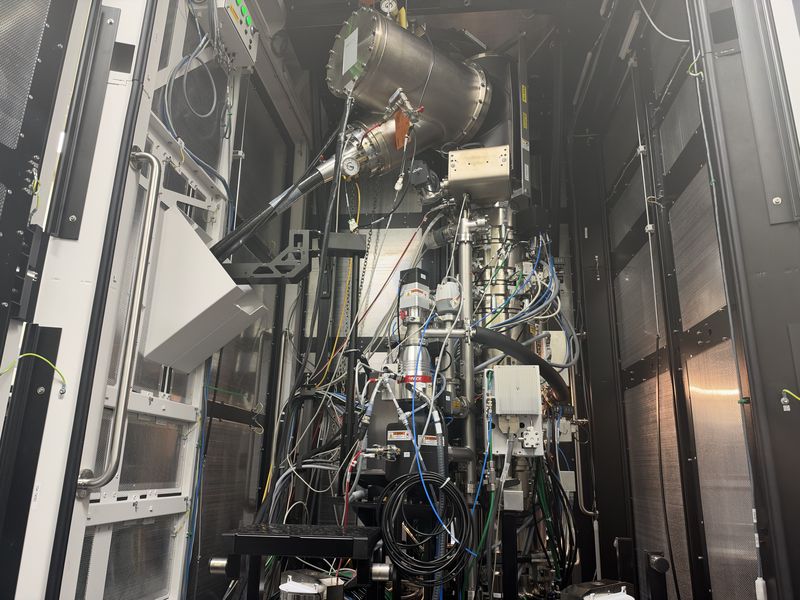
In 2022, KENTECH became the first institution in Korea and the third in the world to acquire a spherical-aberration-corrected scanning transmission electron microscope (STEM) of the Spectra Ultra model. The instrument can analyze the structure and composition of materials at the atomic level and observe how materials change internally as temperature and voltage vary.
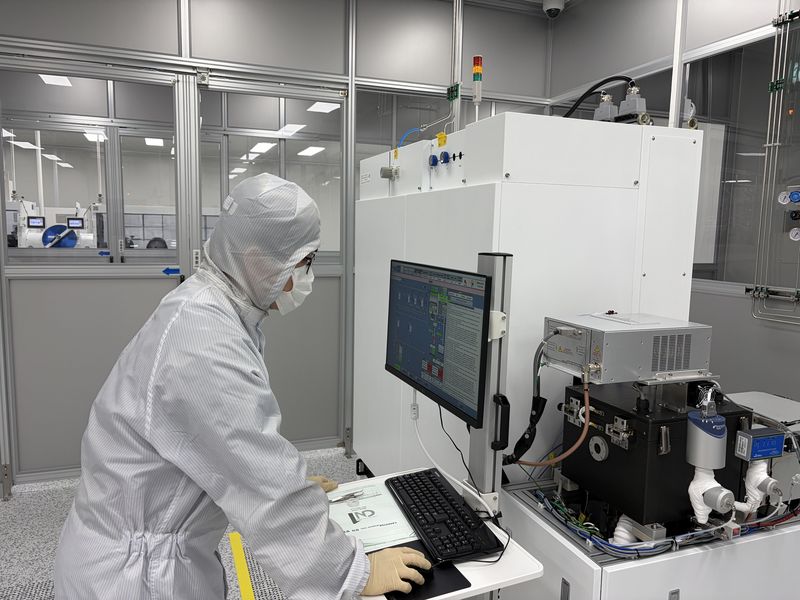
The cleanroom for training semiconductor talent also drew attention. KENTECH has installed process equipment on campus that can be used to fabricate actual semiconductor devices and evaluate their performance. It has created an environment where everything from materials research to semiconductor device fabrication and performance evaluation can be carried out in one place.
The cleanroom is also expected to serve as a hub supporting research and testing for the regional semiconductor industry, beyond its role as an on-campus research facility. As plans move forward to establish a semiconductor cluster in the Honam region as part of the mega-project, KENTECH intends to use the infrastructure not only to teach students about semiconductors but also for joint research with outside institutions and companies.
Research results are also leading to technology transfers and startups. After signing a contract to transfer air-purification technology that uses sunlight and renewable electricity to a company for approximately 2.3 billion won, KENTECH signed another technology-transfer contract this year, worth 500 million won, for its core technology in liquefied-hydrogen plants and infrastructure systems engineering. Faculty members have also launched seven startups based on technologies including hydrogen liquefaction processes, bioenergy and biomaterials.
■ Supporting Honam's mega-projects... connecting regional industry and research
KENTECH's ultimate aim is to link talent development and research results with the growth of regional industry. With semiconductor and AI data centers, as well as industrial complexes based on renewable energy, being pursued in the Honam region, the university aims to become a focal point for industry-academia-research collaboration, developing relevant technologies and supplying skilled professionals.A flagship initiative is the 49-billion-won K-Grid Talent and Startup Valley Development Project. It covers research into technologies needed to operate next-generation power grids—including forecasting renewable-energy generation, managing electricity demand and integrating energy storage systems (ESS)—as well as joint research and testing with companies and support for startups. KENTECH also plans to establish a collaboration framework with the Gwangju Institute of Science and Technology (GIST) and Chonnam National University to train specialists in next-generation power grids.
KENTECH is also preparing to link up with the planned artificial-sun research facility in Naju. Once follow-up procedures, including the government's preliminary feasibility study, clarify plans to establish a national fusion research hub, the university intends to draw on its faculty and research infrastructure for joint research and specialist training.
For Honam to become a new industrial hub based on its abundant renewable-energy resources, it is just as important to secure the technology and talent needed to supply electricity reliably and use it efficiently as it is to generate power. KENTECH has identified its role in the region as supplying the technology and talent that can turn Honam's energy resources into industrial competitiveness.Acting KENTECH President Park Jin-ho said, “The semiconductor and AI industries in the southwestern region, as well as RE100 industrial complexes that meet their electricity needs with renewable energy, need the technology and outstanding talent to ensure a stable supply of carbon-free electricity and use it efficiently. We will connect KENTECH's research in power grids, power semiconductors and energy AI with industry, and support students as they grow through participation in future-energy research, including hydrogen, renewable energy, fusion and climate technologies.”
[email protected] Kim Hyeong-gu Reporter