Supreme Court: “Reimposing Fine on HD Hyundai Heavy Industries Also Abuses Discretion” ... 37-Fold Fine Disparity Remains Even After Maximum Reduction
- Input
- 2026-11-27 14:00:47
- Updated
- 2026-11-27 14:00:47
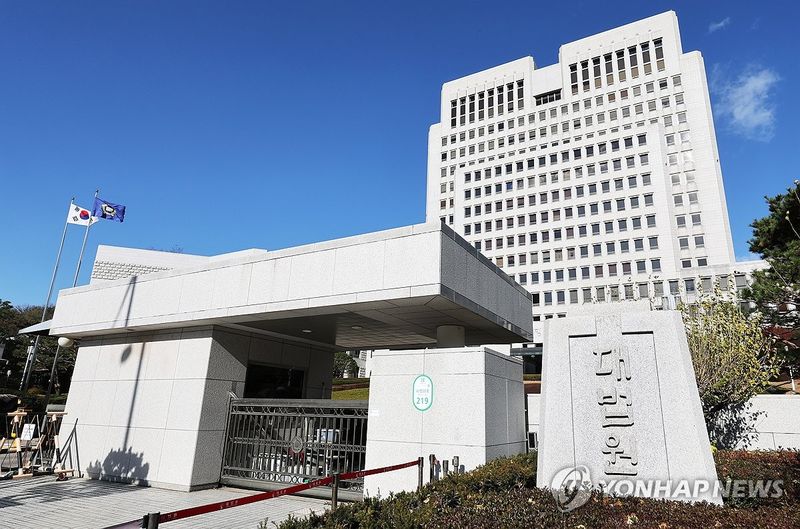
According to legal circles on the 27th, the Supreme Court’s Second Division, with Justice Oh Kyung-mi as the justice in charge, vacated the lower court’s ruling against HD Hyundai Heavy Industries on the 30th of last month in its appeal of a lawsuit seeking to cancel an order to pay a fine, and remanded the case to the Seoul High Court.
In May 2020, the KFTC fined HD Hyundai Heavy Industries 20.807 billion won, saying that it had failed to provide its in-house subcontractors with written documents stating subcontract prices and other terms, and had unfairly determined those prices. For violations through July 24, 2016, it applied the pre-amendment Enforcement Decree, which calculated the fine by multiplying twice the subcontract price by the applicable rate, imposing a fine of 20.375 billion won. For later violations, it imposed a flat-rate fine of 432 million won under the amended decree.
In a lawsuit brought by HD Hyundai Heavy Industries, the Seoul High Court ruled in January 2024 that the fine for the earlier period was disproportionately high compared with that for the later period, and canceled that portion. The ruling was upheld by the Supreme Court in November of the same year. The KFTC left the basic calculation criteria unchanged, raised only the reduction rate from 20% to 50%, and reimposed a fine of 12.734 billion won on July 2 last year.
The issue was whether reimposing the fine after raising the reduction rate to the maximum violated the principle of proportionality and amounted to an abuse of discretion.
The Seoul High Court’s Administrative Division 7, which heard the case below, dismissed HD Hyundai Heavy Industries’ claim on May 14. It reasoned that the larger the subcontract price, the greater the potential risk to subcontractors from the failure to issue written documents, so it was difficult to find that setting the level of sanctions based on the subcontract price was itself unlawful. It also said fines did not necessarily have to be limited to the amount of unjust gains.
The Supreme Court reached a different conclusion. The violations of the written-document requirement before July 24, 2016, involved 175 affected subcontractors and 37,504 violations, with subcontract prices totaling about 270.6 billion won; even after a 50% reduction, the fine was about 10.889 billion won. The later violations involved 147 subcontractors and 10,963 violations, with subcontract prices totaling about 149.2 billion won, but the fine was 162 million won.
The court noted that the two violations were of the same type, and that the subcontract prices were only about 1.8 times as high and the number of violations about 3.4 times as large. Nevertheless, it said the fine for the earlier period was “about 37 times or more higher based on the same subcontract price, creating an imbalance that made the fine excessively large.”
The court cited the legal principle set out in an April 2017 ruling: fines for violations of the Act on the Fair Transactions in Subcontracting serve not only as sanctions but also to recover unjust gains, and therefore must be proportionate to both the severity of the violation and the amount of the gains. It also said that, even if the amended Enforcement Decree did not apply directly, the purpose of the amendment introducing flat-rate fines could be taken into account.
The court found that, even after applying the maximum reduction rate of 50%, the fine remained excessive in relation to what was necessary to recover unjust gains, and that its punitive nature appeared to have been overemphasized. It ruled that the lower court had misinterpreted the law governing the calculation of fines.
[email protected] Kim Dong-gyu Reporter