[fn Editorial] Intensifying Global Trade Pressure: Government and Businesses Must Pull Together as One Team With Extraordinary Resolve
- Input
- 2026-11-27 15:20:09
- Updated
- 2026-11-27 15:20:09
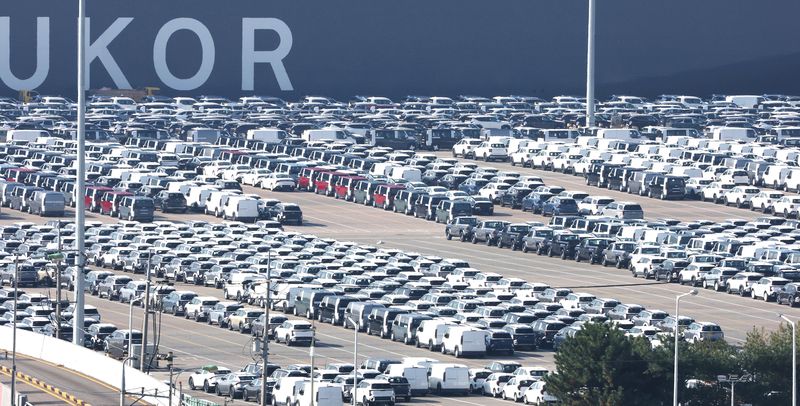
[Financial News] South Korea has ushered in an era of $1 trillion in exports, but the road ahead for its trade is a minefield. As major economies grow wary of South Korea’s strong economy, they are stepping up trade barriers and efforts to contain it. The U.S. midterm elections have ended, but the trade environment facing South Korean companies has become even more uncertain. This is no time to take comfort in the U.S.-South Korea tariff agreement and assume the worst is over. The bigger problem is that the risks are not limited to those originating in the United States. The tide of protectionism is spreading to major economies, including those in Europe. Nor are the industries facing regulation limited to semiconductors. From automobiles, energy and petrochemicals to steel, the full range of South Korea’s key industries now faces barriers, large and small. It is time for the government and businesses to act with extraordinary resolve and develop a comprehensive response to the trade threats mounting from multiple directions.
Sector-specific concerns were voiced at the KCCI’s International Trade Committee meeting on the 27th, which the organization held after inviting Park Jeong-seong, chief of trade negotiations at the Ministry of Trade and Industry. The semiconductor industry is anxiously watching to see whether investment tax credits for facility investments in the United States will be properly implemented. The tax credit benefits must remain consistent and predictable for companies to carry out investments in the United States with confidence. The more uncertain the U.S. position on investment incentives becomes, the greater the burden on businesses.
The energy industry faces the same situation. If the pace of nuclear policy implementation and business conditions change after the midterm elections, disruptions to investment projects in the United States, including nuclear and gas-fired power projects, will be unavoidable.
Trade barriers affecting automobiles are expanding beyond the United States, with Europe becoming another front. The European Union (EU) is pursuing the Industrial Accelerator Act (IAA), which centers on giving preference to locally produced goods, and recently introduced provisional safeguard measures on hybrid vehicles. As South Korea’s government and businesses have been preoccupied with responding to U.S. tariff barriers, another key market is erecting regulatory barriers. Hybrid vehicles are a key product for South Korean automakers. If the preference for locally produced goods is implemented, South Korean companies may have to rethink their entire business strategy in Europe.
Alongside global trade uncertainties, strengthening the competitiveness of South Korean companies is also urgent. Petrochemicals and steel, traditional mainstays of the country’s exports, are grappling with a triple blow: overcapacity, weak demand and import restrictions imposed by countries around the world. As trade friction escalates amid these challenges, the competitiveness of the petrochemical and steel industries will deteriorate rapidly. That is why business restructuring and capacity adjustments can no longer be delayed. These sectors face a twofold challenge: the government must support their competitiveness as the risk of higher export barriers grows, while the companies in those industries must also accelerate their own restructuring.
To make the $1 trillion export achievement sustainable, the government and businesses must work together starting now. In the new trade order, what matters is not only the competitiveness of individual companies but also the country’s capacity to respond through public-private cooperation. To that end, the government must first listen to the difficulties businesses face. Practical solutions can be developed when the government’s negotiating strength is combined with businesses’ on-the-ground experience.