CSAT Cheating Surges 70% in a Year... Criminal Complaints Filed Against Six for Misusing Smart Devices and Cameras
- Input
- 2026-11-27 11:49:15
- Updated
- 2026-11-27 11:49:15
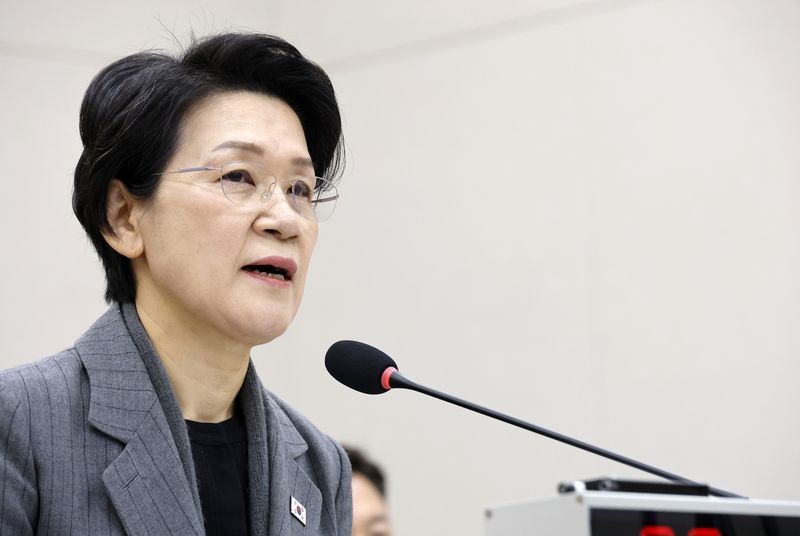
[Financial News] Cheating detected in this year’s College Scholastic Ability Test (CSAT) surged by nearly 70% from last year. In particular, criminal complaints were filed against all six people involved in serious cheating using advanced devices, including smartphones in restrooms, tiny cameras and smart glasses.
On the 27th, Acting Education Minister Choi Eun-ok attended a full meeting of the National Assembly Board of Education and reported on the “Plan to Strengthen Management of Major Exams under the Education Ministry, Including the CSAT.” Choi said, “With a determination never to compromise on exam fairness, we will strengthen the management and oversight of all exams under the Education Ministry to the level of the CSAT.”
According to the Education Ministry, of the 551,864 people who applied for the 2027 CSAT, held on the 19th, 497,526 took the exam and 54,338 were absent, for an absentee rate of 9.85%. This was up 0.45 percentage points from the previous year.
As of the 25th, a total of 474 cases of cheating had been detected, up 195 from 279 the previous year. By type, there were 127 cases of writing answers after the end-of-exam bell, 127 violations of the rules for taking the fourth test session, 112 cases involving the use of smart devices, 51 cases of simply possessing electronic devices, and 57 other cases, including failure to follow instructions. Cheating involving smart devices, in particular, surged by 81 cases from 31 the previous year. Criminal complaints were filed on the 23rd against all six people involved in serious cheating: three who photographed exam questions with smartphones in restrooms during the test, one who used a smartphone in an exam room, one who took photos with a small camera, and one who wore smart glasses.
As a follow-up measure, the Education Ministry is pursuing an amendment to the Higher Education Act that would extend the current one-year ban on taking the CSAT and university-specific exams for people who commit serious cheating using advanced devices to 10 years. It is also considering extending the retention period for CSAT exam papers from the current one year to five years so that suspected cheating cases can be thoroughly reviewed afterward. In addition, the ministry plans to award informants at least 100 million won if cheating is confirmed through a reporting center that will serve as a single channel in coordination with the Anti-Corruption and Civil Rights Commission (ACRC).
The ministry will also significantly tighten oversight of university admissions, high school exams and various national tests. Of the 46 universities holding university-specific exams, including essay tests and interviews based on provided passages, 23 had completed their exams as of that day. The Education Ministry has ordered all universities to retain every exam paper and answer sheet and reexamine the records of applicants expected to be admitted. If cheating is detected, the ministry plans not only to expel the student from their university but also, in consultation with the Korean Council for University Education, to share personal information among universities and block the student from being admitted to another university.
Starting with high schools’ second-semester final exams next month, measures will include screening every student with metal detectors, storing bags at least 50 meters away, blocking on-campus Wi-Fi and having hallway proctors check for Bluetooth signals. The ministry recommended that if smart-device cheating is detected during school exams, students receive zeroes in all subjects that day and face strict disciplinary action ranging from suspension to expulsion.
The period during which people who cheat can be barred from taking teacher recruitment exams for kindergarten, elementary and secondary schools and the Law School Admission Eligibility Test will also be extended to a maximum of 10 years, while the ban for high school equivalency exams and exams for earning a degree through self-study will be extended to a maximum of five years. The ministry is also considering lengthening the bans for the Korean Language Proficiency Test and the Korean History Proficiency Test. The Education Ministry will swiftly pursue revisions to relevant laws and regulations to strengthen penalties for these eight exams and plans to secure and provide additional funding of about 40 billion won to help provincial and metropolitan offices of education obtain detection equipment.
[email protected] Kim Man-gi Reporter