Calls to Expand the Stock Market Stabilization Fund to '100 Trillion Won'... Fund in the 10-Trillion-Won Range Has Made 'Zero' Actual Purchases [Why the Stock Market?]
- Input
- 2026-11-28 06:00:00
- Updated
- 2026-11-28 06:00:04
[Financial News] Volatility in South Korea’s stock market is increasing amid swings in overseas big tech stocks and the effects of supply and demand for derivatives, with the KOSPI falling below the 4,700 mark for the first time in 10 months. As financial authorities prepare to activate the Stock Market Stabilization Fund, a proposal is also being discussed to expand the fund—which has no record of being deployed in the 18 years since 2008—to 100 trillion won. Specific activation criteria and the schedule for injecting funds have yet to be disclosed.
Calls to expand the ‘100 trillion won’ stock market stabilization fund... FSC seeks to hold emergency review meeting on the 30th
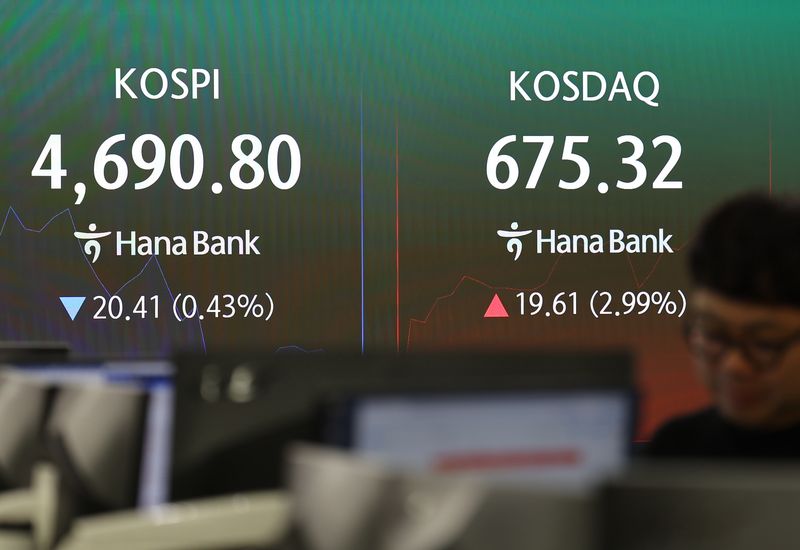
According to the financial investment industry on the 28th, the KOSPI gave up all of the previous day’s gains attributable to NVIDIA CEO Jensen Huang’s return in a single session on the 25th, and closed at 4,697.51, down 308.52 points (6.16%) from the previous trading day. The index had not closed below 4,700 in 10 months, since Jan. 13.Han Byung-do, floor leader of the Democratic Party of Korea (DPK), said at a policy coordination meeting at the National Assembly on the 26th that the government had eased the daily limit on share buybacks by listed companies and was preparing to activate the Stock Market Stabilization Fund immediately if necessary. Both measures were included in the stock market stabilization plan announced by the government at an emergency market situation review meeting (F4 meeting) on the 22nd.
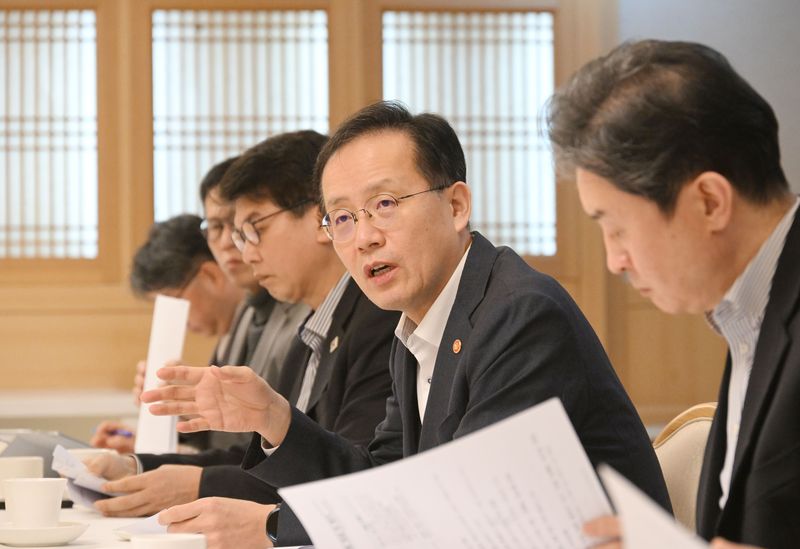
The Stock Market Stabilization Fund currently stands at 10.76 trillion won. Financial authorities are assessing whether contributing institutions can pay their existing pledged amounts and how much capacity they have for additional contributions. The Financial Services Commission (FSC) is working to hold an emergency financial-sector market stability review meeting on the 30th, attended by the heads of the five major financial groups and others.
However, securities industry sources have questioned whether the fund can be expanded to 100 trillion won. They say it would be difficult to secure tens of trillions of won in additional contributions in a short period, as contributing institutions such as financial holding companies and securities firms must manage risk-weighted assets (RWA) and capital soundness at year-end.
An investment industry official said, “Rather than increasing the size of the Stock Market Stabilization Fund, the priority is to disclose specific activation criteria so the market can gauge when funds will be injected.”
Bank of England: “2x leveraged ETFs amplify stock market declines”
The Bank of England (BoE), the United Kingdom’s central bank, said in a recent Financial Stability Report that mechanical selling by 2x leveraged exchange-traded funds (ETFs) was one factor that amplified the KOSPI’s decline. When the underlying index falls, the process of reducing exposure to stocks or futures to maintain the target leverage ratio can increase selling pressure, the report said.The National Pension Service (NPS) deferred sales intended to adjust its allocation to domestic stocks in the first half of the year. As the stock market fell in the second half, the estimated value of the NPS’s domestic stock holdings declined by 220 trillion to 240 trillion won. The NPS’s target allocation to domestic bonds was lowered from 24.9% to 23.1%. Over the same period, government bond yields and commercial bank lending rates also rose.
Samsung Electronics’ large cash dividend is also seen as a factor in the foreign exchange market. Of the company’s 30.7 trillion won cash dividend, foreign investors’ share is 15.3005 trillion won, or 49.8% of the total. That is equivalent to about 65% of the recent average daily spot foreign exchange trading value in South Korea. If foreign investors convert their dividends and remit the money overseas, demand for dollars in the foreign exchange market could rise.
Emphasis on improving treasury share and dividend rules to restore market confidence
The ruling party’s proposals to restore market confidence focused on improving shareholder-return measures, including the cancellation of treasury shares and dividends at listed companies. The actual amounts and timing of cancellations and dividend payments are up to individual companies.On the 26th, the ruling party proposed bringing forward the schedule for listed companies to cancel treasury shares, setting out their dividend plans in greater detail, and amending the Capital Markets Act to introduce ad hoc dividends. It also cited amendments to the Inheritance and Gift Tax Act, changes to the criteria for calculating merger prices, a Korean-style bear hug bill, and mandatory sustainability disclosures as legislative priorities. It also mentioned the timetable for the Digital Assets Act, with a public hearing scheduled for the 3rd of next month.
A senior financial investment industry official said, “If listed companies are burdened with defending their share prices, they may have less capacity to invest in their core businesses, such as artificial intelligence (AI) and semiconductors.” The official added, “The authorities should disclose the activation criteria for the Stock Market Stabilization Fund and consider measures to curb volatility related to short selling, drawing on Taiwan’s experience.”
[email protected] Choi Doo-seon Reporter